
Owen Tree Services - Resources
Rhizosphaera Needle Cast
IDENTIFICATION
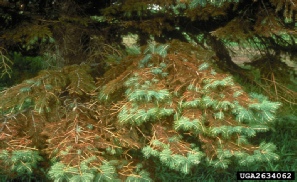
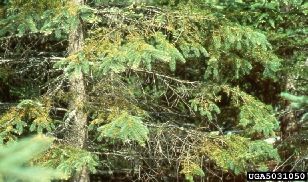
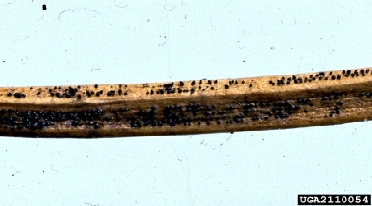
Rhizosphaera needle cast is a foliage disease of spruce trees. This tree disease generally starts at the bottom of the tree and progresses upward. Older, inner needles of the spruce tree branches are where disease symptoms are first seen. Infected needles first appear mottled or speckled with small yellowish spots. Eventually, the infected spruce needles turn a brownish to purplish color. Spruce needles may be dropped (cast) anytime from 3 to 15 months after the initial infection, depending on the variety of spruce infected. Under close examination distinct black specks can be seen in rows on the discolored needles. These specks contain the spores that spread the disease throughout the tree. The spores are spread by dripping and splashing water.
Infection from Rhizosphaera needle cast can occur anytime during the growing season on current growth or older needles that are stressed due to other pests or environmental conditions. Prolonged periods of moisture are required for the spores to germinate and initiate infection. Trees that are crowded together and/or are frequently hit by water from sprinkler systems are subject to severe needle cast infections.
HOW TO CONTROL RHIZOSPHAERA NEEDLE CAST
Rhizosphaera needle cast attacks non-native tree species or stressed trees growing in nutrient poor soils or under adverse conditions. The first step in treatment is to improve the conditions in which the tree is growing. This usually involves fertilizing to provide nutrients to invigorate a tree that is struggling. Proper watering is also essential to avoid stressing the tree either through drought or over watering. Be careful when watering spruce trees. It’s important to avoid letting water spray the tree branches, as this creates conditions favorable to growth and spread of this tree disease.
Three or more fungicide treatments in the spring and throughout the summer will help protect newly emerging spruce needles. Previously infected needles will continue to be lost even after fungicide treatments have begun, and infected needles may remain on the tree for up to 15 months. It may be necessary to continue the disease prevention program for up to five years to fully control the disease while the tree's vigor is regained. On some sites the environmental conditions may cause the disease to become chronic, requiring annual fungicide treatments.
HOST TREES
Colorado Blue Spruce, Black Hills Spruce, Norway Spruce, White Spruce.
CONTRIBUTING FACTORS
Rhizosphaera attacks non-native and stressed trees growing in nutrient poor soils or under adverse conditions. Prolonged exposure to moisture and trees that are crowded are most subject to fungal infection.
This tree disease generally starts at the bottom of the tree and typically moves upward throughout the tree canopy. Infected needles first appear mottled or speckled with dull yellowish blotches. Later, the needles turn brown to purplish brown. The needles are then dropped or “cast” from the tree. Under close examination distinct black specks can be seen in rows on the discolored needles and these specks contain the spores that spread the disease throughout the tree.
LIFE CYCLE
Disease infection usually occurs in the spring when moist weather conditions are most prevalent. Symptoms may be seen in the fall, but most often are not apparent until the following spring.
MANAGEMENT
Reducing tree stress by Deep-Root Fertilizing to help promote health and vigor.
Proper watering is essential to avoid stressing the tree by either over watering or causing drought.
Apply three or more fungicide treatments starting in the spring to protect new growth. Full control may not be achieved in one growing season because of the length of time infected needles remain on the tree.
Photos: Joseph O'Brien, USDA Forest Service, Bugwood.org, USDA Forest Service - North Central Research Station Archive, USDA Forest Service, Bugwood.org
Counties we Serve
Owen Tree Service is affiliated with the following tree care industry organizations


What Our Customers Are Saying
Dean Hartman - Berrien County Drain Commission
Owen Tree Service provided a great value and service to our community. They helped us complete a difficult task of approximately 50 miles of needed treatment almost seamlessly. They were very easy to work with, followed and complimented our directive well. The owners along the areas that were serviced, passed on very nice regards for their team. We were very impressed with Owen Tree Service (as well as the community) and look forward to using their services again this coming year and beyond.
Tyler Smith
I have used Owen for over 10 years. They take care of my Apple tree, shrubs, lawn irrigation and weed/fertilizer. I have always found them to be price competitive, thoughtful and timely. 5 stars from me!
Gayle Rickert
Responsiveness, Punctuality, Quality, Professionalism
Trish did an exceptional job of assessing the tree removal, trimming, diseased/dead trees, and brush removal on our property. She explained the processes clearly and in detail. Trish is an extremely knowledgeable arborist. I highly recommend her to give a comprehensive review & estimate of your landscape needs.
New Item
Tonia Burns
Responsiveness, Professionalism
Called about having a 17ft tree placed in our yard. Received a call back from Trish you was incredibly gracious with her time and information. Unfortunately, trees that are over 6ft can't be planted by them. However, Trish gave me more than enough info to be confident about having a tree of that sized planted. I'd definitely call and use them for any other future services.
Rick Stomps
Responsiveness, Punctuality, Quality, Value
Owen Tree Service did an outstanding job. The crew trimmed up the treeline and removed several. Did a great job of cleanup too. Extremely professional, informative, helpful & friendly. Thanks so much to the great crew - Ron, Skip, Tim & Doug ... you were incredible. Thanks so much. I'll tell folks about you! (BTW - the guys deserve a few extra $$)