
Plant Health Care
Almont’s Experience with Cytospora Canker
| Jul 05, 2025
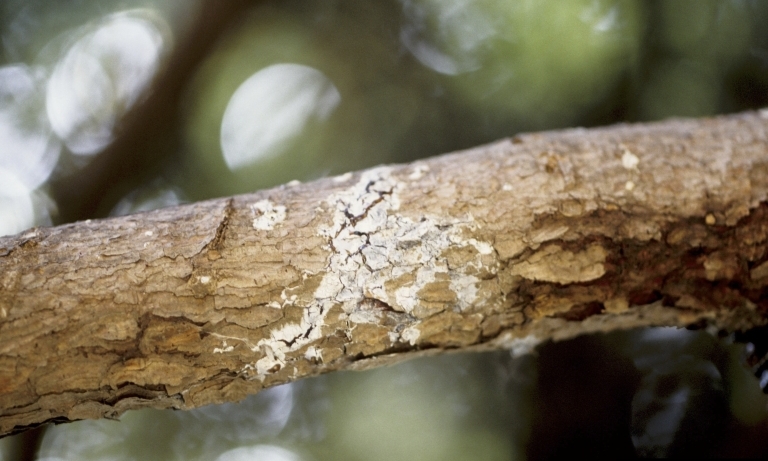
Cytospora canker on spruce branch. | Joseph OBrien, USDA Forest Service, Bugwood.org
As Almont continues to battle Cytospora canker in our Blue Spruces, we've gained valuable insights that can guide our future urban forestry practices.
Firstly, we've learned the importance of diversity in our home landscapes and our urban forest as a whole. The widespread planting of Blue Spruces left us vulnerable to this single disease. Moving forward, a mix of species can help prevent such large-scale losses.
We've also recognized the value of native species. Blue Spruce trees are not native and are at home in a more arid environment. Trees adapted to our local climate and conditions are generally more resilient to insect pests and diseases. This experience has sparked a renewed interest in Michigan's native trees.
The outbreak has highlighted the need for regular tree health monitoring. Early detection can make a significant difference in managing diseases like Cytospora canker. Many residents are now more proactive about inspecting their trees and seeking a professional arborist to help when needed.
Although no fungicides are currently labelled for the control of Cytospora canker there are actions that can be taken to help trees that are infected. Pruning infected limbs is the first step in battling this disease. To prevent spreading this disease it is important to sterilize your pruning tool after each and every pruning cut. Fertilization will also help to maintain the health and vigor of an infected Blue Spruce. Watering during dry periods will help trees continue with their normal internal processes. Growth retardants have also showed promise in reducing the rate at which the disease moves within an infected tree.
Lastly, we've gained a deeper appreciation for our urban forest. The potential loss of Blue Spruces planted in Almont landscapes has reminded us of the numerous benefits trees provide to our community.
As we move forward, these lessons will, hopefully, shape Almont homeowners approach to deciding which trees to plant in their landscapes. By applying what we've learned from the Cytospora canker outbreak, we can create a healthier, more resilient urban forest for future generations.