
Owen Tree Services - Resources
Aphids
IDENTIFICATION
Dozens of species of aphids may be found on shade trees and woody ornamental plants in Michigan. Aphids are small insects that range from 1/8 to 1/4 inch in length. Aphids come in a wide variety of colors, from bright orange to green or gray to red.
DAMAGE
Aphids feed on plants by sucking plant sap from the leaves, twigs or stems of plants. A high population of aphid insects can reduce the growth and vigor of the host plant. This injury is most common with stem or trunk infesting aphids. Aphids can also cause leaf curling injuries.
Most aphids also excrete a sweet, sticky substance called honeydew. The honeydew dripping from feeding aphids can be a nuisance – depending on what is under the plant they are feeding on. Also, sooty mold fungus often starts growing on the honeydew, producing a gray or black covering on the leaves. This mold is not damaging except that it can temporarily reduce photosynthesis of the leaves.
ANTS AND APHIDS
Ants feed on aphid produced honeydew. Ants even tend colonies of aphids and other honeydew producing insects, much like we do with cattle. Often the presence of ants crawling up trees or over foliage indicates that large numbers of aphids or other honeydew producing insects are feeding on the plant.
CONTROL
Many types of insects naturally prey upon Aphids. However in the urban environment this may not be the case and aphid populations can get quite large. Tree spraying and systemic treatments work well for aphid control. Also, overwintering eggs from aphids can be controlled by spraying trees with dormant oils in the early spring.
HOST TREES:
Aphids can occur on most varieties of landscape trees and shrubs.
SYMPTONS / IDENTIFICATION:
There are dozens of species of aphids which come in a wide variety of colors, from bright orange to green or gray to red. Aphids are small insects, ranging between 1 /8 to 1/4 inch in length. Aphids can cause leaf curling as a result of their feeding.
LIFE CYCLE:
Aphids overwinter as eggs on their host plants. The eggs hatch in the spring and some winged aphids may move to other plant species. In the summer aphids can give birth to live young at the rate of 1 -20 per day without mating. Consequently, aphid populations can increase rapidly. Aphids mate on the host plant at the end of the summer and the female lays the eggs on the host plant.
HOW TO CONTROL APHIDS ON TREES AND SHRUBS
Many types of insects naturally prey upon aphids. However in the urban environment this may not be the case.
Systemic treatments work well since the tree is absorbing the insecticide via the root system.
Contact treatments work well for control when the aphids are exposed and not protected under a curled leaf.
For overwintering eggs, aphids can be controlled with dormant oil in the spring.
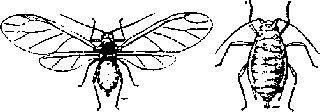
Photo: John A. Weidhass, Virginia Polytechnic Institute and State University, Bugwood.org
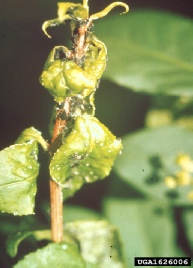
Photo: John A. Weidhass, Virginia Polytechnic Institute and State University, Bugwood.org
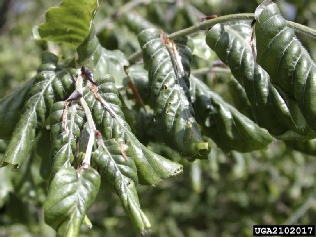
Photo: Louis-Michel Nageleisen, Département de la Santé des Forêts, Bugwood.org
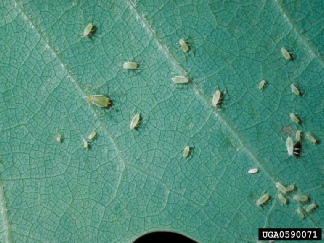
Photo: Robert L. Anderson, USDA Forest Service, Bugwood.org
Counties we Serve
Owen Tree Service is affiliated with the following tree care industry organizations


What Our Customers Are Saying
Dean Hartman - Berrien County Drain Commission
Owen Tree Service provided a great value and service to our community. They helped us complete a difficult task of approximately 50 miles of needed treatment almost seamlessly. They were very easy to work with, followed and complimented our directive well. The owners along the areas that were serviced, passed on very nice regards for their team. We were very impressed with Owen Tree Service (as well as the community) and look forward to using their services again this coming year and beyond.
Tim Nyquist
Responsiveness, Punctuality, Quality, Professionalism, Value
The folks at Owen Tree Service took such good care of my family. We had a massive tree fall on our house and cars, completely upending our lives, and Dave Kidd, Kay Sicheneder, and their whole crew working on it not only did a great job evaluating and removing, but also spent a good deal of time chatting with us, consoling us, offering advice, and generally putting our minds at ease. I sincerely appreciated everything they did for us and would highly recommend them if you’re looking for a good tree service. I can’t thank them enough.
Rick Stomps
Responsiveness, Punctuality, Quality, Value
Owen Tree Service did an outstanding job. The crew trimmed up the treeline and removed several. Did a great job of cleanup too. Extremely professional, informative, helpful & friendly. Thanks so much to the great crew - Ron, Skip, Tim & Doug ... you were incredible. Thanks so much. I'll tell folks about you! (BTW - the guys deserve a few extra $$)
Tonia Burns
Responsiveness, Professionalism
Called about having a 17ft tree placed in our yard. Received a call back from Trish you was incredibly gracious with her time and information. Unfortunately, trees that are over 6ft can't be planted by them. However, Trish gave me more than enough info to be confident about having a tree of that sized planted. I'd definitely call and use them for any other future services.
Linda Janiszewski
Punctuality, Quality, Professionalism, Value
We are very happy with the work they did. We had a large birch tree trimmed that had power lines on each side. There were 4 workers and they worked well together as a team to get the job done. They cleaned up the yard around the tree and did a professional job. They also asked us if we liked it before they left. We would highly recommend Owen Tree Service!
Tyler Smith
I have used Owen for over 10 years. They take care of my Apple tree, shrubs, lawn irrigation and weed/fertilizer. I have always found them to be price competitive, thoughtful and timely. 5 stars from me!