
Plant Health Care
Apple Scab: A Common Threat to Oxford, MI Crabapples
| Dec 21, 2024
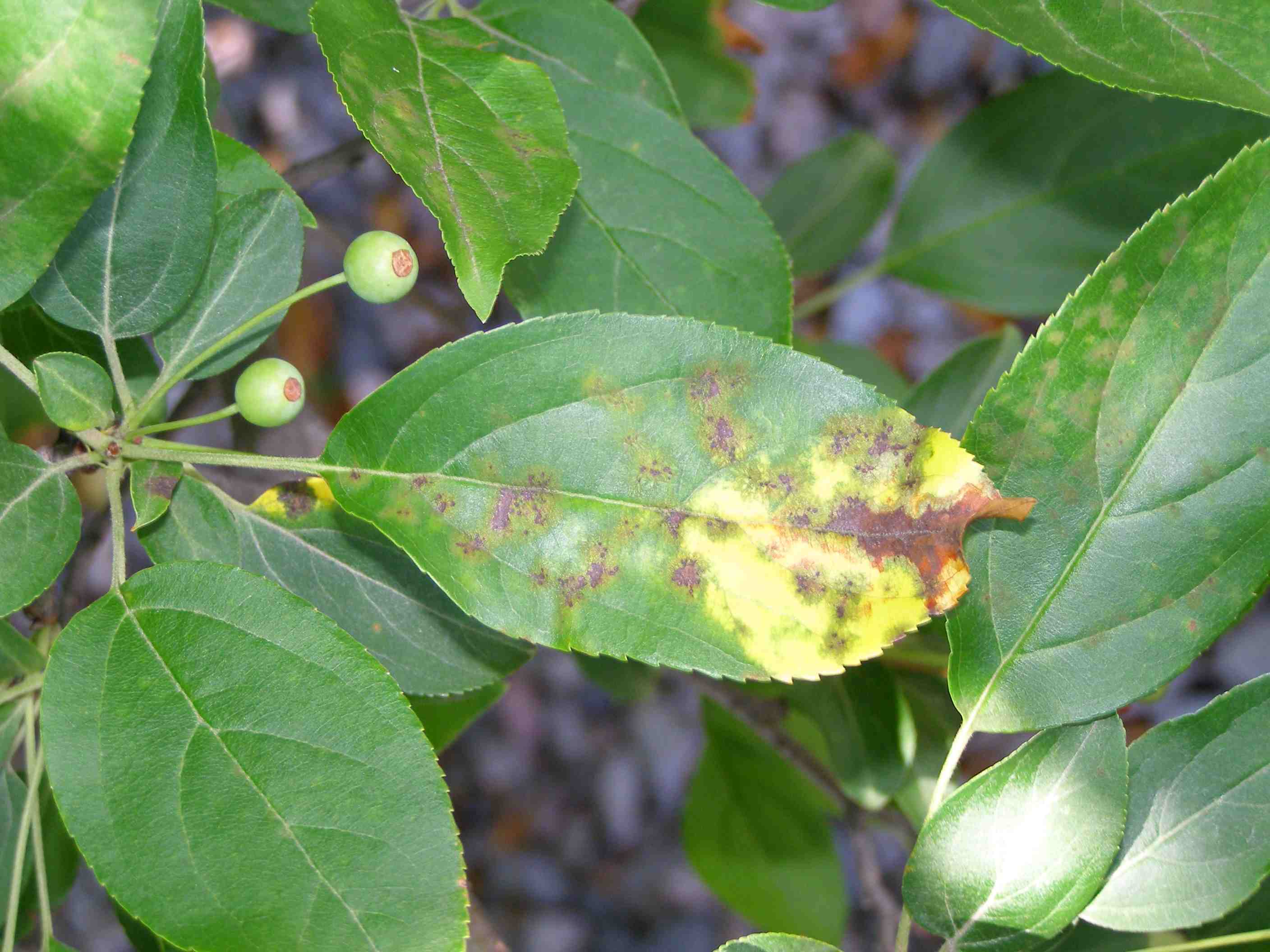
Apple Scab infection on crabapple leaves. Photo: University of Minnesota, Apple Scab Information
Apple scab is the most prevalent disease affecting ornamental crabapple trees in Oxford, Michigan.
For homeowners in Oxford, MI, managing apple scab is crucial to maintaining healthy crabapple trees. The fungus overwinters in fallen leaves, and in spring, it releases spores that infect newly developing leaves, flowers, and fruit.
Wet spring weather, with temperatures between 40-70°F, creates ideal conditions for apple scab to thrive.
In Oxford, MI, where spring can bring ample rainfall, vigilance is key. Symptoms of apple scab include:
• Olive-green to brown spots on leaves, up to 1/2 inch across.
• Velvet-like spots with fringed borders on leaves.
• Yellowish leaves that may drop by mid-summer.
• Olive-green spots on fruit that turn brown and corky over time.
To combat apple scab in Oxford, MI, a proactive approach is essential. Tree spraying fungicides should begin when leaves first appear. Typically three treatments are applied each year. This timing is crucial because:
1. Early intervention prevents the fungus from establishing itself on new growth.
2. Multiple treatments provide continuous protection throughout the vulnerable spring period.
3. Repeated applications help safeguard both leaves and developing fruit.
For those seeking eco-friendly options, consider planting scab-resistant crabapple varieties. These varieties can significantly reduce the need for fungicide applications.
Remember, while apple scab primarily affects tree aesthetics and fruit quality, severe infections can weaken trees over time, making them more susceptible to additional insect or disease pests.
By implementing a timely spraying regimen and choosing resistant varieties, when possible, Oxford residents can enjoy healthy, visually appealing crabapple trees for years to come.