
Owen Tree Services - Resources
Chlorosis
SYMPTOMS AND EFFECTS
Chlorosis is a common problem of trees in Michigan. Some trees are more susceptible than others, but it is a potential problem in all trees. Chlorosis is usually evident for many years and, left untreated, may end with the loss of the tree.
Chlorosis generally starts as a yellowing of the leaf tissue which can show as a pale green leaf when the leaf would normally be dark green in color. As the condition worsens the leaves will lose their ability to manufacture food and will fall from the tree. Chlorosis reduces the ability of the tree to produce food. As the tree loses its ability to produce food it will rely more on its stored energy. As the tree depletes this stored energy, whole branches and portions of the tree will begin to die. Over time the tree may decline enough to lose its aesthetic value, necessitating removal.
CAUSE
Chlorosis is caused by the tree being unable to produce chlorophyll. This is usually caused by a deficiency of essential micronutrients like iron, manganese, zinc or copper. Many times, this is caused by a soil pH that the tree is not suited for, or by a low level of nutrients in the soil, and in some cases even from an injury or disease causing a problem in the trees roots or stem limiting the amount of nutrients the tree can absorb and deliver to the leaves.
In the case of chlorosis caused by the soil pH, what is happening is that at different pH levels different nutrients are available in the soil. One common instance of this happens in Michigan oaks planted in soil with a pH level that is too high, causing the iron in the soil to bind with the soil making it unavailable to the tree. For this reason, your arborist may suggest taking a soil and foliar sample to assess the nutrient levels in both the soil and the leaves to confirm or rule this out as a possibility.
CONTROL
Prevention is the best option. The best way to prevent chlorosis is to research plants you would like to have in your landscape to confirm they are suitable for the pH level of your soil. When planting be careful not to damage the roots, and protect the roots during any construction projects going on around the tree.
If the problem is related to high soil pH, a pH reducer can be added to the soil to lower the current pH to an acceptable level. This can be a long process as soil pH can be difficult to change. Another option is to supply the plant with the lacking nutrient through either a soil injection where a nutrient rich fertilizer is added to the soil, or a trunk injection where the nutrient is injected directly into the trunk of the tree. Trunk injection shows the fastest results but in general should only be used to aid the tree while the underlying issue is being addressed.
The goal is to lower the soil pH to a level that the soil and tree are in balance and maintain that level in the future.
ALTERNATIVE PLANTING OPTIONS
If a lab test determines you have a high pH soil, there are several tree and shrub species available that you can plant that will tolerate a high soil pH. You should also be aware of the types of tree species in Michigan that will not tolerate high pH soil so you don't waste your time and money on a plant that will not thrive.
| | WILL TOLLERATE HIGH pH | |
|---|---|---|
| American Smoke tree | Eastern Redbud | Mugo Pine |
| American Yellowwood | Eastern Red Cedar | Nannyberry |
| Amur Maackia | Elm | Northern Catalpa |
| Amur Maple | English Oak | Norway Spruce |
| Arborvitae | Ginkgo | Ohio Buckeye |
| Bur Oak | Goldenrain tree | Persian Parrotia |
| Burning Bush | Hawthorn | Red Horsechestnut |
| Buttonbush | Honeylocust | Redosier Dogwood |
| Chestnut Oak | Hophornbeam | Savin Juniper |
| Chinese Lilac | Japanese Tree Lilac | Swiss Stone Pine |
| Chinkapin Oak | Japanese Zelkova | Tamarisk |
| Common Hackberry | Katsura tree | Tartarian Maple |
| Common Lilac | Kentucky Coffee tree | Tulip-tree |
| Common Ninebark | Little leaf Linden | Vanhoutte Spirea |
| Crabapple | London Plane tree | Weeping Mulberry |
| Dawn Redwood | Miyabei Maple | |
| | WILL NOT TOLLERATE HIGH pH | |
|---|---|---|
| Azalea | Larch | River Birch |
| Baldcypress | Northern Red Oak | Saucer Magnolia |
| Beech | Pear | Serviceberry |
| Black Gum | Pine | Swamp White Oak |
| Dogwood | Pin Oak | Sweet Gum |
| Fir | Red Maple | White Oak |
| Hemlock | Rhododendron | Willow Oak |
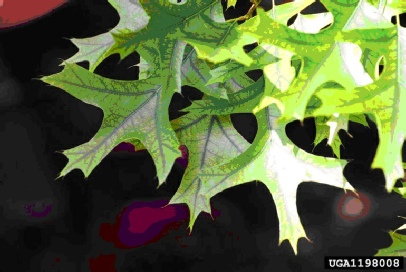
Photo: Joseph O'Brien, USDA Forest Service, Bugwood.org
Counties we Serve
Owen Tree Service is affiliated with the following tree care industry organizations


What Our Customers Are Saying
Brandon Rowley
Professionalism
Great people and they always do a nice job. We have used Owen Tree Service for years for various things like tree trimming and lawn care.
Tonia Burns
Responsiveness, Professionalism
Called about having a 17ft tree placed in our yard. Received a call back from Trish you was incredibly gracious with her time and information. Unfortunately, trees that are over 6ft can't be planted by them. However, Trish gave me more than enough info to be confident about having a tree of that sized planted. I'd definitely call and use them for any other future services.
Rick Stomps
Responsiveness, Punctuality, Quality, Value
Owen Tree Service did an outstanding job. The crew trimmed up the treeline and removed several. Did a great job of cleanup too. Extremely professional, informative, helpful & friendly. Thanks so much to the great crew - Ron, Skip, Tim & Doug ... you were incredible. Thanks so much. I'll tell folks about you! (BTW - the guys deserve a few extra $$)
Tim Nyquist
Responsiveness, Punctuality, Quality, Professionalism, Value
The folks at Owen Tree Service took such good care of my family. We had a massive tree fall on our house and cars, completely upending our lives, and Dave Kidd, Kay Sicheneder, and their whole crew working on it not only did a great job evaluating and removing, but also spent a good deal of time chatting with us, consoling us, offering advice, and generally putting our minds at ease. I sincerely appreciated everything they did for us and would highly recommend them if you’re looking for a good tree service. I can’t thank them enough.
Gayle Rickert
Responsiveness, Punctuality, Quality, Professionalism
Trish did an exceptional job of assessing the tree removal, trimming, diseased/dead trees, and brush removal on our property. She explained the processes clearly and in detail. Trish is an extremely knowledgeable arborist. I highly recommend her to give a comprehensive review & estimate of your landscape needs.
Tyler Smith
I have used Owen for over 10 years. They take care of my Apple tree, shrubs, lawn irrigation and weed/fertilizer. I have always found them to be price competitive, thoughtful and timely. 5 stars from me!