Invasive Plants
Controlling Olive In Michigan With Mechanical & Chemical Methods
| Jun 04, 2025

Herbicide spraying with dead plants
Autumn Olive (Elaeagnus umbellate) and Russian Olive (E. angustifolia) are both non-native species in Michigan and are difficult to control.
Autumn olive is an invasive woody shrub that can grow up to 20 feet tall, with silvery scales on the bottom of its leaves. It is common in old fields, open woods and forest edges. It produces small, round, bright red fruits with silver specs in late summer.
Russian Olive is also invasive but can grow taller than autumn olive. The foliage has silvery scales on both sides of its leaves. Russian olive produces oblong, burnt orange fruits that are about twice the size of autumn olive fruits.
After three years of age both Autumn Olive and Russian Olive will bloom with yellow flowers in June and July.
Be aware that both Autumn Olive and Russian Olive are illegal to sell, trade, plant or share in Michigan. Both species require persistent control methods.
Effective strategies for managing olives include:
Mechanical Control
• Hand pulling: Works for young seedlings, especially after rain has loosened the soil. Remove the entire root to prevent re-sprouting.
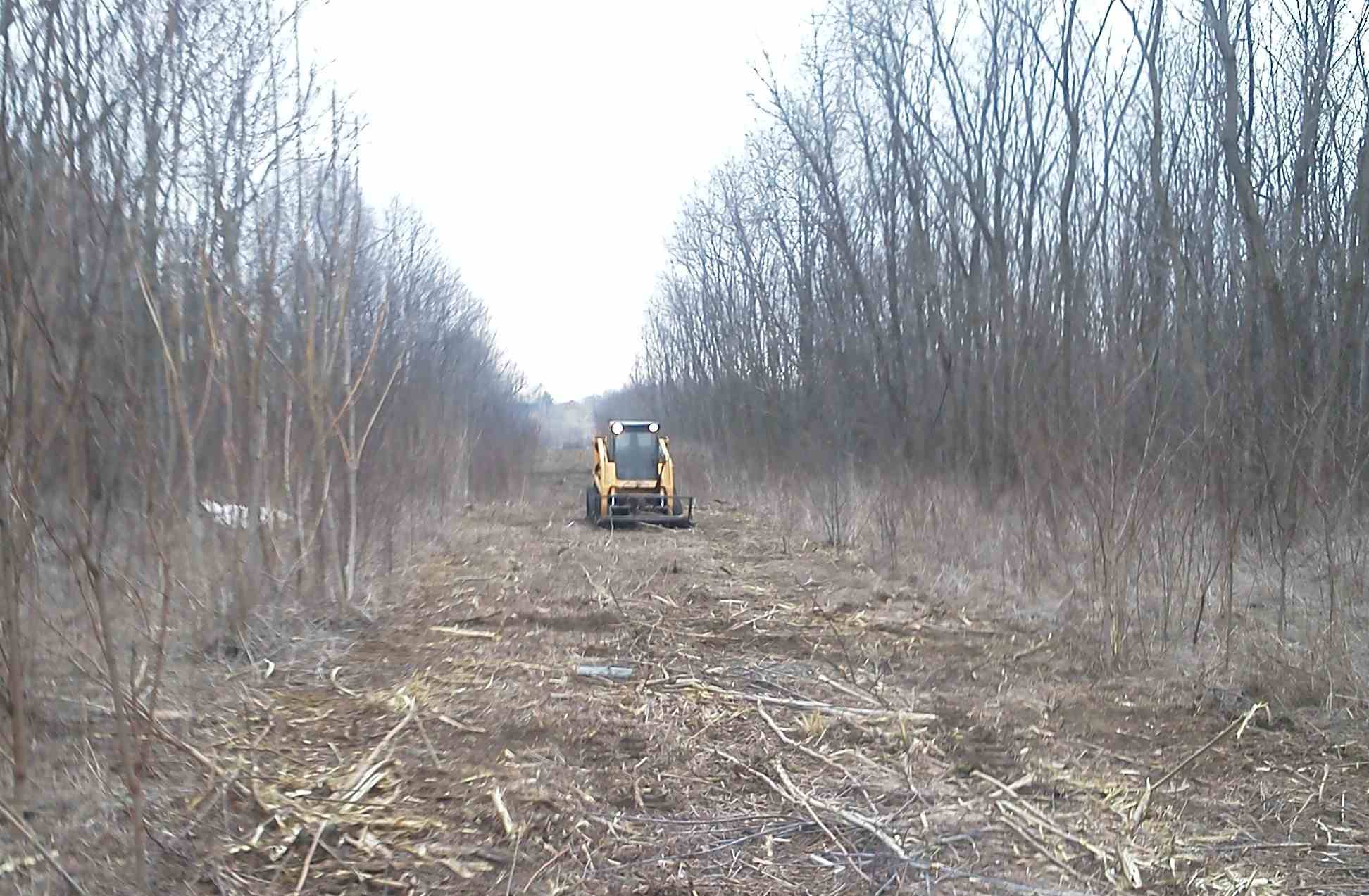
• Cutting: Cut trees at ground level when flowering begins. This method will require follow-up cutting and/or treatments due to re-sprouting. Cutting with a forestry mower can be done where olive plants have invaded large areas of a property.
• Girdling: For large trees, make a complete cut around the trunk into the cambium layer. While effective for killing the top, re-sprouts will occur below the cut area or from plant roots.
Chemical Control
Herbicide applications are most effective for mature olive plants infestations. These applications typically require multiple treatments over several years. The frequency depends on the specific method used and the severity of the infestation.
• Foliar spray: Glyphosate and triclopyr can be used after leaves have fully expanded. Apply during the growing season, preferably from June to the onset of fall color. Repeat applications will likely be necessary for 3-5 consecutive years to achieve complete control.
• Cut-stump treatment: Apply undiluted triclopyr or diluted glyphosate to freshly cut surfaces. Apply immediately after cutting the plant. If regrowth occurs, reapply during the growing season or dormant period.
• Basal bark treatment: Apply concentrated triclopyr ester in basal oil to the lower 12-18 inches of stems. Can be applied throughout the year, but is most effective during the dormant season. Repeat annually if regrowth is observed. You can also do a basal stump treatment with this product after cutting has occurred (doesn’t have to be immediately after cutting).
It's important to note that a single herbicide application is rarely sufficient for complete control of established olive populations. Monitoring treated areas and follow-up applications are crucial for long-term management success.
Integrated Management:
A combination of mechanical and chemical controls is highly effective for managing olive infestations. This approach offers several advantages. You must monitor treated areas for re-sprouts or new seedlings and adjust your strategies as needed.
• Enhanced control: Mechanical methods followed by herbicide treatments wil significantly improve control. For example, cutting the plant at ground level and applying herbicide to the stump is one of the most successful strategies.
• Improved long-term management: While mechanical methods alone may not be sufficient for established stands, combining them with chemical controls provides more effective results for severe infestations.
• Versatility: This approach can be customized to site conditions and infestation levels. For small infestations, mechanical removal followed by targeted herbicide application on resprouts can be effective. For larger, established olive stands, initial mechanical clearing followed by a herbicide treatment offers efficient control.
• Reduced herbicide use: By first employing mechanical methods, the amount of herbicide needed for effective control can be reduced.
• Prevention of resprouting: While mechanical methods alone will lead to resprouting, the addition of herbicide treatments helps prevent regrowth from root crowns and remaining root systems.
To maximize effectiveness, it's crucial to time the treatments appropriately, taking into consideration the plant's physiology and growth patterns. Additionally, monitoring and follow-up treatments over 3-5 years are typically necessary for complete control of well-established olive populations.