
General
Deer Damage on Landscape Plants
| Dec 06, 2025
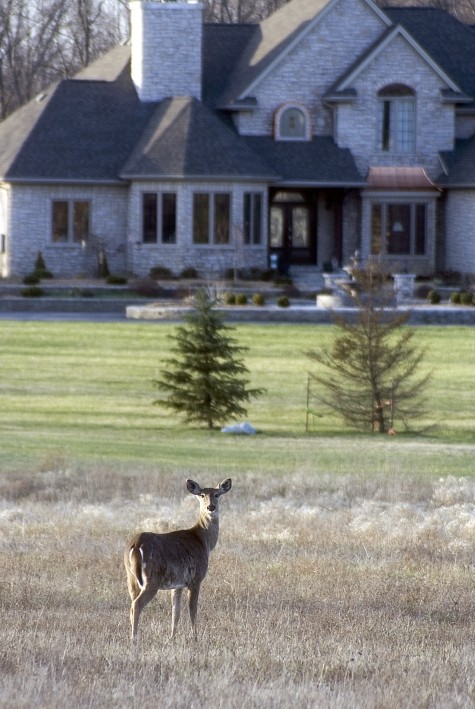
Deer getting ready to feed on landscape plants. | David Cappaert, Bugwood.org
White-tail deer can be a nuisance on many plants in our suburban and urban landscapes. Hungry deer can systematically damage young trees and devastate certain shrub species. These seemingly innocent animals create multiple challenges for the survival of some landscape plants through their feeding and territorial behaviors.
How Deer Damage Young Trees
Deer impact landscape plants in two primary ways:
1. Browsing Destruction: Hungry deer consume saplings and small tree branches, particularly targeting cherry, crabapple and cedar trees. Their grazing can kill or severely stunt the growth of flowers, shrubs and prized plants, altering landscape designs to accommodate deer feeding preferences.
2. Territorial Marking: During mating season, bucks rub their antlers on tree trunks, stripping bark and damaging the critical nutrient distribution layers that are just below the tree bark. This action can compromise a tree's ability to survive and grow.
Broader Ecological Implications
The deer's impact extends beyond individual landscapes. By consuming understory vegetation, they:
• Reduce forest biodiversity
• Disrupt local wildlife ecosystems
• Prevent natural forest renewal processes
Potential Protection Strategies
Urban certified arborists, property managers, landscapers and homeowners have developed several methods to mitigate deer damage:
1. Individual Tree Protection:
• Wire tree cages
• Protective tubes
• Individual fencing around saplings
2. Landscape Management:
• Planting deer-resistant species
• Creating diverse plant environments that confuse deer browsing patterns
If you need help protecting your landscape plants from deer damage contact Owen Tree & Lawn Care today at 800-724-6680. We can install protective barriers for deer, and our arborists can offer suggestions for plants that are less desirable to hungry deer.