
Plant Health Care
Dutch Elm Disease
| Dec 29, 2024
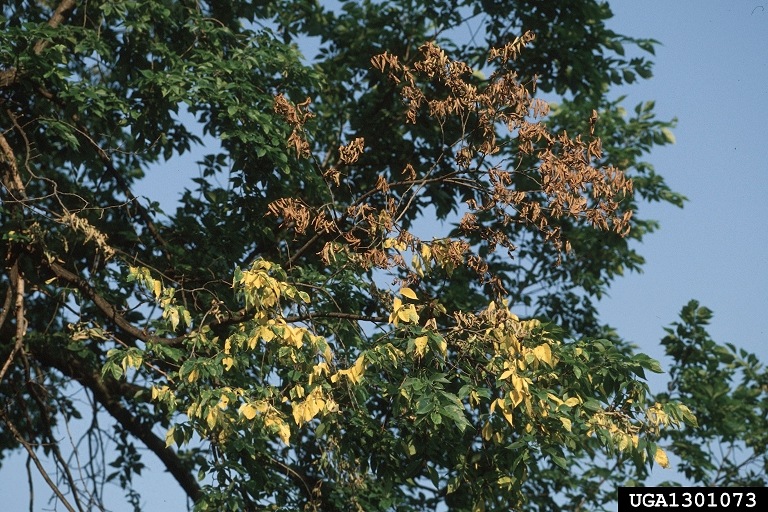
Dutch Elm Disease-Leaves; Photo: Joseph Obrien, USDA Forest Service, Bugwood.org
Dutch Elm Disease is an aggressive fungal infection that threatens our majestic Elm trees. If infected and left untreated it can cause the demise of the tree within a month. The disease is primarily spread by elm bark beetles but can also spread tree to tree through root grafts. Once a tree is infected, the tree reacts and tries to stop the internal spread by blocking its own xylem. The xylem is a part of the “water pipeline” in the tree. This blocked tissue than starves the infected branch and is responsible for the wilting appearance. If the disease gets into the roots, it then can infect healthy Elms by root grafts. However, with proactive measures and prompt treatment, Fort Gratiot residents can help protect their beloved elms. Prevention is key in managing DED. Regular inspections by Owen Tree Services ISA Certified Arborists can catch early signs of infection. First signs of Dutch elm disease usually appear in early June.
If Dutch elm disease is suspected, quick action is crucial. Immediate pruning of infected branches, cutting 6-10 feet beyond visible symptoms, can halt the disease's spread. Essentially, we’re trying to cut out the disease from the tree. However, this may cause severe disfiguration of the tree depending on the size of the limb removed. It's vital to properly dispose of infected wood to prevent further contamination. For trees in Fort Gratiot showing early stages of infection, a combination of pruning and fungicide treatment offers the best chance of survival. Trunk injections of fungicides can be effective when less than 15% of the canopy is affected. It is recommended to use these fungicides as a preventive to reduce the threat of Dutch elm disease.
Fort Gratiot residents should consult with our ISA Certified Arborists for proper diagnosis and treatment plans. While there's no guaranteed cure for Dutch elm disease, prompt action and preventive maintenance can improve an elm's chances of survival and help preserve these iconic trees in the community.