
Tree Diseases
Fungus Growing on Landscape Trees in Fenton
| Jan 12, 2026
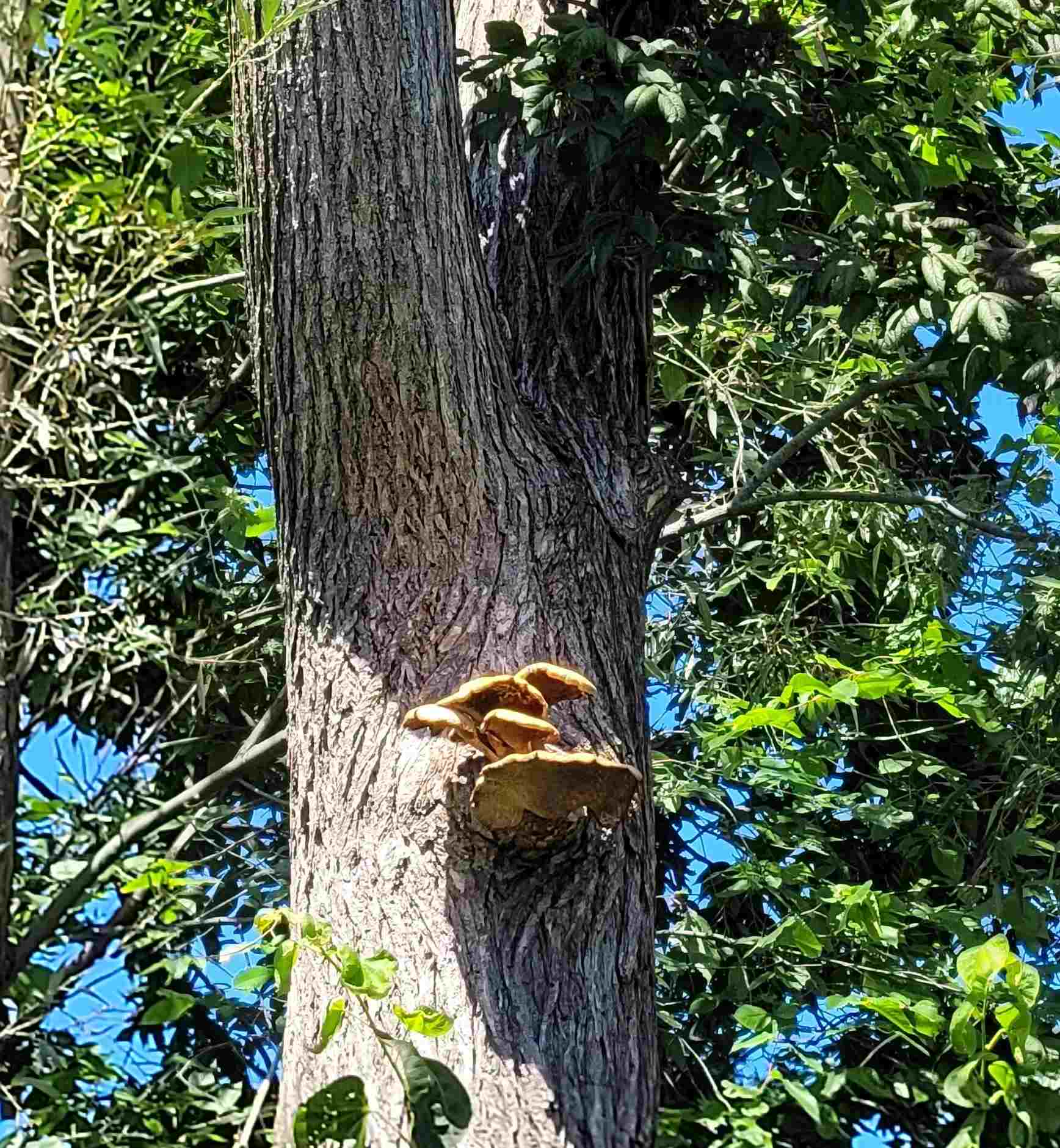
Tree fungus on elm tree trunk.
When performing property inspections in Fenton, I’m sometimes asked about mushrooms growing on, or near, trees. There are a lot of different species of fungi that might be encountered in a landscape. Some are harmful to trees, some are helpful and others are benign with respect to tree health. Although a little on the technical side, this article helps explain why we find fungi on trees and what to do when we see a fungus growing on one of our landscape trees.
Why Do Fungi Feed on Trees?
It all comes down to sugar. Just like all living organisms, fungi require carbon, hydrogen, and oxygen for energy and to build their structures. When we consume carbohydrates, our bodies break down the sugar molecules into carbon, hydrogen, and oxygen, which we use as fuel. Even cars rely on hydrocarbons—combinations of carbon, hydrogen, and oxygen. Trees are made of these elements as well, arranged into complex molecules like cellulose and lignin, which give the tree its strength and structure.
How Do Fungi Feed on Trees?
Fungi break down the tree’s complex molecules with specialized enzymes, rearranging them to build their own structures, known as mycelium, which resemble long, interconnected threads. When mature, basidiomycete fungi produce fruiting bodies (mushrooms) containing spores. When conditions such as temperature and humidity are right, these spores are released into the air. The mushroom itself is just a small part of the larger fungal organism, similar to an apple on a tree being only a small part of the whole tree.
Can Trees Defend Themselves Against Fungi?
Yes, trees are well-equipped to fight off fungi, provided they are healthy. The bark is the first line of defense, preventing fungi from entering. However, if the tree’s bark is damaged by storms, construction equipment, or improper climbing practices (spiking trees), fungi can find their way in. Similarly, improper pruning or root damage can create openings for decay. If the tree is healthy, it can compartmentalize the infected area, isolating the fungus and preventing it from spreading throughout the tree.
Mushrooms Growing on Your Tree
If you see mushrooms growing on your tree or near its roots, they likely belong to a group of fungi called basidiomycetes, or "club fungi." These fungi are named for the club-shaped structures (basidia) on which their spores are produced. Within this group, fungi can be saprophytes, parasites, saprophytic parasites, or beneficial fungi. Identifying the type of fungus is crucial for assessing your tree’s health, which is why consulting an ISA Certified Arborist is important.
Saprophytes
Saprophytic fungi are generally harmless as they feed on dead plant material, such as fallen leaves and rotting wood. They play an essential role in soil health and the global carbon cycle. Saprophytes can enter trees through wounds and begin to feed on the heartwood (dead wood inside the tree). Although they cause decay, they don’t typically affect the living parts of the tree. In many cases, a tree may appear hollow but still be structurally sound, similar to a building that’s hollow inside but remains safe to occupy. An ISA Certified Arborist can assess whether a tree is safe.
Parasitic Fungi
Parasitic fungi target the living tissues of a tree, particularly the cambium—the layer beneath the bark responsible for transporting water, nutrients, and sugars throughout the tree. These fungi can cause severe structural damage, decline, and even death by disrupting the tree’s vascular system. Often, parasitic fungi do not show obvious symptoms until the damage is significant, making the tree structurally unstable and more likely to fail without warning.
Saprophytic Parasites
Some fungi are primarily saprophytic, feeding on dead plant material, but they can become parasitic under certain conditions. A dangerous example of this is Ganoderma sessile, which attacks both living and dead wood. These fungi are often noticed when large, shelf-like mushrooms (polypores) appear at the base of the tree, signaling potential structural damage.
Beneficial Fungi
Not all fungi are harmful. Mycorrhizal fungi form a beneficial relationship with the tree’s roots. These fungi extend into the soil, collecting nutrients like phosphorus, which the tree needs. In return, the tree supplies the fungi with carbohydrates. This symbiotic relationship is beneficial for both the tree and the fungi. Occasionally, you may notice mushrooms from these fungi near the tree’s roots, which is typically a good sign of the tree’s health. While not all mycorrhizal fungi produce mushrooms, their presence is often a sign of a well-functioning ecosystem.
Sometimes mycorrhizal fungi are deficient in the soil – especially where new construction has occurred. For this reason, we offer mycorrhizal fungi as a component of some of our fertilization treatments for our Fenton clients.
What to Do if You Suspect Fungi in Your Tree
If you notice fungal growth on your tree, it’s essential to consult an ISA Certified Arborist. They are trained to identify fungal risks and assess the potential threat to your tree's health and structural integrity. Some arborists use specialized equipment like the Resistograph, a decay detection tool, to evaluate the extent of the damage.
Just because fungi are present doesn’t mean your tree needs to be removed. With proper care, many trees can recover, and risks can be mitigated, often saving the tree and avoiding costly removal.
Trees in Fenton landscapes are a valuable asset, benefiting the environment and enhancing property value. Keeping them healthy not only improves our surroundings but also provides long-term benefits. If you see signs of fungal growth, an ISA Certified Arborist can help determine the best course of action to preserve the health and safety of your tree. And remember, the more trees we keep healthy, the more our community and wallets will thrive.