
Plant Health Care
Ground Cover Diseases
| Dec 19, 2024
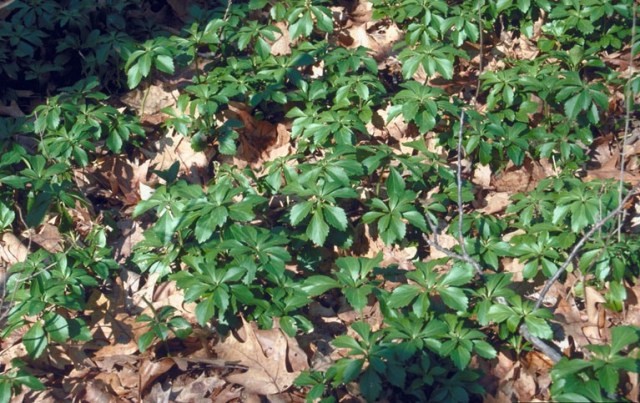
Pachysandra ground cover; Photo: Owen Tree Service
Three common ground covers used in Michigan are pachysandra, vinca (aka myrtle or periwinkle), and English ivy. Although these ground cover plants are mostly problem-free, on occasion they can be subject to disease problems. In most instances of diseases on ground covers a fungicide program in combination with good cultural practices can eliminate the problem.
Pachysandra ground cover. Photo: Jil Swearingen, USDA National Park Service, Bugwood.org
Pachysandra. Volutella leaf and stem blight is the most common disease on pachysandra. The disease is usually promoted by excessive moisture for long periods of time. The fungus causes black blotches on the leaves and black cankers on the stem. To control Volutella leaf blight, avoid excess moisture from overhead irrigation. A fungicide spray program started in the spring can usually prevent the disease from spreading.
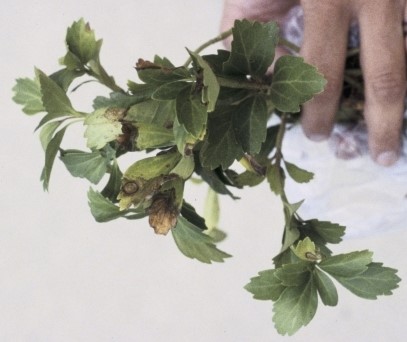
Volutella blight on pachysandra ground cover plants. Photo: Mary Ann Hansen, Virginia Polytechnic Institute and State University, Bugwood.org

Vinca (periwinkle) ground cover. Photo: Jil Swearingen, USDI National Park Service, Bugwood.org
Vinca/Myrtle/Periwinkle. Phoma stem blight is the most common disease of Vinca in Michigan. The fungus generally rots and girdles lower stems. Often the first symptom noticed by homeowners are wilted leaves as a result of girdled stems. Like Pachysandra, Vinca diseases will be minimized to some extent by avoiding excessive moisture, particularly in shaded areas of the landscape. Excess fertilization will also cause lush dense growth and greater susceptibility to the disease. Fungicide sprays will usually eliminate this ground cover disease over time.

Phoma stem blight on Vinca ground cover. Photo: Howard F. Schwartz, Colorado State University, Bugwood.org
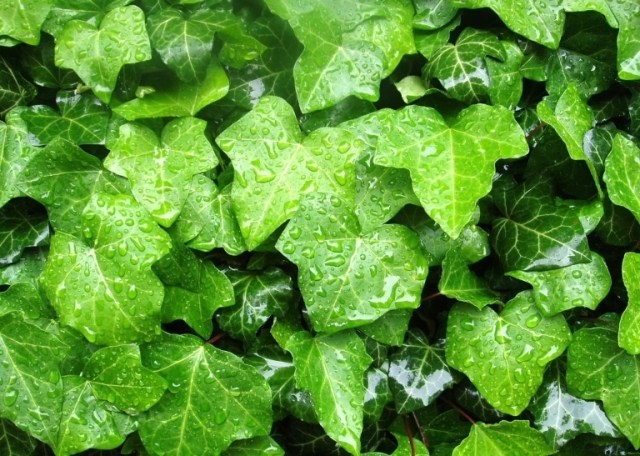
English ivy ground cover. Photo: Jan Samanek, Phytosanitary Administration, Bugwood.org
English Ivy. Several fungal leaf spots and a severe Xanthomonas bacterial leaf spot are possible causes for brown or black spots on English ivy. Although bacterial leaf spot often has a yellow halo surrounding the dark lesion on leaves, the fungal and bacterial disease can appear similar. Moisture control is particularly important for the bacterial leaf spot. Fungicides sometimes spread the bacterial disease but may inhibit the fungal leaf spots. A lab test may be warranted to confirm which disorder is affecting the plants. Where practical, infected leaves can be picked and destroyed.

English ivy with bacterial leaf spot. Photo: Leslie J. Mehrhoff, University of Connecticut, Bugwood.org