
Plant Health Care
How Mycorrhizae Fungi Can Help Bloomfield Hills Landscapes
| Oct 27, 2025
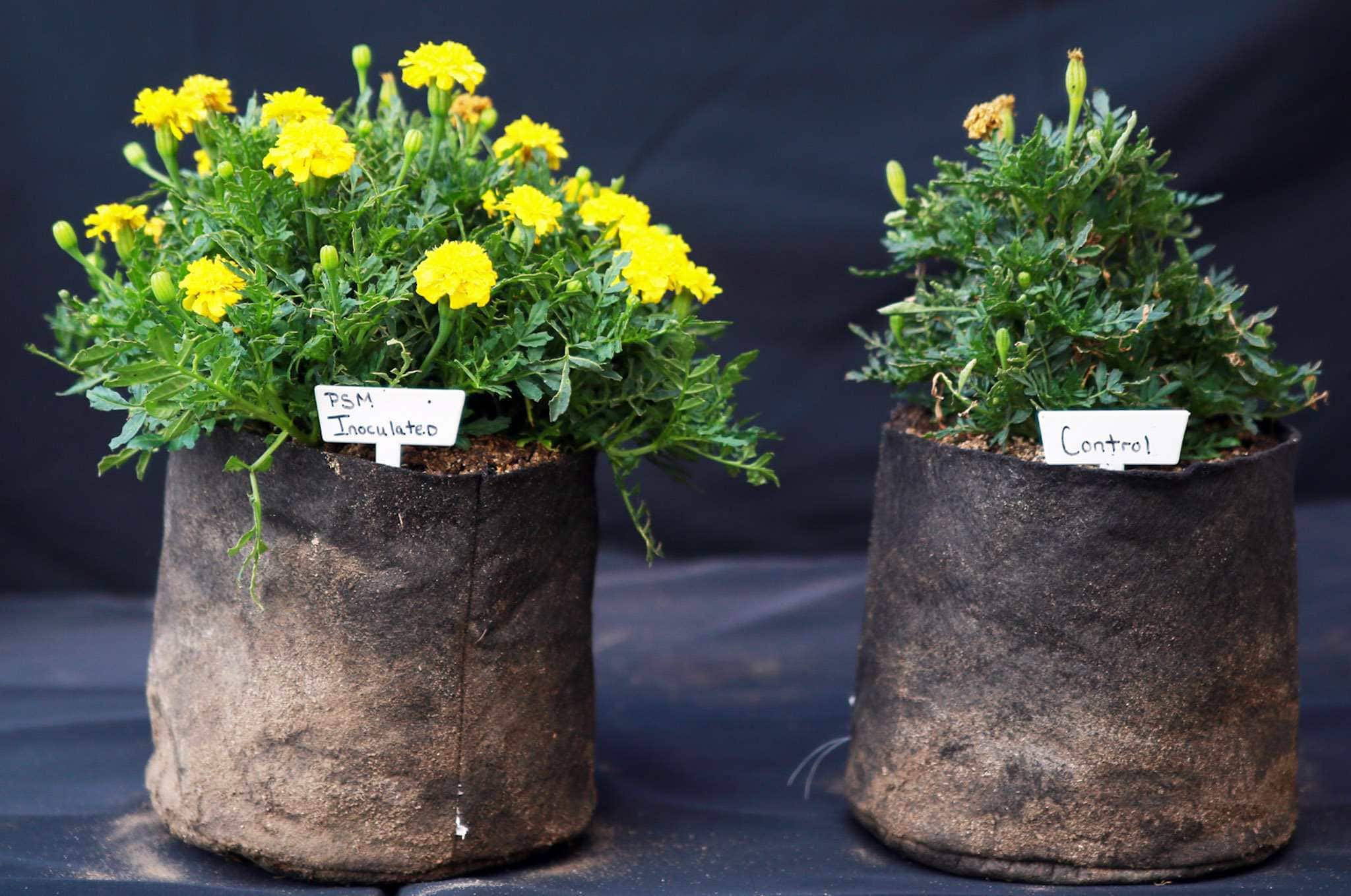
Marigolds inoculated with mycorrhizae (left) versus untreated. Photo: Plant Success Organics
Mycorrhizae play a crucial role in the soil ecosystem of Bloomfield Hills, Michigan,
contributing to plant health and soil fertility. These beneficial fungi form symbiotic relationships with plant roots, enhancing nutrient uptake and improving overall plant growth.
In Bloomfield Hills' soil, arbuscular mycorrhizal fungi are particularly important. These fungi form extensive networks of fine filaments called hyphae that extend far beyond the reach of plant roots, effectively increasing the plant's ability to absorb water and nutrients.
This is especially beneficial in areas with nutrient-poor or drought-prone soils. The presence of mycorrhizae in Bloomfield Hills' soil can significantly impact plant health and ecosystem functioning. These fungi help plants access phosphorus, a critical nutrient that is often limited in soil. By having Owen Tree Service inject mycorrhizae directly into the soils in need and improving phosphorus uptake, mycorrhizae contribute to stronger plant growth and increased resistance to environmental stresses.
Mycorrhizal fungi also play a role in soil structure and carbon sequestration. The extensive hyphal networks help bind soil particles together, improving soil aggregation and water retention. This can be particularly beneficial in urban areas like Bloomfield Hills, where soil compaction and nutrient depletion in the soil may be concerns. For Certified Arborist in Bloomfield Hills, encouraging mycorrhizal fungi in the soil can lead to healthier plants and a reduced need for chemical fertilizers.
When trees and shrubs are planted in an urban environment, the role of mycorrhizae in helping plants cope with environmental stresses becomes increasingly important. These fungi can help landscape plants better deal with drought conditions and the reduced nutrient levels often found in our urban landscapes.