
Tree Trimming
How Snow and Ice Impact Trees and Shrubs in Birmingham
| Feb 09, 2026
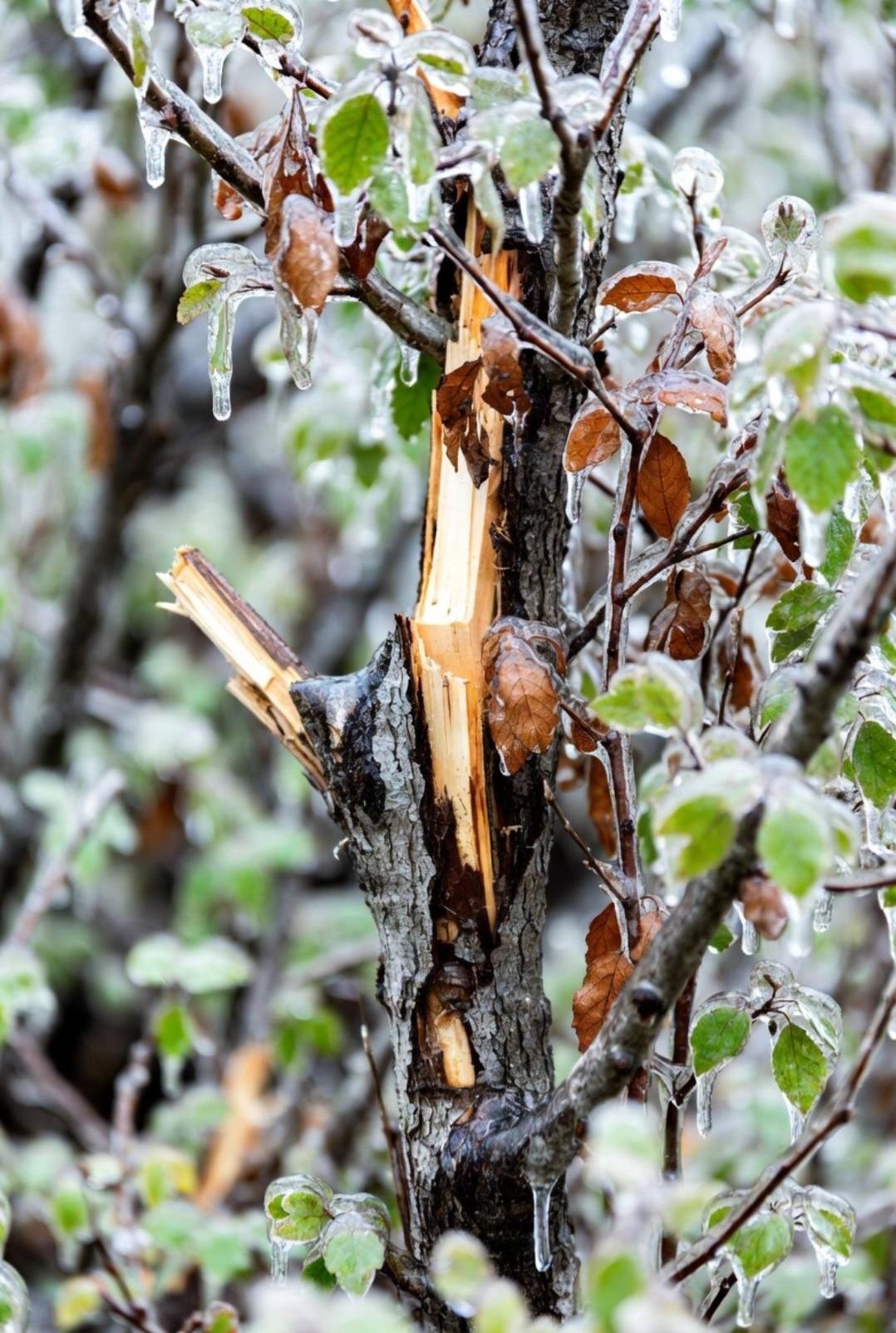
Tree damage from ice storm. | Trisha Boyd, Owen Tree Service
Winter in Birmingham, MI can be harsh on trees and shrubs. Snow accumulation, ice storms, and fluctuating temperatures all place stress on landscape plants, sometimes causing damage that affects both appearance and safety.
Understanding how snow and ice affect trees and shrubs can help Birmingham homeowners spot problems early, respond appropriately, and reduce the risk of long-term damage.
Why Winter Weather Is Hard on Trees and Shrubs
Unlike rain, snow and ice don’t simply run off branches. They linger - and that’s where problems begin.
Heavy Snow Loads
• Wet, compact snow can weigh down branches quickly.
• Trees with spreading or layered branching tend to collect more snow.
• Shrubs often become buried or compressed, especially during repeated storms.
Ice Accumulation
• Ice coats branches evenly, dramatically increasing weight.
• Even small amounts of ice can double or triple the stress on limbs.
• Ice prevents branches from flexing naturally in the wind.
Temperature Swings
• Freeze–thaw cycles cause ice to melt slightly and refreeze, increasing density.
• Rapid temperature changes can weaken already stressed wood.
Plant Structure and Age
• Trees with tight branch angles or previous pruning wounds are more vulnerable.
• Older trees common in Birmingham neighborhoods may have hidden structural issues.
Common Winter Damage Seen Around Birmingham
After major snowfalls or ice events, property owners frequently notice the following types of damage:
Branch Failure
• Limbs snap suddenly under the extra weight.
• Partially broken branches may remain hanging, posing a safety hazard.
Shrub Deformation
• Snow presses shrubs outward or downward.
• Evergreens often appear flattened or uneven after winter.
Canopy Imbalance
• Loss of major limbs can throw off the tree’s natural shape.
• Uneven canopies are more vulnerable to wind and future storms.
Root Stress
• Repeated freezing and thawing can loosen soil.
• Shallow-rooted shrubs may shift or lift slightly from the ground.
Post-Storm Tree and Shrub Check
Once conditions are safe, walk your property and look closely at your plants. Watch for:
• Broken branches on the ground
• Limbs hanging or cracked
• Trees leaning more than before
• Visible splits where branches meet
• Shrubs bent flat or splayed outward
• Exposed roots near shrub bases
If you see branches overhead that look unstable, keep people away from the area until they can be addressed.
What You Should (and Shouldn’t) Do After Snowfall
Safe Snow Removal
For light snow accumulation:
• Use a broom or soft tool to gently brush snow off branches.
• Start at the lower branches and work upward.
• Always brush outward - never pull branches toward you.
Avoid Removing Ice
• Ice bonds tightly to bark and wood.
• Trying to knock it loose often causes cracking or breakage.
• The safest option is to allow ice to melt naturally.
Helping Bent Shrubs
• After snow melts, gently reposition shrubs if possible.
• Stakes or temporary supports may help shrubs regain their shape.
When Pruning Is Necessary
Winter damage often requires pruning, but timing matters.
Best Time for Pruning
• Late winter to early spring is ideal.
• Prune damaged branches as soon as it safe to access the tree.
Smart Pruning Practices
• Remove damaged limbs back to healthy wood.
• Make clean cuts just outside the branch collar.
• Avoid excessive pruning, which can stress trees further.
Call a Professional Arborist When:
• Large limbs are broken or hanging.
• Damage is near homes, sidewalks, or power lines.
• A tree appears unstable or severely unbalanced.
• Multiple major branches have failed.
ISA Certified Arborists can assess structural integrity and recommend pruning, cabling, or other corrective measures.
Reducing Winter Damage Before It Happens
Proactive care goes a long way toward protecting trees and shrubs during Birmingham winters.
Helpful Preventative Steps
• Structural pruning improves branch spacing and strength.
• Avoid topping trees, which creates weak growth.
• Select well-suited plant species for Michigan winters.
• Apply mulch (2 - 4 inches) to protect roots from temperature extremes.
• Install supports for young or ornamental shrubs before snowfall.
Evergreen Care
• Evergreens are especially prone to snow buildup.
• Tying multi-stem shrubs loosely with twine before winter can reduce spreading.
Birmingham-Specific Landscape Considerations
Birmingham properties often feature:
• Mature shade trees close to homes and sidewalks
• Ornamental shrubs near driveways and walkways
• Landscapes exposed to plowed snow and deicing salts
These conditions make regular monitoring especially important. Snow piled from sidewalks or streets can weigh heavily on nearby shrubs, while salt can compound winter stress.
Spring Follow-Up Is Essential
Some winter damage doesn’t show up right away. As spring arrives:
• Inspect trees again for delayed branch failure.
• Watch for dead buds or sections that fail to leaf out.
• Water plants during dry early spring periods.
• Address pest or disease issues entering through damaged wood.
• Schedule any needed corrective pruning early in the season.
Final Thoughts
Snow and ice are unavoidable parts of winter in Birmingham, but serious tree and shrub damage doesn’t have to be. By understanding how winter weather affects your landscape, taking smart post-storm actions, and investing in preventative care, you can keep your trees healthier, safer, and more resilient.
When damage looks significant or safety is a concern, an ISA Certified Arborist is your best resource for protecting both your landscape and your property.