
Landscaping
How To Install New Sod
| Mar 09, 2025
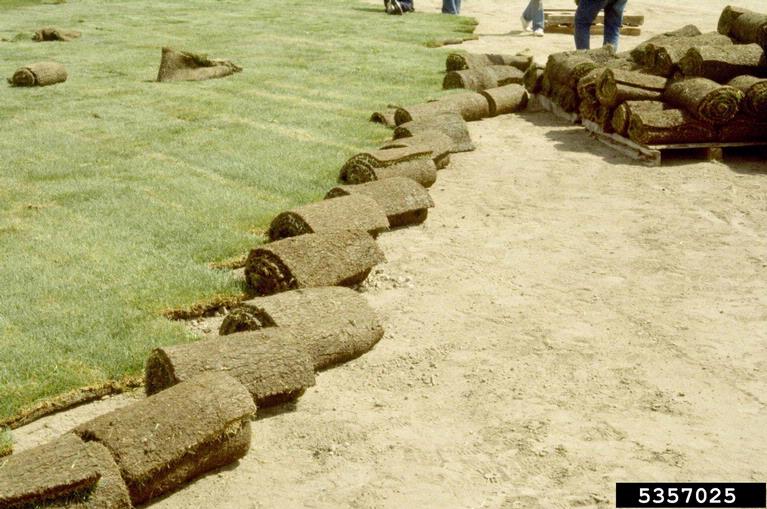
Laying sod for new lawn. Photo: William M. Brown Jr., Bugwood.org
Having a nice, green lawn may seem like it’s not worth it, but there are a lot of benefits to be had. For starters, a nice-looking lawn is going to increase the value of your home simply by improving the curb appeal. Taking an ecological perspective, a 25’ x 25’ square of healthy grass provides enough oxygen for one person to breath all day!
The fastest way to get a nice, green lawn is by installing new sod. If you’re looking to quickly upgrade the appearance of here are some reasons to do so and tips for installing new sod:
Erosion Control
If you have thinning grass on a sloped area it’s going to be difficult to get grass established from seed. One heavy rain and all your efforts are washed down the hill, so to say.
Fewer Weeds
Sod acts as a natural barrier to weeds. You may get some weeds shooting up where pieces of sod meet, but for the most part there will be a lot less weeds to contend with than you would have when seeding.
Improved Curb Appeal
As mentioned earlier, a thick, green lawn is going to improve the curb appeal of your house. This can be accomplished with seeding, too, it will just take a little longer. With sodding the improvement in curb appeal is nearly instant.
Instant Transformation
While there are some benefits to seeding get a new lawn, sod give you instant gratification. As soon as the sodding is done you have a lawn – no waiting weeks for seed to germinate and grow.
Tips for Installing New Sod
Now that we see the reasons and benefits of installing new sod, here are some tips to get it done:
Prepare The Area To Be Sodded
Any existing grass and weeds should be stripped from the lawn. This is usually accomplished with a sod cutter. The sod cutter cuts the old sod in strips which are rolled up and hauled away.
The next step is to loosen up the soil so the roots of the sod can penetrate and get established quickly. Professional landscape companies usually use a Harley rake for this part of the job. This is also the time to level out any low areas and incorporate topsoil or compost into the yard.
Loosening up the soil may bring up some rocks, stones or tree roots to the surface, which you won’t want to lay the new sod on. The rocks can be manually picked up or a tool called a rock hound can be used to get rid of rocks.
Once the old grass is removed, the soil is loosened and any rocks or stones are removed you are ready for the sod.
Choose The Sod
Most sod farms in Michigan grow Kentucky bluegrass sod or a blend of Kentucky bluegrass and ryegrass. This type of grass is suitable for sunny areas of your lawn. A select few sod farms offer fine fescue sod which is better for shady lawn areas.
Sod Installation
The correct way to lay sod is in a brickwork pattern. Staggering the seams of each row is the best way to avoid gaps and not have any washouts from a heavy rain. All edges should be butted tightly together. If a sloped area needs to be sodded wooden pegs can be used to keep the sod in place to give the roots time to anchor into the ground.
As soon as the sodding is completed it should be watered. You will want to make sure enough water is applied to thoroughly moisten each piece of sod and the soil, but not enough that the soil underneath becomes waterlogged. Peel back a few random areas to get an idea of the right amount of time to water each area of new sod.
Watering and Maintenance
The new sod is going to need consistent moisture to keep the sod from drying out and to get new roots growing. The sod should be watered once or twice a day for the first couple weeks, depending on the temperature and any natural rainfall that occurs. Once again, you want to keep the sod and the soil underneath it moist, but not waterlogged.
After a couple weeks the amount of watering can be tapered to once every other day – depending on temperature and rainfall.
Avoid foot traffic on new sod as much as possible for the first 3-4 after installation. Mowing can be started 2-3 weeks after installation, but check some random areas in the lawn to make sure the sod is fully rooted.
5. Fertilization Of New Sod
Fertilization and weed control treatments can be started after the sod has been in for 5 - 6 weeks.
Sod installation can be a quick and effective solution to revitalize a thinning lawn or for getting a brand new lawn established quickly. Following these tips for sod installation should get your new lawn off to a good start.