
Owen Tree Services - Resources
Japanese Beetle
A voracious feeder, the Japanese beetle is known to feed on more than 400 different species of plants. Landscape plants most commonly attacked by Japanese beetle in Michigan include:
- Cherry
- Crabapple
- ElmHorse-chestnut
- Japanese maple
- Littleleaf Linden
- Mountain-ash
- Norway maple
- Pin oak
- Plum
- Rose
- Rose-of-sharon
- Sand cherry
- Sycamore
- Willow
Adult Japanese beetles are skeletonizers – which means they eat the leaf tissue between the veins of the leaves. The beetles send out scent molecules called pheromones, which attracts additional Japanese beetles to the plant. Trees or shrubs with heavy Japanese beetle feeding damage will have a brownish appearance when viewed from a distance. The larvae of Japanese beetles are root feeders which, although they will feed on tree roots, can cause substantial damage to turfgrass.
Japanese beetles overwinter as grubs, deep in the soil. In April the grubs move to the upper level of the soil and do a little bit of feeding on roots. Japanese beetle adults emerge from the soil in late June through mid-July and begin feeding on trees and shrubs. Mating begins within a day or two of adult emergence and each female will lay 40 to 60 eggs. Grubs usually start hatching around mid-August and will feed on turf and tree roots until the first heavy frost.
JAPANESE BEETLE CONTROL
Japanese beetles can be controlled with either tree spraying or soil injected insecticides, or a combination of both. It is unlikely that one tree spraying treatment will provide adequate control. Usually a series of two or three Japanese beetle sprays are recommended.
If there is a lot of Japanese beetle activity on your trees or shrubs you may also want to consider have a grub control treatment for the lawn. Japanese beetle grubs can cause significant damage to grass roots during the time of the season when the lawn is under the highest amount of drought stress.
Japanese beetle traps are not recommended for prevent or minimize feeding damage to your trees or shrubs. Although, these devices will trap Japanese beetles they also serve to attract additional beetles to your property that might not have shown up if no traps were put out. If you feel the need to use Japanese beetle traps they should be placed as far as possible from susceptible trees or shrubs in order to minimize any feeding damage to your plants.
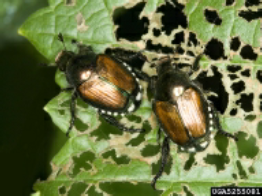
Japanese beetles feeding
Photo: David Cappaert, Michigan State University, Bugwood.org
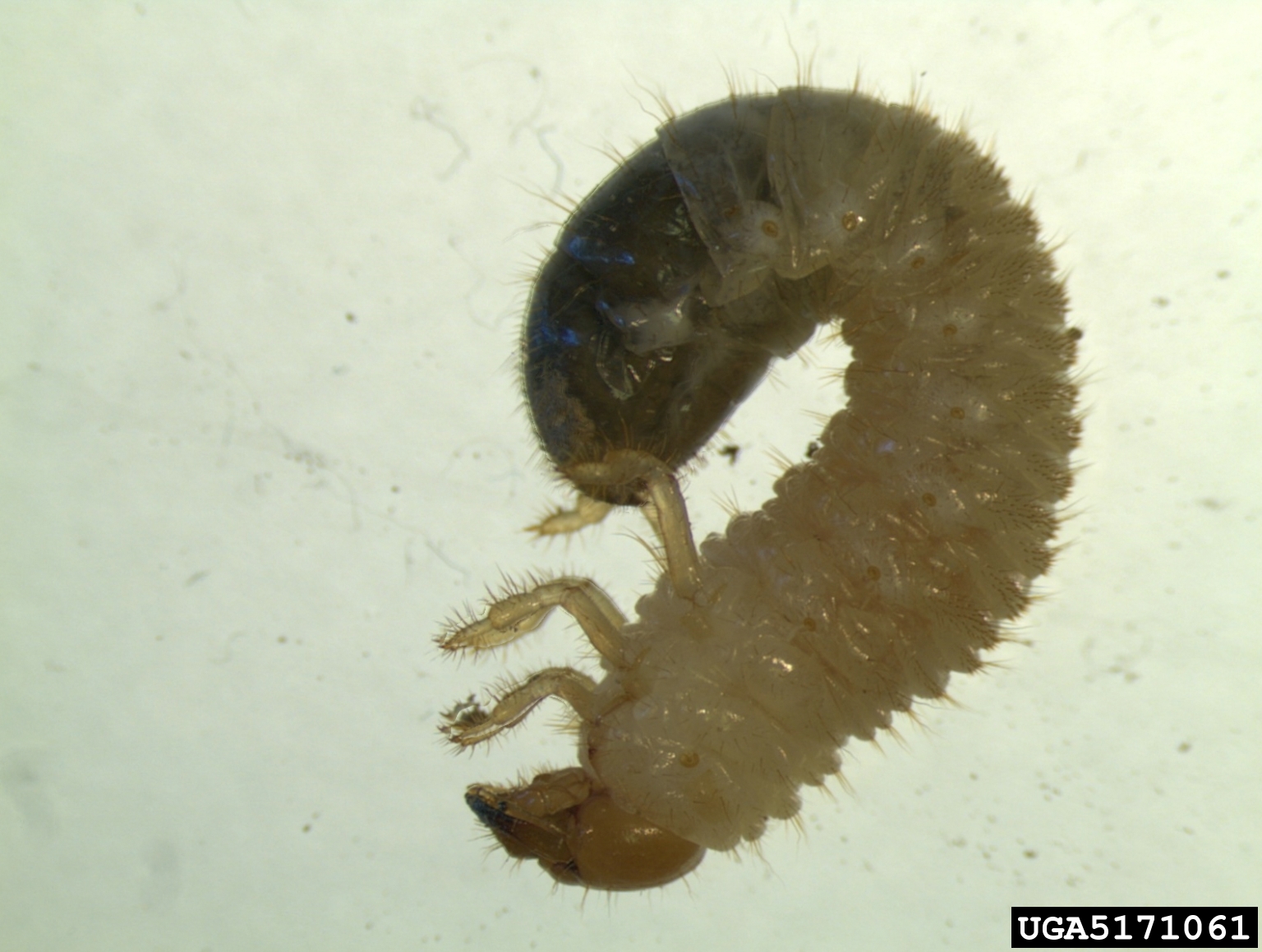
Japanese beetle grub
Mike Reding & Betsy Anderson, USDA Agricultural Research Service, Bugwood.org
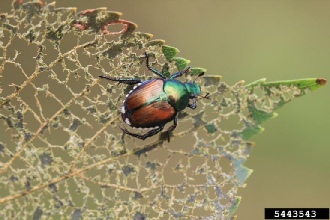
Japanese beetle on linden leaf Photo: Steven Katovich USDA Forest Service Bugwood.org
Counties we Serve
Owen Tree Service is affiliated with the following tree care industry organizations


What Our Customers Are Saying
Dean Hartman - Berrien County Drain Commission
Owen Tree Service provided a great value and service to our community. They helped us complete a difficult task of approximately 50 miles of needed treatment almost seamlessly. They were very easy to work with, followed and complimented our directive well. The owners along the areas that were serviced, passed on very nice regards for their team. We were very impressed with Owen Tree Service (as well as the community) and look forward to using their services again this coming year and beyond.
Brandon Rowley
Professionalism
Great people and they always do a nice job. We have used Owen Tree Service for years for various things like tree trimming and lawn care.
Andrew Lapeer
I hired Owen to do a tree removal and some pruning for me. Extremely happy with the care they used on my property. I am also using them for my lawn fertilization this year. Arborist seems very knowledgeable.
New Item
Tonia Burns
Responsiveness, Professionalism
Called about having a 17ft tree placed in our yard. Received a call back from Trish you was incredibly gracious with her time and information. Unfortunately, trees that are over 6ft can't be planted by them. However, Trish gave me more than enough info to be confident about having a tree of that sized planted. I'd definitely call and use them for any other future services.
Gayle Rickert
Responsiveness, Punctuality, Quality, Professionalism
Trish did an exceptional job of assessing the tree removal, trimming, diseased/dead trees, and brush removal on our property. She explained the processes clearly and in detail. Trish is an extremely knowledgeable arborist. I highly recommend her to give a comprehensive review & estimate of your landscape needs.