
Plant Health Care
Japanese Beetle Damage on Marysville Landscape Plants
| Jul 20, 2025
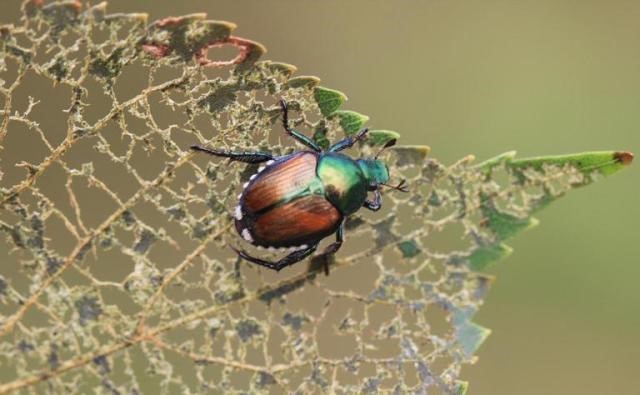
Japanese Beetle adult on littleleaf linden. Photo: Steven Katovich USDA Forest Service Bugwood.org
Many Marysville, Michigan's landscapes are facing an increasing challenge from Japanese beetles this summer. Japanese Beetles are an invasive insect pest that can wreak havoc on both trees and shrubs commonly found in many landscape plantings. These metallic green insects with copper-colored wings emerge as early as late-June and remain active through August, posing a significant threat trees and shrubs.
Japanese beetles have a voracious appetite, feeding on over 300 different plant species. In Marysville, some of their favorite targets include:
• Maple trees
• Birch trees
• Crabapples
• Cherry trees
• Linden trees
• Roses
The damage caused by Japanese beetles is distinctive and alarming. Adult Japanese beetles skeletonize leaves by consuming the tissue between the veins, leaving behind a lacy appearance. Severe infestations can lead to complete defoliation, weakening trees and making them more susceptible to other insect or disease issues.
To protect your landscape plants from Japanese beetles, several management strategies are available:
1. Regular monitoring, especially during peak activity from June through August
2. Hand-picking beetles in the early morning when they're less active
3. Using beetle-resistant tree species for new plantings
4. Applying carefully timed insecticide treatments to susceptible plants
Tree and shrub spraying is effective, but reinfestation may occur once the spray has had time to wear off the plant, meaning multiple applications may be necessary. The use of pheromone traps is also an option but place them away from the landscape plants you’re trying to protect. This draws the beetles away from your susceptible plants.
Keep in mind, too, that the larvae of Japanese beetles are grubs that will feed on grass roots from August through mid-October. So, if you find a lot of Japanese beetles on your landscape plants you may also want to think about doing a grub control treatment on your lawn.