
Insect Pests
Magnolia Scale: A Growing Concern for Homeowners in Davison, Michigan
| May 16, 2025

Adult stage Magnolia scale. | Whitney Cranshaw, Colorado State Univ., Bugwood.org
Magnolia trees are a unique specimen tree in many yards and in Davison. Known for their breathtaking flowers, they are a standout feature in residential and commercial landscapes. However, homeowners may face challenges in maintaining the health of these stunning trees due to a pest called magnolia scale.
What is Magnolia Scale?
Magnolia scale (Neolecanium cornuparvum) is a large, immobile insect that infests magnolia trees, especially in areas like Davison. These insects are oval or circular in shape, measuring up to 0.5 inches in diameter, and are typically light yellow-brown with a dark, waxy covering. The adult scales attach themselves to the branches, stems, and twigs, where they feed on the tree’s sap. This feeding weakens the tree, causing significant damage over time.
Symptoms of Magnolia Scale Infestation
While magnolia scale may not be immediately obvious, one of the first signs of infestation is the appearance of white, waxy spots on the tree’s branches and limbs. As the scales mature, the waxy covering becomes more noticeable, and the insects themselves become visible. Trees with heavy infestations may exhibit symptoms such as:
• Yellowing leaves or early leaf drop
• Stunted growth and lack of vigor
• Black, sooty mold growth from the honeydew secreted by the scales
• Weakened limbs and branch dieback
Without prompt treatment, magnolia scale can lead to severe damage, weakening the tree and potentially causing its death if left unchecked.
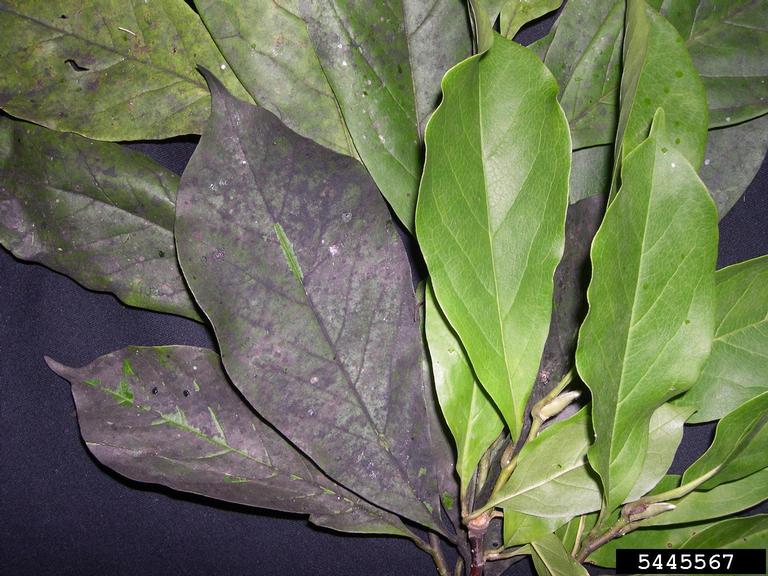
Sooty mold on magnolia leaves caused by magnolia scale. | Sarah Vanek, Bugwood.org
How Certified Arborists Can Help Control Magnolia Scale
Addressing magnolia scale requires a professional approach, as DIY treatments often fail to provide effective control. ISA Certified Arborists possess the expertise to manage and eradicate this pest. Here's how they tackle magnolia scale:
1. Early Detection: Certified arborists are skilled at identifying the early warning signs of magnolia scale. Timely intervention can minimize damage and preserve the health of the tree.
2. Tree Health Maintenance: Magnolia scale siphons essential nutrients and water from the tree, so proper watering and fertilization are critical for maintaining a strong, healthy tree.
3. Insecticide Treatments: Eradicating magnolia scale is challenging but achievable with the right insecticide applications, especially during the crawler (nymph) stage when the pest is most vulnerable.
4. Pruning: In cases of severe infestation, pruning heavily infested branches can help stop the spread of the pest to other parts of the tree, preventing further damage.
5. Ongoing Monitoring: Magnolia scale often requires multiple treatments over several years. Certified arborists provide regular monitoring to ensure the tree remains protected from reinfestation.
Magnolia scale is a growing problem for homeowners in Davison, Michigan. However, with the help of an ISA Certified Arborist, this pest can be managed and controlled effectively. By early detection and the properly timed treatments, magnolia trees can continue to thrive, providing a beautiful focal point in your landscape.
If you suspect magnolia scale on your tree, don’t hesitate to contact a certified arborist who can help you protect and maintain the health of your magnolia for years to come.