
Tree Spraying
Managing Lophidermium Needlecast on Landscape Trees
| Oct 05, 2025
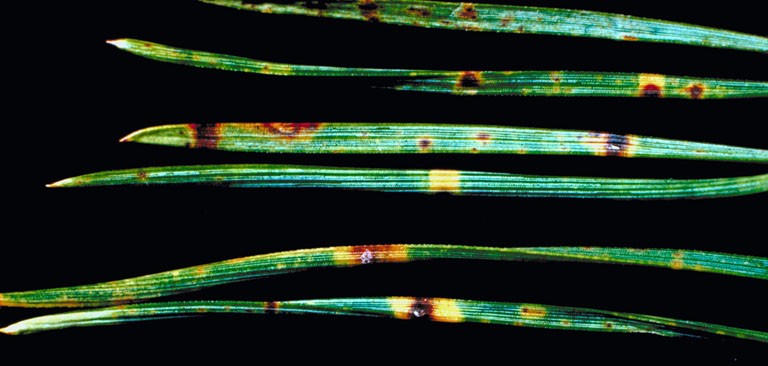
Lophodermium needlecast fruiting bodies on pine needles. | USDA Forest Service , USDA Forest Service, Bugwood.org
Lophidermium is a genus of fungi best known for causing needlecast diseases on pines and other conifers. While often studied for its ecological roles in forests, this fungus presents a significant challenge in landscaped settings, where aesthetics, tree vigor, and long-term growth are key concerns.
Symptoms and Impact of Lophidermium Needlecast
Trees infected with Lophidermium typically show premature needle yellowing and drop, thinning of foliage, and overall decline in appearance. Severe infections can weaken trees, leaving them more susceptible to drought, pests, and additional pathogens. In managed landscapes, repeated defoliation reduces not only tree vitality but also property value and curb appeal.
Cultural Control Strategies
Because needlecast fungi thrive in moist, crowded conditions, cultural practices play a central role in management. Here’s how to reduce Lophidermium Needlecast in your landscape:
• Increase air circulation: Space trees appropriately and thin surrounding vegetation to reduce humidity around susceptible conifers.
• Improve water practices: Avoid overhead irrigation, which wets needles and promotes fungal spread. Instead, use drip irrigation or water at the base of trees.
• Clean up fallen needles: Lophidermium overwinters on infected litter. Rake and remove dropped needles to reduce inoculum for the following year.
• Select resistant species and cultivars: When planting, choose conifer varieties less prone to needlecast where possible.
• Maintain tree vigor: Deep-root fertilization will ensure adequate nutrients are available which will help trees withstand stress and recover more quickly.
• Mulching: Adding mulch under trees will enhance overall tree health and will cover fallen needles, which is where spores will come from that will infect new needles.
Fungicide Treatments for Lophidermium Needlecast
While cultural controls are the foundation of management, fungicide applications may be needed in high-value landscapes or during severe outbreaks.
• Timing is critical: Unlike most foliar diseases, preventive treatments are most effective when applied from July to October. Three to four treatments should be applied.
• Coverage is essential: Thorough spraying of the entire tree canopy ensures protection, since Lophidermium spores are dispersed by rain splash.
Integrated Management
Long-term control of Lophidermium Needlecast relies on a combination of cultural and chemical methods. Good site selection, proper spacing, sanitation, and resistant species reduce disease pressure significantly, while fungicides provide extra protection for trees with high ornamental or economic value.
By balancing these strategies, property owners and landscape managers can maintain healthy, vigorous conifers while minimizing the impact of needlecast diseases caused by Lophidermium. Call Owen Tree & Lawn Care today to have our arborists tailor a management plan to control Lophidermium on your landscape trees.