
Plant Health Care
Managing Scale Insects in Casco Township, MI
| Aug 21, 2025
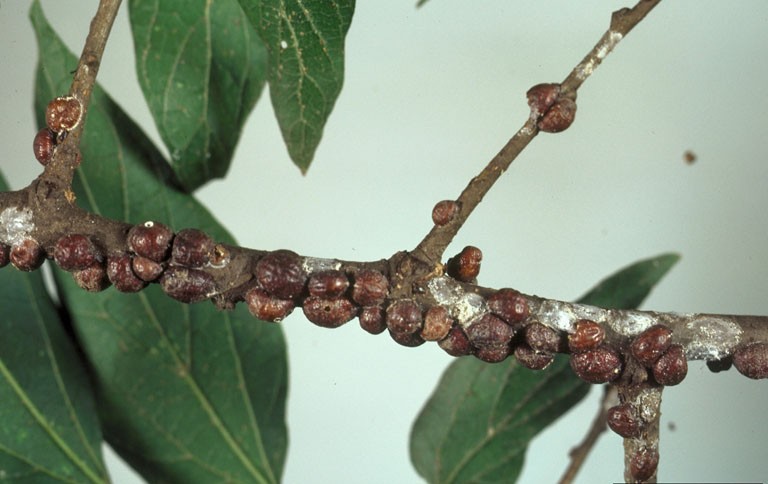
Lecanium scale insects on branch. | James Solomon, USDA Forest Service, Bugwood.org
Scale insects are a common pest in Casco Township, posing a significant threat to the health of your trees, shrubs, and garden plants. These tiny insects, part of the Coccoidea superfamily, can infest a wide range of plant species, which is why early detection and proper management are important in maintaining a healthy landscape.
Identifying Scale Insects
There are two main types of scale insects: armored scales and soft scales. Armored scales, such as Euonymus scale, are covered by a tough, protective shell, while soft scales, like the Cottony Maple scale, have a waxy coating. Both types attach themselves to plants and remain stationary for most of their life, often blending into the plant surface, making them difficult to detect. Adult scale insects are typically between 1/16 and 1/8 inch in size, with mature females being the most harmful due to their heavy feeding on plant sap.
Damage Caused by Scale Insects
Scale insects feed on plant sap, weakening the plant over time. Signs of damage include yellowing leaves, stunted growth, and even plant dieback in severe cases. These pests also produce honeydew, a sticky substance that attracts ants and fosters the growth of sooty mold, a black fungus that can further harm plant health.
In Casco Township, trees such as maples, oaks, and magnolias are especially vulnerable to scale infestations. These pests are hardy and can survive through Michigan’s harsh winters, making them an annual concern for homeowners.
Managing Scale Insects
The key to managing scale insects is regular monitoring. Inspect your plants, particularly during the growing season, for signs of infestation. If you find infested branches, prune and dispose of them, if practical, to prevent the pests from spreading to other parts of your landscape.
For larger infestations, horticultural oils or insecticidal soaps can be effective, especially when applied during the crawler stage of the scale insects' life cycle. These treatments work by suffocating the insects. In some cases, systemic insecticides may be used but they must be applied in advance of expected scale feeding activity. Spraying trees or shrubs is the most commonly used method to control scale infestations.
Preventing Scale Insect Infestations
The best defense against scale insects is to keep your plants healthy. In Casco Township, providing your plants with proper care—such as regular watering, mulching, and fertilizing—helps them resist pest infestations. Healthy plants are better equipped to handle pests and recover from minor damage.
If you suspect scale insects are affecting your plants, consult a local arborist for advice and treatment options tailored to your specific landscape.
By taking preventive measures and responding quickly to infestations, residents of Casco Township can protect their landscapes and keep their trees and shrubs healthy throughout all four of Michigan’s seasons.