
General
Marcescence
| Dec 15, 2025
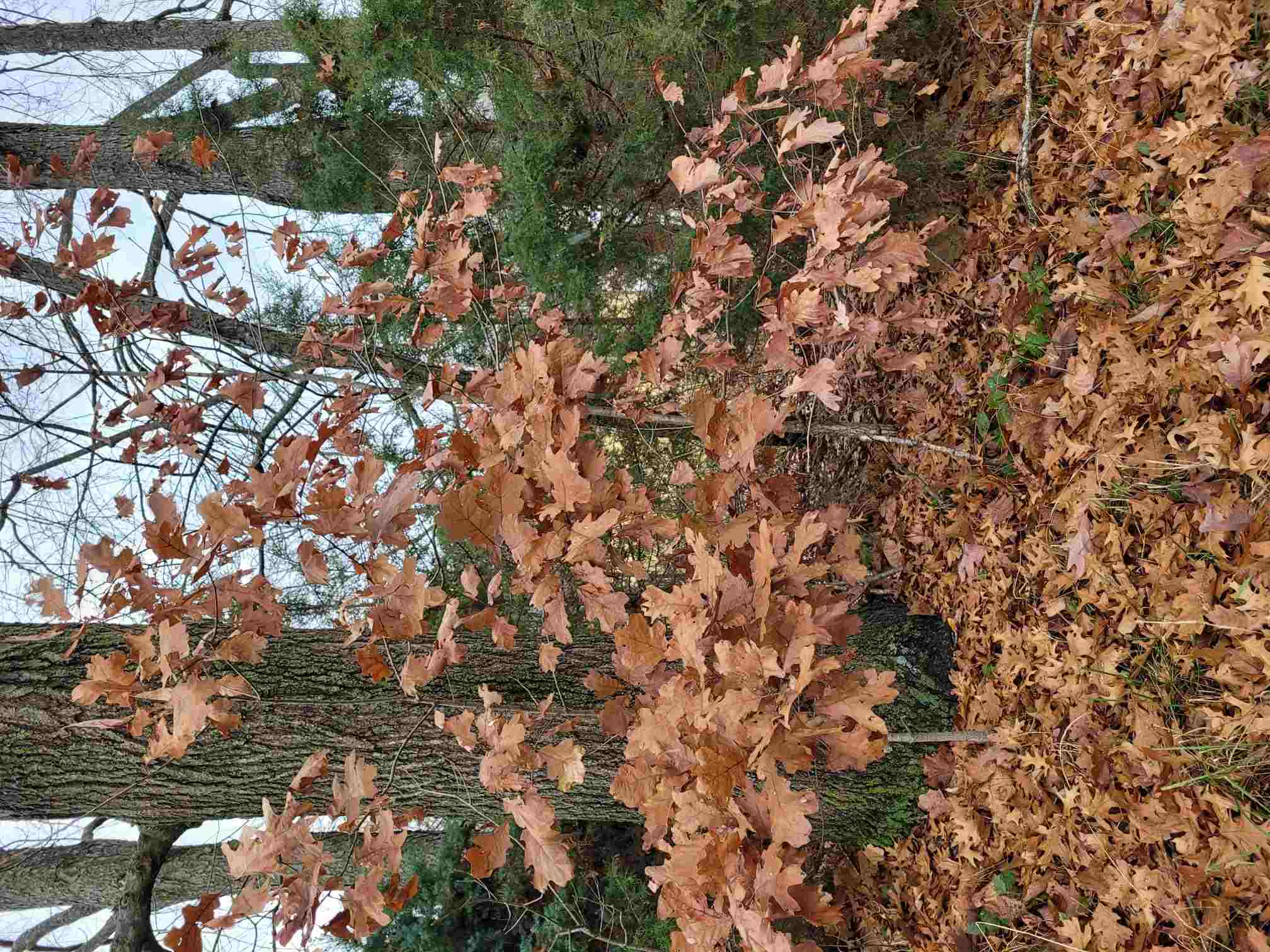
Oak tree holding leaves in late November. | Tom Morgan, Owen Tree Service
When autumn arrives, most of us picture a familiar sight: deciduous trees transitioning from green to brilliant shades of red, orange, and yellow before finally dropping their leaves. Yet in many forests, landscapes, and neighborhoods, certain trees break that pattern. Oaks, beeches, and a handful of other species often hold onto their brown, papery leaves long after their neighbors have shed theirs. This unusual phenomenon is called marcescence, a botanical term referring to dead plant material that remains attached instead of naturally falling away.
Although it may look like a seasonal quirk, marcescence is a scientifically recognized and well-studied behavior. Research from several universities and extension services—including Kansas State University, University of Illinois Extension, Penn State Extension, and others—has documented both the physiological reasons for marcescence and the ecological advantages it may provide. Understanding marcescence helps explain why our winter woods often still carry a rustling coat of leaves and why some species never follow the typical deciduous script.
What Is Marcescence?
Marcescence occurs when a tree fails to fully form an abscission layer, the specialized zone of cells where a leaf detaches from the twig. Normally, as days shorten and temperatures cool, deciduous trees produce this abscission layer at the base of each leaf stem. Once completed, wind and weather easily break the connection and leaves fall away.
However, in marcescent trees—especially oaks (Quercus spp), American beech (Fagus grandifolia), and young trees of many hardwood species—the abscission layer never fully develops. According to the University of Illinois Extension, this causes leaves to remain attached throughout winter until mechanical forces like wind, snow, or new spring growth finally push them off.
This is why marcescent leaves often drop in mid-winter storms or fall all at once when buds begin to swell in early spring.
Why Doesn’t the Abscission Layer Form?
Several university sources point to two primary explanations: species-specific traits and environmental conditions.
1. Species Traits (Natural Marcescence)
Some species are genetically predisposed to partial or complete marcescence.
• University of Illinois Extension notes that oaks and beeches often retain leaves every year, especially in young trees or on the lower branches of mature ones.
• Penn State Extension further explains that this trait is strongest in juvenile growth, which is why saplings look especially “leafy” in winter compared to taller mature trees whose upper canopies shed leaves more normally.
This type of marcescence is normal, predictable, and part of the species’ life strategy.
2. Environmental Conditions (Induced Marcescence)
Other times, marcescence is caused by unusual weather.
A bulletin from Kansas State University Research & Extension (2023) emphasizes that an early freeze can interrupt the formation of the abscission layer. When temperatures drop sharply before the tree has completed its fall processes, leaves essentially become stuck.
This induced marcescence may affect species that don’t normally hold leaves—and can vary widely from year to year depending on climate. The fall droughts in Southeast Michigan in 2024 and 2025 have seemed to increase marcescence.
Why Would a Tree Keep Its Leaves?
Researchers and university botanists still debate the evolutionary advantages of marcescence, but several leading theories have emerged from extension bulletins and academic sources:
1. Nutrient Cycling Advantage
One hypothesis, discussed by the University of Illinois Extension, proposes that keeping leaves through winter allows trees to drop them in spring, when the nutrients released from decomposing leaves benefit the tree at a more active time of growth. This could be especially advantageous in nutrient-poor soils.
2. Moisture Conservation
Another theory is that retained leaves help trap snow around the base of young trees, increasing soil moisture availability in spring. Penn State Extension has referenced this idea, suggesting that marcescence may provide subtle but meaningful hydration benefits.
3. Herbivore Protection
Some botanists believe marcescence might deter winter browsing by deer or other herbivores. Young oak or beech branches with dry, papery leaves may be less palatable, making them harder for animals to eat. Both University of Illinois Extension and Penn State discussions include this as a potential adaptive advantage.
4. Protection for Buds and Twigs
Dead leaves may act as a physical buffer, reducing desiccation and shielding tender buds from winter winds. While research is still ongoing, university botanists cite this as a plausible benefit.
Why Is Marcescence More Common in Young Trees?
Nearly every university source agrees on this point: marcescence is most common in juvenile trees. As trees age and gain height, the trait diminishes, especially in upper branches.
Possible reasons include:
• Young trees benefit more from the potential protection and nutrient advantages.
• Smaller trees have different growth rhythms and may complete abscission later.
• Lower branches on tall mature trees often behave more like juveniles.
This pattern explains why saplings in forests often appear fully clothed in winter while towering mature oaks do not.
How Weather Influences Marcescence
Weather conditions can dramatically alter the degree of leaf retention.
According to Kansas State University’s 2023 horticulture bulletin, marcescence becomes widespread in years when temperatures drop rapidly—before trees complete the chemical process that triggers leaf separation. In such years, species that usually shed leaves cleanly (maples, ashes, etc.) may suddenly display marcescent behavior.
University experts note that:
• Early fall freezes → more marcescence
• Gradual cooling → normal abscission
• Drought stress → can also disrupt abscission layer formation
Thus, marcescence can serve as an indicator of how seasonal weather affects trees.
Is Marcescence Harmful?
University extension bulletins consistently emphasize that marcescence is not harmful to the tree. Retained leaves rarely cause damage, and the tree will shed them naturally by spring. The only notable issue is aesthetic—some property owners find the brown leaves unsightly.
However, in snowy climates, the retained leaves may catch snow and cause small branches to bend or break. Extension sources consider this minor and not a threat to the tree’s overall health.
The Bottom Line
Marcescence is one of the many fascinating quirks of deciduous trees, something you’ll notice once you begin to look for it. Whether it’s naturally occurring in species like oaks and beeches or triggered by an early freeze, the retention of dead leaves offers insights into both tree physiology and environmental influences.
As the research shows—from the University of Illinois Extension, Kansas State University, and Penn State Extension—marcescence is not merely a seasonal oddity. It’s a complex interaction of genetics, weather, ecological strategy, and tree development.
So, the next time you see papery leaves clinging to branches in the middle of January, you’ll know you’re witnessing a remarkable botanical adaptation that scientists are still studying today.