
Plant Health Care
Methods to Control Apple Scab Disease
| Jan 23, 2025
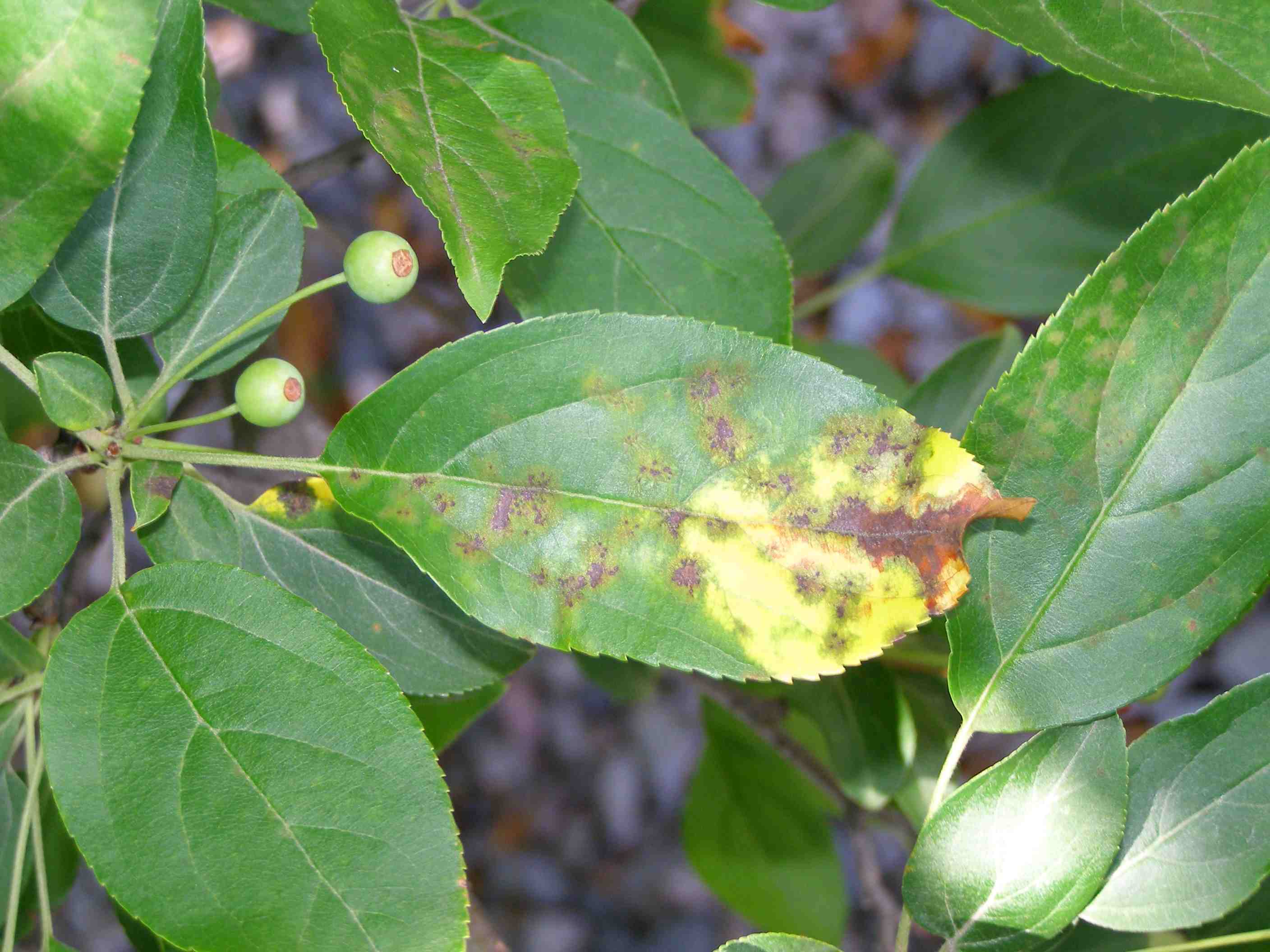
Apple Scab spots on leaf
Apple scab, in Farmington Hills, caused by the fungus Venturia inaequalis, is a significant disease affecting apples and crabapple tree leaves. This persistent fungal infection can lead to substantial leaf loss by the end of July. The success in Owen Tree Service controlling apple scab varies depending on several factors:
Effective Control Measures
1. Preventive Fungicide Applications: Timely application of protectant fungicides, especially during the critical period from bud break to two weeks post-bloom, can significantly reduce primary infections.
2. Sanitation Practices: Raking and disposing of fallen leaves and fruit, particularly before winter, can greatly reduce the overwintering inoculum in your landscape.
3. Resistant Varieties: Planting scab-resistant crabapple cultivars which can eliminate or reduce the need for fungicide applications.
Challenges in Control
1. Weather Conditions: Cool, wet spring weather favors disease development, making control more difficult when these conditions persist in April and early May.
2. Fungicide Resistance: The apple scab fungus is prone to developing resistance to fungicides, necessitating careful management and rotation of chemical groups.
3. Timing of Interventions: Effective control relies heavily on preventing primary infections early in the growing season. Missing this critical window can lead to uncontrollable secondary infections.
4. Inoculum Pressure: High levels of overwintering inoculum from previous infections can overwhelm fungicide control measures.
While apple scab control can be effectively managed with a combination of cultural practices, resistant crabapple varieties, and well-timed fungicide applications, success is not guaranteed. Factors such as weather, fungicide resistance, and landscape management practices play a role in determining the outcome of control efforts.