
Organic Mulch
Organic Mulch and Temperature Regulation in Macomb County Landscapes
| Dec 26, 2025
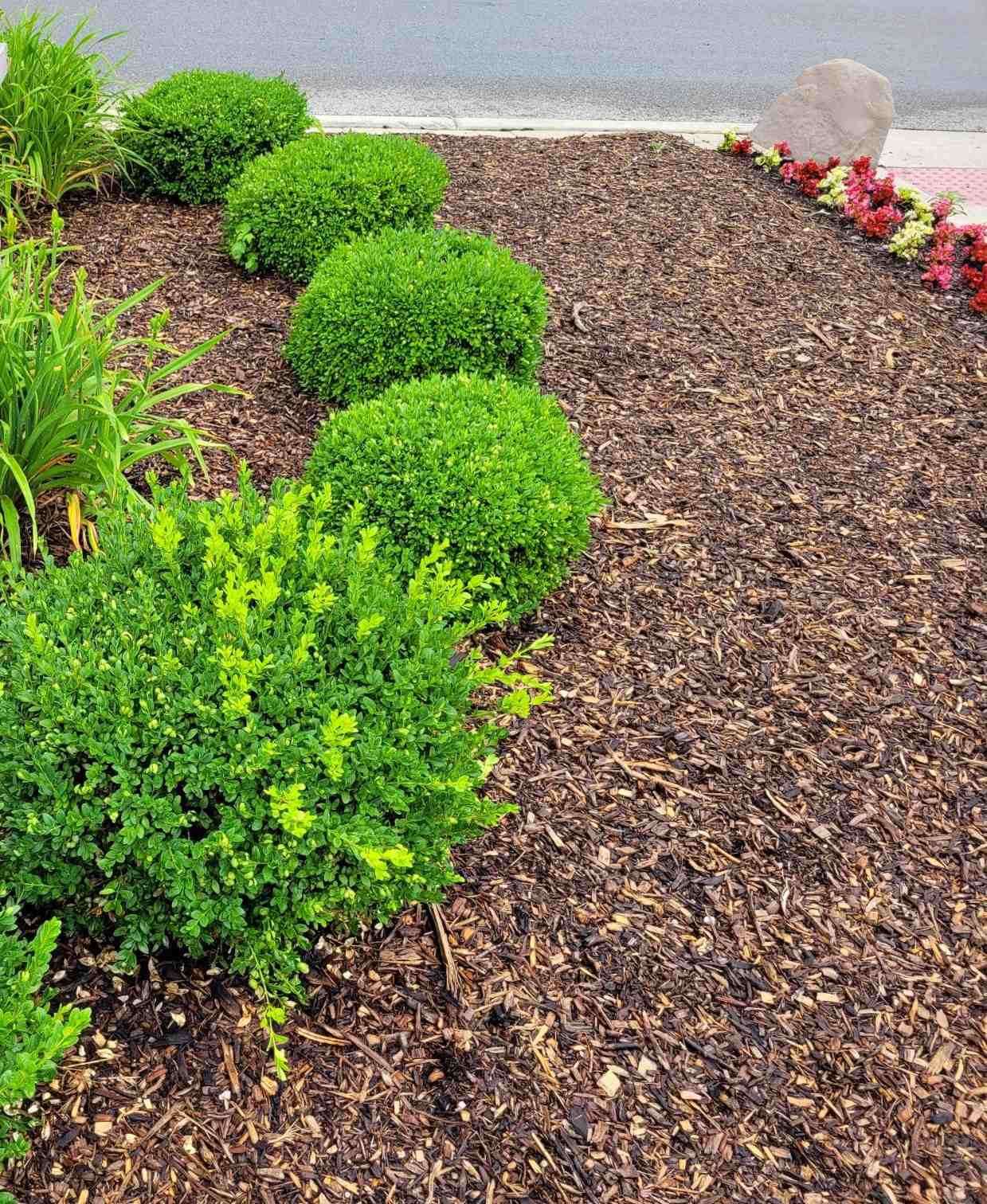
Freshly mulched boxwood shrubs. | Tom Morgan, Owen Tree & Lawn Care
Organic mulch plays a crucial role in temperature regulation for gardens and landscapes in Macomb County, Michigan, where seasonal temperature extremes can challenge plant health.
By acting as a natural insulator, organic mulch helps stabilize soil temperatures, benefiting plants year-round. In summer, organic mulch such as wood chips, straw, or shredded leaves reduce soil temperatures by shading the surface and minimizing heat absorption. Studies by Michigan State University (MSU) have shown that 3 inches of wood chip mulch can lower midday soil temperatures by up to 18°F compared to bare soil. This cooling effect protects plant roots from heat stress and reduces moisture evaporation, ensuring healthier growth during hot months.
Conversely, in Michigan’s cold winters, mulch acts as an insulating layer that prevents rapid soil temperature fluctuations. This is particularly important for safeguarding plant roots against frost damage and maintaining consistent microbial activity in the soil. Stable temperatures also reduce the risk of premature freezing and thawing cycles that can harm root systems.
Additionally, organic mulches gradually decompose, enriching the soil with nutrients like potassium, magnesium, and calcium. This process enhances soil fertility while improving its structure and water retention capacity.
Mulch also prevents erosion by anchoring soil particles and reducing water runoff, which is essential given Michigan’s propensity for heavy summer thunder storms.
To maximize these benefits, homeowners in Macomb County should apply a 2-3 inch layer of organic mulch around plants and trees. Popular options include wood chips for landscaping and straw for vegetable gardens.
Proper mulching not only regulates soil temperatures but also supports sustainable gardening practices by reducing watering needs, controlling weeds, and promoting overall plant health.