
Tree Insects
Overwintering Insects on Trees and Shrubs in Macomb County
| Dec 10, 2025
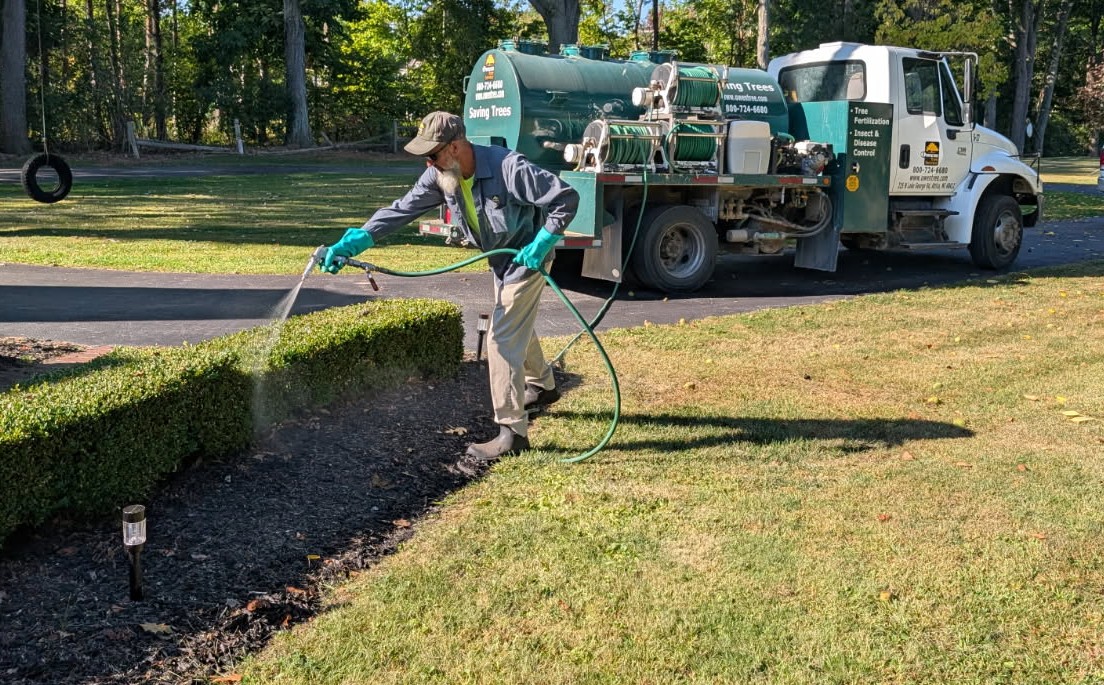
Spraying Boxwood shrubs. | Brad Dunkin, Owen Tree & Lawn Care
As winter settles over Macomb County, many homeowners assume their trees and shrubs finally get a break from insect activity. While above-ground movement slows, many destructive insects remain alive, hidden under bark, nestled in buds, or secured in egg masses that will hatch as soon as temperatures rise. These are known as overwintering insects, and they pose a significant threat to ornamental landscapes, fruit trees, evergreens, and shrubs throughout southeastern Michigan.
At Owen Tree Service, our ISA Certified Arborists understand the seasonal cycles of local pests and know just how important fall and early spring are for controlling their populations. Overwintering insects are easiest to manage when dormant and addressing them before they hatch or resume feeding protects the health, vigor, and appearance of your landscape throughout the growing season.
What Are Overwintering Insects?
Overwintering insects are pests that survive winter by entering a dormant or sheltered state in one of their life stages of egg, larva, nymph, or adults. Instead of dying off in freezing temperatures, they protect themselves using the structure of the host plant, surrounding debris, or insulated bark layers.
Common overwintering strategies include:
• Eggs laid on branches, buds, or trunk surfaces
• Nymphs hiding in bark crevices
• Larvae protected inside cocoons or silk webbing
• Adults burrowed under leaf litter or within evergreen foliage
• Scale insects attached tightly to twigs for the winter
Once warmer temperatures return in spring, these pests become active and often in large numbers right when trees are pushing out new, tender growth.
Why Overwintering Insects Matter in Macomb County
Macomb County’s climate plays a major role in the survival of these pests. Michigan winters are cold, but not consistently cold enough to kill insects outright. Snow cover, mulched landscapes, dense branching, and microclimates around homes provide insulation that helps pests survive with ease.
Overwintering insects can:
• Feed in early spring, damaging buds and young leaves
• Multiply rapidly, overwhelming the tree by summer
• Weaken trees by removing sap and nutrients
• Cause leaf drop, thinning canopies, and dieback
• Increase susceptibility to disease
Without dormant-season management, the damage accumulates year after year, leading to chronic decline.
Common Overwintering Insects in Macomb County
1. Scale Insects
Scale is one of the most common overwintering pests in southeastern Michigan. Magnolia scale, oystershell scale, pine needle scale, and lecanium scale all survive winter as eggs or immature nymphs.
Scale insects weaken trees by sucking out sap, often causing:
• Yellowing foliage
• Stunted growth
• Branch dieback
• Honeydew and sooty mold buildup
Because scale insects are protected by hard shells or waxy coatings, they are challenging to manage during summer making fall and spring dormant oil treatments an effective approach.
2. Aphids
Many aphid species overwinter as shiny black eggs attached to twigs and buds, especially on crabapple, spirea, and other ornamental species. When these eggs hatch in early spring, populations explode quickly and begin feeding on fresh new growth.
Damage includes:
• Curling and distortion of leaves
• Reduced flower and leaf development
• Sticky honeydew coating lower foliage and surfaces
Aphids also attract ants and promote sooty mold, making early-season prevention critical.
3. Spider Mites and Spruce Spider Mites
Spider mites overwinter as tiny eggs on needles, bark, or buds. Spruce spider mites, common on spruce, arborvitae, fir, and juniper, are cool-season mites and begin feeding very early in spring.
Symptoms include:
• Speckled or bronzed needles
• Premature needle drop
• Thinning evergreen branches
Horticultural oils applied in fall reduce the initial number of eggs, while spring applications target survivors before they start feeding on new foliage.
4. Tent Caterpillars
Eastern tent caterpillars and forest tent caterpillars overwinter as egg masses wrapped tightly around small twigs. These egg masses hatch as soon as temperatures rise, and young caterpillars can quickly defoliate trees such as crabapple, cherry, and flowering plum.
Fall and spring horticultural oil applications, can significantly reduce populations before they damage trees.
5. Bagworms
Bagworms overwinter as eggs inside hardened “bags” attached to branches. Each bag may hold several hundred eggs. When they hatch in late spring, the larvae begin feeding immediately on arborvitae, spruce, pine, and other evergreens. In Macomb County I have also found bagworms on oak, sweetgum and ‘Crimson King’ maple trees.
Because evergreens cannot refoliate easily, bagworm infestations often result in permanent thinning or branch death if not addressed. Removing visible bags in the fall will eliminate hundreds of eggs from your tree or shrub.
6. Adelgids
On trees such as hemlocks and spruce, adelgids overwinter in woolly, wax-covered clusters. As spring approaches, they resume feeding and can cause needle discoloration, stunting, and canopy decline. Dormant oil applications in fall and spring are effective at reducing these pests before they become active.
Signs Your Trees May Have Overwintering Insects
Homeowners in Macomb County should routinely inspect trees from late fall through early spring. Common signs include:
• Small bumps or scales attached to twigs
• Cottony or wool-like clusters
• Shiny black aphid eggs on stems
• Silky cocoons or egg masses
• Sticky residue (honeydew) coating bark or hard surfaces
• Black sooty mold on branches or trunk
• Discolored or thinning needles on evergreens
Many overwintering pests are small and difficult to detect, so a professional inspection is often the most reliable method.
Why Fall and Early Spring Are the Best Times for Treatment
Applying horticultural oils during both fall and early spring provides the most effective control:
• Fall applications target insects entering dormancy, smothering eggs, larvae, and nymphs before they fully settle for winter
• Spring applications target any survivors before they resume feeding on buds and new foliage
• Trees have minimal foliage during these periods, allowing complete coverage
• Beneficial insects are largely inactive, reducing ecological impact
• Early intervention lowers pest populations, preventing severe infestations during summer
This two-pronged approach significantly improves tree health, reduces damage, and helps prevent repeated infestations year after year.
How Horticultural Oils Work
Horticultural oils are an environmentally friendly, effective, and widely used method for managing overwintering insects. They work by coating insects and eggs and suffocating them, providing broad-spectrum control with minimal risk of resistance. Proper application in fall and spring ensures that dormant pests are targeted before they can harm your landscape.
Professional Treatment Options in Macomb County
A comprehensive overwintering insect management plan may include:
• Fall and spring horticultural oil applications to control dormant insects
• Targeted pruning to remove egg masses or infested branches (tent caterpillars, bagworms, scales)
• Monitoring and inspections in early spring to evaluate treatment success
• Long-term Integrated Pest Management (IPM) combining cultural care, sanitation, pruning, and selective treatments
By addressing overwintering insect populations during dormancy, homeowners significantly reduce the risk of early-season infestations and cumulative tree damage.
Protecting Your Landscape Before Spring
Overwintering insects are often overlooked, yet they are one of the primary reasons trees decline year after year. Applying treatments in fall and spring, combined with pruning and professional monitoring, is the most effective way to ensure your trees and shrubs emerge healthy and vigorous each season.
Owen Tree Service’s ISA Certified Arborists have decades of experience diagnosing and treating overwintering insects throughout Macomb County. Whether your trees are ornamental, evergreen, or mature shade trees, we can develop a customized plan to protect your landscape before pests become active in spring.