
Tree Diseases
Pear Trellis Rust: A Fungal Foe in Oakland County
| Dec 28, 2025
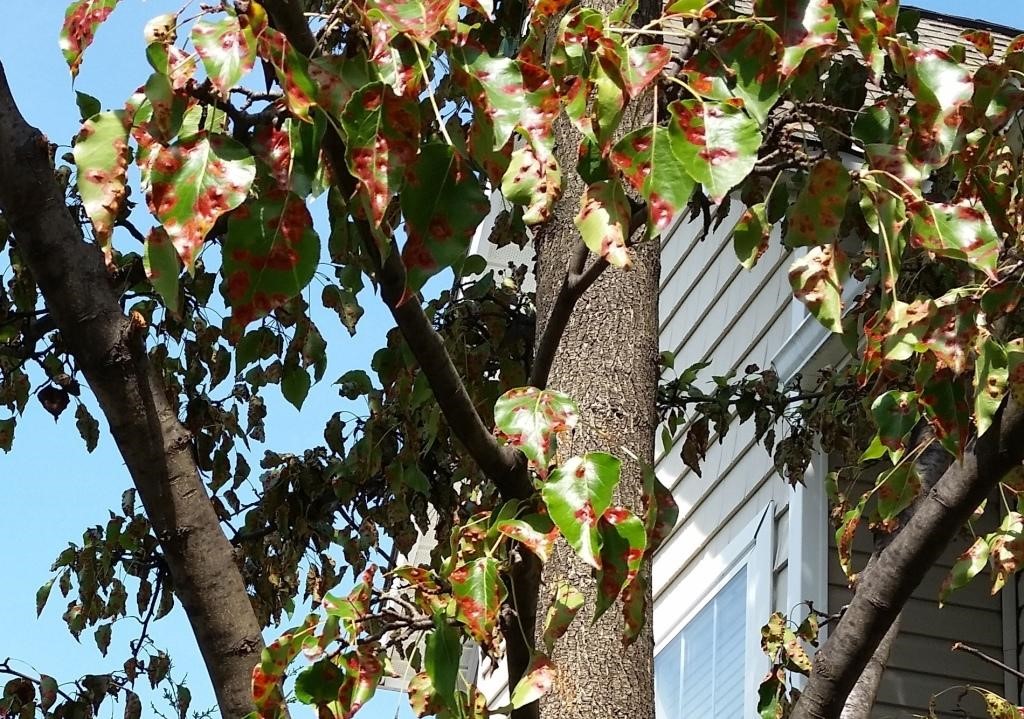
Flowering pear leaves infected with pear trellis rust
Pear trellis rust, a fungal disease caused by Gymnosporangium sabinae, is a common ailment affecting flowering pear trees across Oakland County. Pear trellis rust is a relatively new disease in North America, introduced from Europe in the 1990s. It has been spreading in recent years, with confirmed cases in all Southeast Michigan communities.
This pesky pathogen manifests as bright orange spots on pear leaves during summer and early autumn, creating a striking but unwelcome sight on our landscape trees.
Pear trellis rust poses a significant threat to tree health, potentially causing reduced growth, crown thinning, and branch dieback over time.
The Pear Trellis Rust Lifecycle
The lifecycle of pear trellis rust is intriguing, as it requires two hosts to complete its journey. While flowering pear trees serve as the primary host, junipers and cedars act as the alternate host. This dual-host nature makes the disease particularly challenging to control, as spores can travel significant distances on the wind.
Symptoms and Impact on Host Plants
On Flowering Pear Trees:
• Bright orange spots on leaves
• Brown, gall-like growths on leaf undersides
• Potential fruit deformation and premature drop
• In severe cases, premature leaf loss, branch dieback and reduced tree vigor
On Junipers and Cedars:
• Perennial canker-like swellings on branches
• Orange, gelatinous spore masses in spring
Management Strategies
Controlling pear rust requires a multi-faceted approach:
1. Remove infected leaves in the fall
2. Prune out any dead or declining branch on flowering pear trees
3. Ensure proper tree nutrition to boost natural defenses
4. Consider removing nearby junipers or cedars, if feasible
5. Apply appropriate fungicides as a preventive measure, two applications per year
Pear trellis rust can be a frustrating disease for homeowners that have flowering pear trees. However, understanding its life cycle and having an ISA Certified Arborist implement a proactive management plan can mitigate the impact on your landscape.