
Invasive Plants
Phragmites Control Along Roadsides In Macomb, Oakland And Wayne Counties
| Apr 09, 2025

Invasive phragmites plant. | Steve Dewey, Utah State Univ., Bugwood.org
What is Phragmites “phragmites australis” (pronounced frag-my-teas) aka common reed?
Phragmites australis is an aggressive non-native invasive plant that is causing an ecological health problem all over Michigan. This invasive plant is affecting not only our coastlines and our inland lakes, but it is also a threat to our streams, ponds, ditches and severely damaging Michigan’s wetlands and wetland habitats.
Michigan does have native phragmites, but it does not have the devastating effect that this invasive plant does.

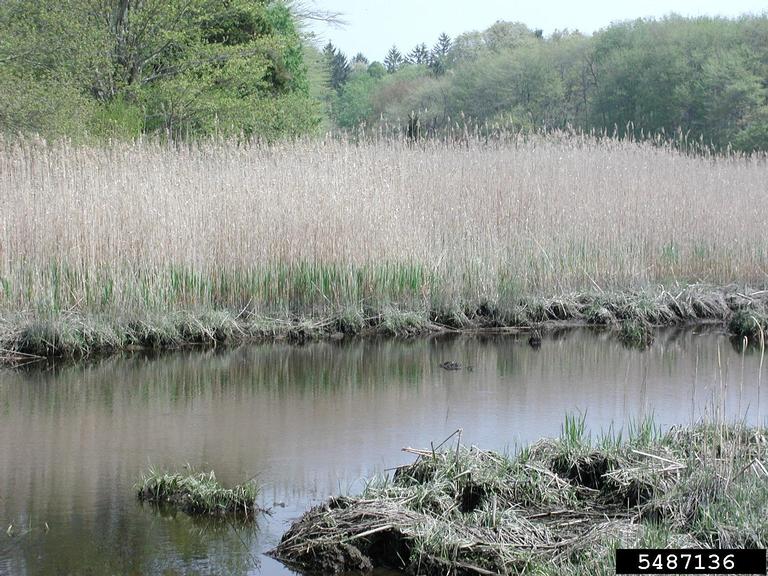
A group of invasive phragmites plants. | Caleb Slemmons, National Ecological Observatory Network, Bugwood.org
Native Phragmites vs Non-Native Invasive Phragmites
Native Phragmites are sparse growing, allowing other undergrowth to grow alongside and underneath the stalks. Native phragmites plants only grow up to 6.5 feet tall. Native phragmites plants have yellow green stalks and may have small black dots on the stalks. Native phragmites stalks and stems break down at the end of each growing season, allowing for other plants and undergrowth to grow in and around the plant bases.
Non-Native, Invasive Phragmites are dense growing. No undergrowth grows under or alongside of these plants due to the density and concentration of the stalks. Plants can grow up to 20 feet tall, and it has dull – tan or green stalks. Non-native phragmites stalks and stems do not break down at the end of the growing season and are still present and standing in the winter, thus preventing surrounding undergrowth from growing.
The Problem With Invasive Phragmites
Non-Native Phragmites choke out and replace the native plants in the areas that it takes over once it has established itself. This invasive species doesn’t just affect natural plant life, it also affects native animal life too. Invasive phragmites plants can completely take over small bodies of water in a short period of time. These plants are taking away valuable fish habitats in small ponds and lakes and, due to the dense growth of the stalks, takes away the habitats of birds that frequent the marsh and wetland areas of Michigan.
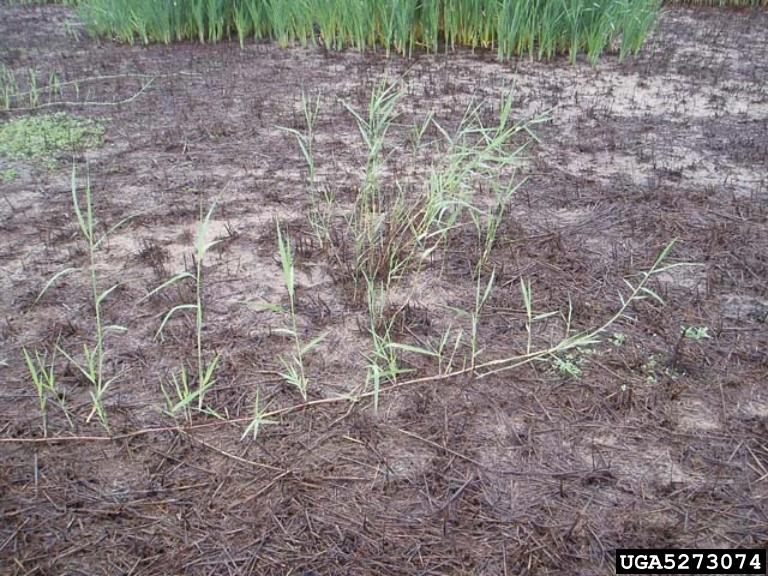
Invasive phragmites growing along riverbank. | Leslie J. Mehrhoff, Univ. of Connecticut, Bugwood.org
Invasive phragmites not only poses a threat to wetlands and lakes, but they are also causing a driving problem. The increasing number of areas that phragmites are growing along roadsides is not just an ecological problem, but also a safety hazard. Due to the height of the phragmites and how close the stalks grow; they are quickly becoming a clear vision problem along Michigan’s expressways and roadways. The extreme height and density of their growth frequently blocks the visibility of road signs and prevents drivers from observing potential hazards along the roadside or at certain intersections. A major roadside hazard that they can hide is deer and other animals running toward the road, increasing the likelihood of a vehicle strike, since motorists driving on the roads cannot see their approach to take necessary safety measures until the animal has already entered the road of right-of-way.
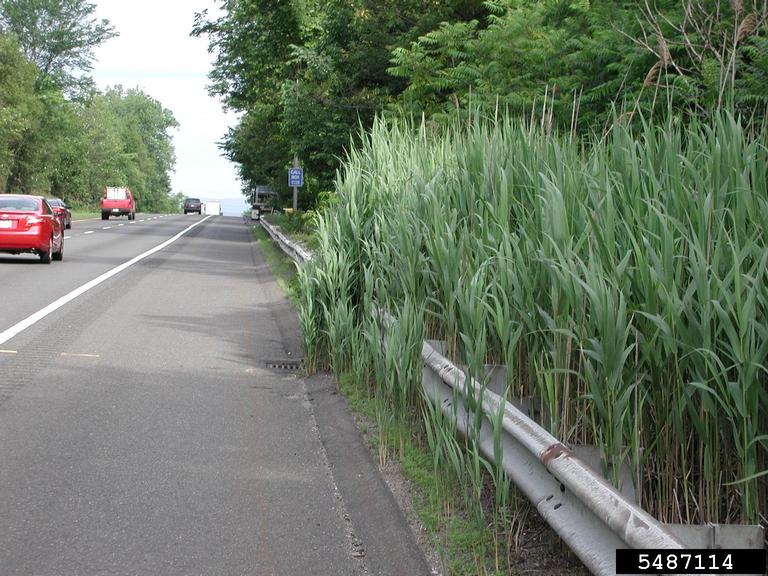
Invasive phragmites growing next to roadway. | Leslie J. Mehrhoff, Univ. of Connecticut, Bugwood.org
In addition to the above problems that phragmites pose, they are also an increasing roadside brush fire threat. Due to the stalks not breaking down and drying up the phragmites and surrounding vegetation creates an ideal environment for roadside brush fires to become larger and more difficult to control than normal.
What can be done to control invasive phragmites?
Effective control of phragmites is a difficult process but can be done as long as the treatment / control measures are done at the appropriate time in the life cycle of the phragmites plant’s growth. Once the treatment cycle has begun, follow-up treatments must be done to ensure that the invasive species is controlled as much as possible.
Effective control of phragmites is a multi-phase process and a long-term commitment. It starts with an initial herbicide application in late summer. This is then followed by mowing down of the stalks after the plants have had time to absorb the herbicide. Mowing timing is in the fall to winter. A follow up visit to spot-treat any phragmites regrowth will be necessary for several years / growing seasons in the future.
Mowing in late fall / winter is the best time to prevent any seed heads from spreading to nearby ground and minimizes the possibility of disturbing the ground and damaging the underground rhizome network. Damaging the rhizome network will cause a new network of sprouts to form and grow. Mowing of the standing stalks gives the native plants in the area a chance to grow in the spring to lessen the area the phragmites would have to grow.
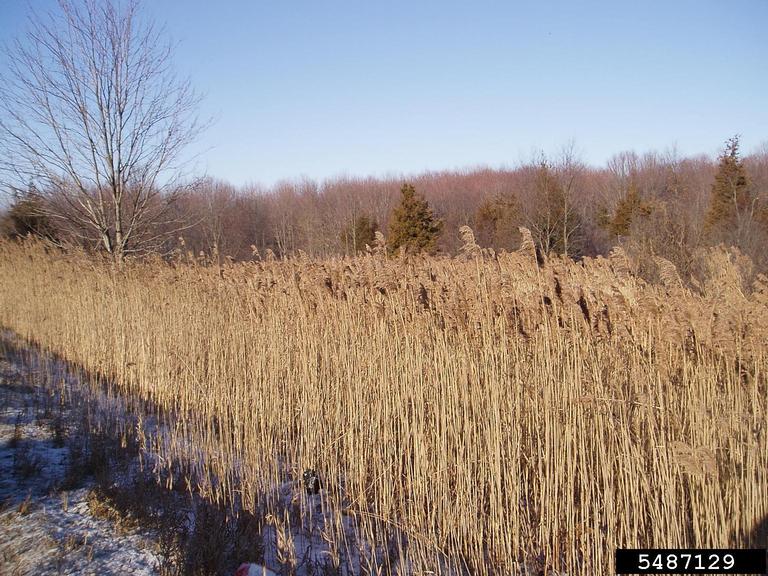
Invasive phragmites in winter. | Leslie J. Mehrhoff, Univ. of Connecticut, Bugwood.org
We have a specialty piece of equipment that we use to mow down the standing stalks of phragmites. Our tracked, skid-steer mounted drum mower grinds the stalks of phragmites up and lessens the possibility of spreading any seed heads that may still be present. Using this specific type of mowing unit makes it unnecessary to rake up the resulting thatch / debris due to the way the stalks are ground up in the process; the appearance of the site post-mowing is not intended to look like a manicured lawn.
Mowing the stalks alone is not effective in controlling phragmites; this is only part of the total control process needed for this plant. Mowing the stalks only removes the surface evidence of phragmites; it does nothing to control the below ground rhizome network, and the plants will just regrow, and possibly with greater density than before mowing. This is why a multi-phased control program is essential to effectively controlling phragmites.
Annual maintenance is essential to effectively control phragmites and aid in re-establishing native plant life to the area. Monitoring and adaptive management are necessary components to successfully controlling phragmites.
Before any control measures are started, a detailed monitoring and treatment plan must be established and followed. Establishing realistic goals and understanding the scope of investment of resources and assets needed to begin and sustain this effort are crucial and sometimes a forgotten component of an effective treatment plan.
What we are doing to help control invasive phragmites:
Over the years, we have developed a control and management program to achieve optimal results in slowing the spread and controlling phragmites growth in the metro Detroit region.
We began in 2014 working with the local MDOT maintenance manager. When on a windshield survey of vegetation control needs along trunklines, phragmites stands were identified early on as a problem that needed to be addressed. The growing problem of phragmites was addressed and we were asked to develop a long-term control and management program to deal with phragmites in the metro Detroit region.
Since then, we have worked to refine our approach and techniques to achieve the best possible results for our customers. We have performed phragmites control on numerous expressways and roadways in the metro Detroit region, including I-696, I-96, I-75, M-59, I-94 and I-275. We follow the recommended best practices with late summer initial sprays, fall / winter mowing and then periodic follow up visits to spot spray any possible re-growth.
Experience over the years has assisted in our development of the current treatment and control process we have. We are always seeking out the latest information on effective control measures and if any changes to our current process need to be made, we implement them as soon as we have researched the new processes or treatments. We want to be good stewards of our customer’s money and do our best to achieve the best results we can. Achieving high control rates is a 2-fold success for us. On one hand we are living up to our customer’s expectations and on the other hand, we are also helping the environment by taking on an invasive plant with the end goal being eradication of it and giving the native plant environment the opportunity to regrow and re-establish itself.
Phragmites management and control is not just a concern for cities, municipalities and government agencies. If you have phragmites growing on your property, please contact our office to set up a time for one of our arborists to come out and develop a control and management plan for your property so that we can all do our part to slow the spread of phragmites in Michigan.