
Landscaping
Proper Tree Staking in Dryden Landscapes
| Oct 24, 2025
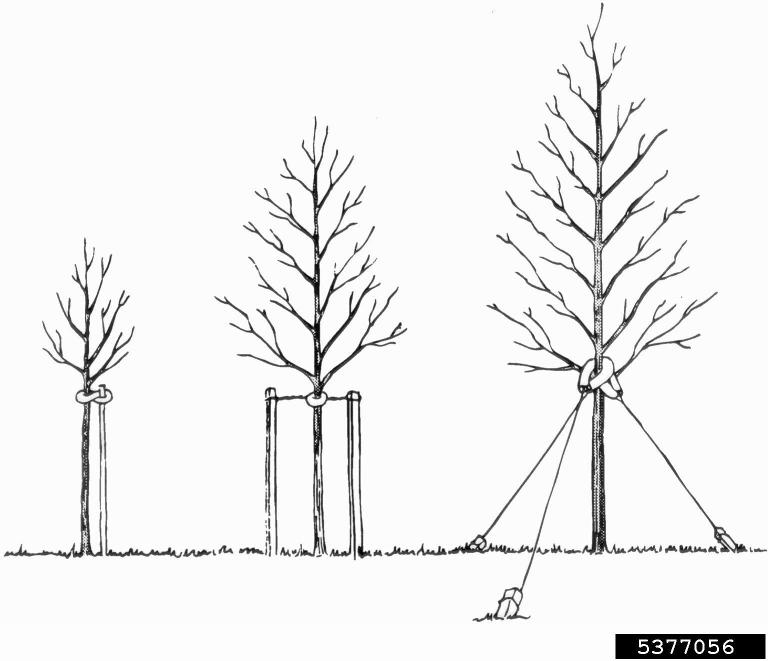
Staking options vary with tree size and location. | International Society of Arboriculture, Bugwood.org
Staking newly planted trees in Dryden requires careful consideration. While not all trees need staking, it can be beneficial in certain situations, particularly for larger trees or those planted in windy areas.
When staking is necessary, use the proper technique to avoid damaging the tree. Place tree stakes just outside the root ball, which is usually about 1-2 feet from the trunk. For smaller trees, wooden stakes or metal posts can be used, driven 1-2 feet into the soil. Larger trees may require a more robust staking system.
The number of stakes depends on the tree's size and environmental factors. A single stake may suffice for a tree subjected to a consistent wind direction, while three stakes in a triangle pattern will provide support from all directions for trees in open or windy areas.
When attaching the tree to stakes, use materials that won't damage the bark. Avoid wire directly wrapped around the trunk; instead, use wide, flexible straps or run wire through sections of garden hose to protect the bark. Ensure the ties allow for some trunk movement, which is helpful for developing a strong, tapered trunk and well-anchored root system.
Regularly inspect the staking system during the first growing season to prevent bark damage and assure the stakes aren't loose in the ground. In most cases, remove stakes after one year to promote natural strength development in the tree.
By following these staking guidelines, residents in Dryden can provide the necessary support for newly planted trees while encouraging healthy, long-term growth.