
Tree Trimming
Protecting Oaks and Elms in Wixom
| Feb 03, 2026
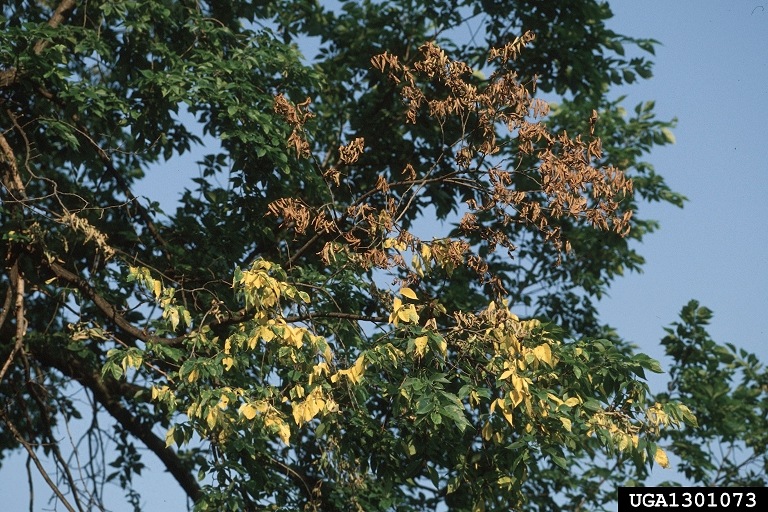
Dutch elm disease causing yellowing and browning of leaves. | Joseph Obrien, USDA Forest Service, Bugwood.org
Wixom, Michigan features a mix of established neighborhoods, wooded areas, and developing landscapes where mature oak and elm trees play an important role. These trees provide shade, improve air quality, and add long-term value to properties. However, both species are vulnerable to serious diseases that can spread quickly if these trees are pruned at the wrong time of year.
Two of the most concerning threats are Oak Wilt and Dutch Elm Disease (DED). Fortunately, homeowners can significantly reduce the risk of spreading these diseases by understanding when and how to prune oak and elm trees. In Michigan, winter pruning is one of the most effective preventative tools available.
Why Oaks and Elms Require Special Pruning Care
Most trees can tolerate pruning at any time of the year, but oaks and elms are different. The diseases that affect them rely on insects and open wounds, to a large extent, to move from tree to tree.
Fresh pruning cuts release sap and odors that attract insects. When those insects are active, they can carry fungal spores directly to healthy trees. Timing tree pruning work to avoid insect activity is essential, especially in areas like Wixom where trees often grow close together.
What Is Oak Wilt?
Oak Wilt is a fungal disease that interferes with a tree’s internal water transport system. Once infected, oak trees may show leaf discoloration, wilting, and rapid decline. Red oaks are particularly susceptible and often die from oak wilt within a single growing season. White oaks may survive longer but can still be affected.
How Oak Wilt Moves Between Trees
Oak Wilt spreads in two primary ways:
• Sap-feeding beetles that visit fresh wounds on oak trees
• Root grafts between nearby oaks, allowing the fungus to move underground
Pruning wounds created during warm weather are especially attractive to beetles, making spring and summer pruning of oaks one of the most common causes of new infections.
High-Risk Period in Michigan
In Michigan, oak trees are most vulnerable when insects are active — typically from mid-April through mid-July. Pruning during this period greatly increases the risk of Oak Wilt transmission.
What Is Dutch Elm Disease?
Dutch Elm Disease is caused by a fungus spread by elm bark beetles. These beetles breed in dead or weakened elm trees and carry spores into healthy trees as they feed. Once an elm has been infected, the fungus blocks water movement, leading to wilting, branch dieback, and often tree death.
Why Pruning Timing Matters for Elms
Pruning elms during the growing season creates fresh wounds that attract beetles. Winter pruning helps reduce this risk by:
• Eliminating the concern for beetle activity
• Removing weakened wood before beetles emerge
• Improving overall tree health prior to spring growth
For Wixom properties with mature elms, dormant-season pruning is a key disease-management strategy.
Why Winter Is the Safest Time to Prune
Winter offers several natural advantages when it comes to pruning oaks and elms:
• Insects that spread disease are inactive
• Trees are dormant, reducing stress from pruning
• Fresh wounds won’t attract beetles – they are hibernating
• Branch structure is easier to see without leaves
• Pruning cuts are not fresh when beetles emerge in the spring
For Wixom homeowners, this typically means scheduling pruning between late fall and early spring, when temperatures remain consistently cold.
Recommended Winter Pruning Approach
Winter pruning should be strategic, not excessive. Common goals include:
• Removing dead, broken, or hazardous branches
• Reducing crossing or rubbing limbs
• Improving overall structure and balance
• Clearing branches away from buildings, walkways, driveways and streets
Avoid heavy pruning that removes too much live growth, as this can weaken trees over time.
Use Proper Tree Pruning Tools and Techniques
• Sharp tools create clean cuts that heal faster
• Cuts should be made just outside the branch collar
• Tools should be cleaned between trees to reduce the chance of spreading pathogens
Manage Pruned Wood Carefully
• Do not store freshly cut oak or elm wood near healthy trees
• Remove pruning debris promptly or chip it for disposal
• Dead wood can attract beetles if left in place
What If Pruning Can’t Wait Until Winter?
Occasionally, tree pruning outside the dormant season is unavoidable — such as after storm damage has occurred or when broken limbs pose a safety risk.
If emergency pruning is required:
• Limit cuts to only what is necessary
• For oaks, seal fresh wounds immediately with a latex-based tree wound dressing to reduce insect attraction
• Consult an ISA Certified Arborist whenever possible to minimize disease risk
While these measures help, they are not a replacement for winter pruning.
Additional Benefits of Winter Pruning
Beyond disease prevention, winter pruning offers several practical advantages for Wixom homeowners:
• Reduced impact on lawns and landscaping due to frozen ground
• Improved safety with clearer visibility of branch structure
• Healthier spring growth as trees direct energy into desirable branches
• Easier access to problem branches without foliage in the way
These benefits make winter an efficient and tree-friendly season for maintenance.
Tree Care Considerations Specific to Wixom
Wixom’s landscapes often include:
• Mature oak trees in residential neighborhoods
• Elms growing along property lines or near roads
• Trees located close to homes, garages, and utilities
Because trees are often in close proximity to each other, these two diseases can spread more easily through root grafts if proper pruning practices are not followed. Proactive winter maintenance helps protect not only individual trees but also surrounding properties.
Final Thoughts
In Wixom, MI, caring for oak and elm trees means more than routine trimming — it requires thoughtful timing and an understanding of how diseases spread. Winter pruning is one of the most effective ways to reduce the risk of Oak Wilt and Dutch Elm Disease.
By pruning during dormancy, avoiding high-risk seasons, and using proper tree pruning techniques, homeowners can help preserve the health, safety, and longevity of their trees.
For large trees or disease-sensitive species, working with an ISA Certified Arborist ensures your tree pruning work is done correctly and responsibly — helping Wixom’s trees remain strong for years to come.
For an inspection and pruning proposal for your oak or elm trees drop us a message or call us today at 800-724-6680.