
Tree Trimming
Protecting Your Milford Landscape from Ice and Snow Damage
| Jan 21, 2026
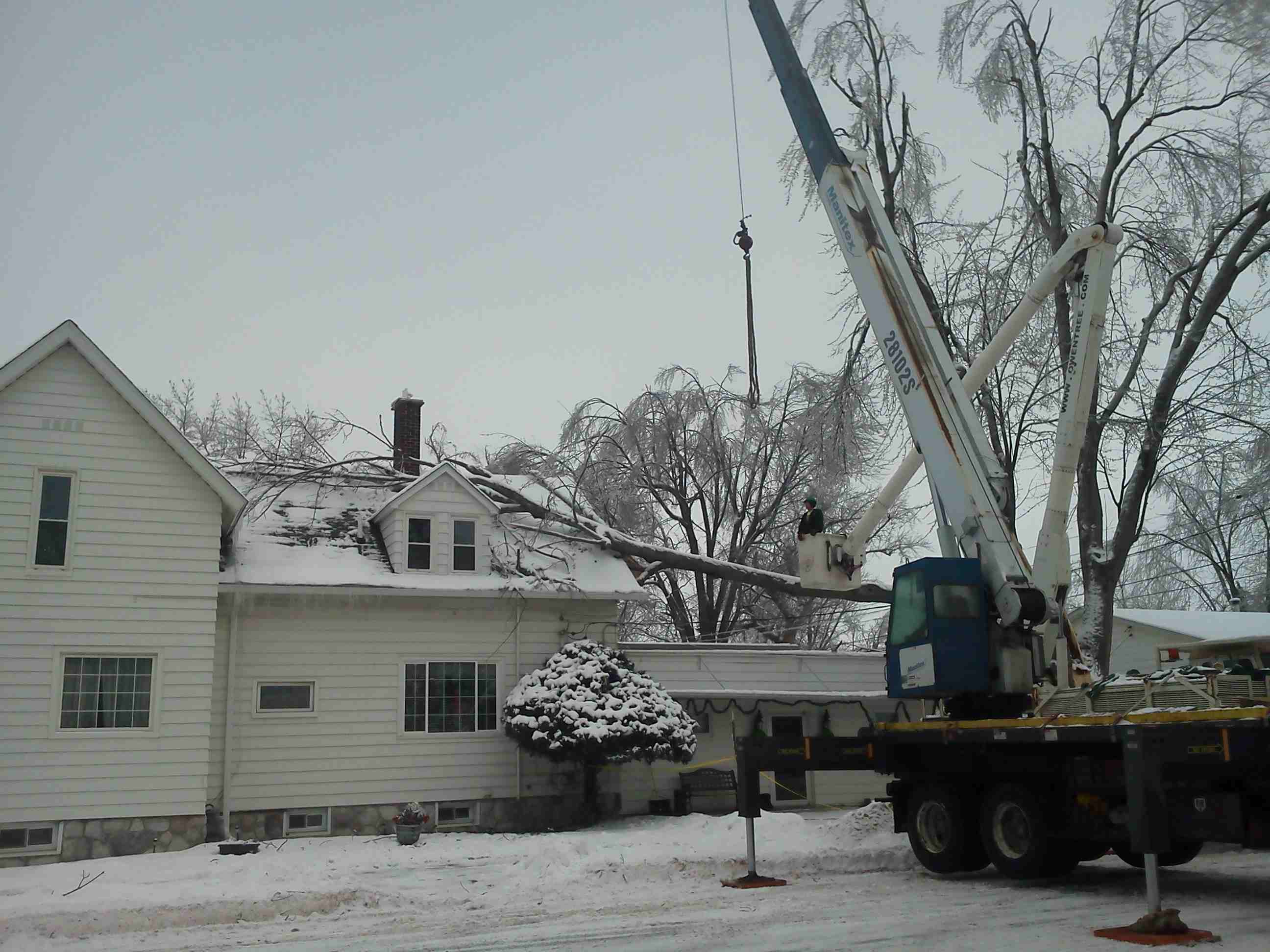
Removing large limb from house after winter storm. | Owen Tree Service
Winter in Milford, Michigan often delivers charming snow-covered landscapes, frosted branches, and quiet neighborhoods blanketed in white. While the scenery can be stunning, heavy snowfall and ice accumulation can take a toll on trees and shrubs. Wet snow and thick ice place added stress on plant structures, sometimes resulting in broken limbs, misshapen shrubs, and potential hazards around homes, driveways, and walkways.
This guide is designed to help Milford homeowners understand what causes winter damage, how to identify it, what steps to take after storms, and how to protect trees and shrubs before and after winter weather.
Why Snow and Ice Cause Damage
1. Excessive Weight on Branches
• Wet, dense snow and ice significantly increase the load branches must carry.
• Trees with wide-spreading or horizontal limbs tend to collect more snow.
• Ice buildup can multiply the weight far beyond what branches are designed to handle.
2. Structural Weaknesses in Trees
• Trees with tight branch angles, included bark, or overcrowded limbs are more likely to split.
• These vulnerabilities are often found in mature trees that haven’t received proper structural pruning.
3. Repeated Freeze-Thaw Conditions
• Temperature swings cause ice to melt and refreeze, making it heavier and harder to shed.
• Once ice bonds to branches, it tends to linger until temperatures rise.
4. Shrubs Under Pressure
• Low or loosely structured shrubs such as hydrangea and forsythia can bend or snap under snow.
• Evergreens frequently retain snow longer, increasing the chance of branch distortion.
Common Winter Damage Seen in Milford Landscapes
After snowstorms or ice events, Milford property owners often notice the following issues:
Broken or Fallen Branches
• Branches may snap suddenly under the additional weight.
• Cracked limbs create entry points for insects and disease.
Bent or Misshapen Shrubs
• Some shrubs remain flattened or uneven long after the snow melts.
• Evergreens often appear splayed or uneven following heavy snowfall.
Structural Tree Damage
• Splits at branch unions or fractures near the trunk can compromise long-term stability.
• Damage high in the canopy may not be obvious but can affect future growth.
Root Heaving
• Freeze-thaw cycles can push shallow-rooted shrubs upward, exposing roots.
How to Identify Snow & Ice Damage (Inspection Checklist)
Once it’s safe after a storm, walk your property and look for the following signs:
• Snow heavily weighing down branches
• Cracked or dangling limbs
• Broken branches scattered near the tree
• Trees leaning unexpectedly
• Visible splits at branch connections
• Shrubs bent or flattened
• Roots exposed or lifted from the soil
If you notice hazardous limbs, mark the area to prevent people from walking underneath.
Steps to Take After a Winter Storm
1. Prioritize Safety
• Avoid standing beneath snow or ice-loaded branches.
• Do not shake large limbs, as sudden breakage can occur.
2. Carefully Remove Snow
For lighter snow accumulation:
• Use a soft broom or similar tool.
• Gently brush snow from the trunk outward.
• Apply light pressure — forcing branches can cause breakage.
3. Leave Ice Alone
• Never try to knock or chip ice from branches.
• Ice adheres tightly and removal attempts often result in damage.
4. Reposition Bent Shrubs
• After snow melts, carefully guide shrubs back into place.
• Temporary staking can help restore their shape.
Pruning as a Recovery Tool
When to Prune
• When it is safe to access the damaged tree.
• Pruning may be needed later, if some branches don’t leaf out.
Best Pruning Practices
• Cut damaged branches back to healthy wood or a strong lateral branch.
• Proper cuts encourage healing and reduce decay risk.
• Avoid leaving stubs, which can attract pests and disease.
When to Call an Arborist
Contact an ISA Certified Arborist if you observe:
• Large limbs broken over structures or driveways.
• Major splits near the trunk.
• Multiple damaged limbs throughout the canopy.
• Trees leaning toward homes, garage, driveway, roads, or power lines.
A professional can determine whether pruning, cabling, bracing, or removal is necessary and address overall plant health concerns.
Preventative Measures for Milford Properties
Several steps can be taken to prepare your trees and shrubs for winter weather:
1. Structural Tree Pruning
• Removing weak or crowded branches improves snow shedding.
• A well-shaped canopy handles winter weight more evenly.
2. Choose Durable Plant Varieties
Plants that typically handle winter stress better include:
• Trees with strong branching and open form
• Shrubs such as boxwood, juniper, and yew, though they may still bend under heavy snow
3. Skip Tree Topping
• Topped trees develop weak regrowth that breaks easily under the extra weight of ice or snow.
4. Apply Mulch Correctly
• Refresh landscape beds with 2 - 4 inches of mulch around trees and shrubs.
• Keep mulch away from trunks to prevent rot and pests.
5. Support Vulnerable Shrubs
• Install seasonal stakes or supports for young or ornamental shrubs.
• This helps them maintain structure during snow events.
Considerations for Milford Landscapes
Milford’s mix of wooded areas, older trees, and ornamental plantings presents unique challenges:
• Mature trees add character but often require routine maintenance.
• Shrubs near sidewalks and driveways may experience snow piling and salt exposure.
• Periodic professional inspections help identify risks before winter storms hit.
Local arborists familiar with Milford conditions can offer property-specific recommendations.
Caring for Trees After Winter Ends
As spring approaches:
• Check for hidden or delayed damage.
• Water during dry spring periods to support recovery.
• Monitor for insects or disease entering through damaged wood.
• Schedule corrective pruning before active growth begins.
Final Thoughts
Winter in Milford can be beautiful, but snow and ice can be challenging for trees and shrubs. By understanding potential damage, responding appropriately after storms, and taking steps to prepare your landscape, you can protect both plant health and property safety.
When unsure, working with an ISA Certified Arborist is the best way to ensure your trees remain strong, safe, and healthy for years to come. To schedule an inspection of your landscape trees and shrubs contact Owen Tree and Lawn Care at 800-724-6680.