
Tree Diseases
Protecting Your Urban Trees from Diseases
| Jan 27, 2026
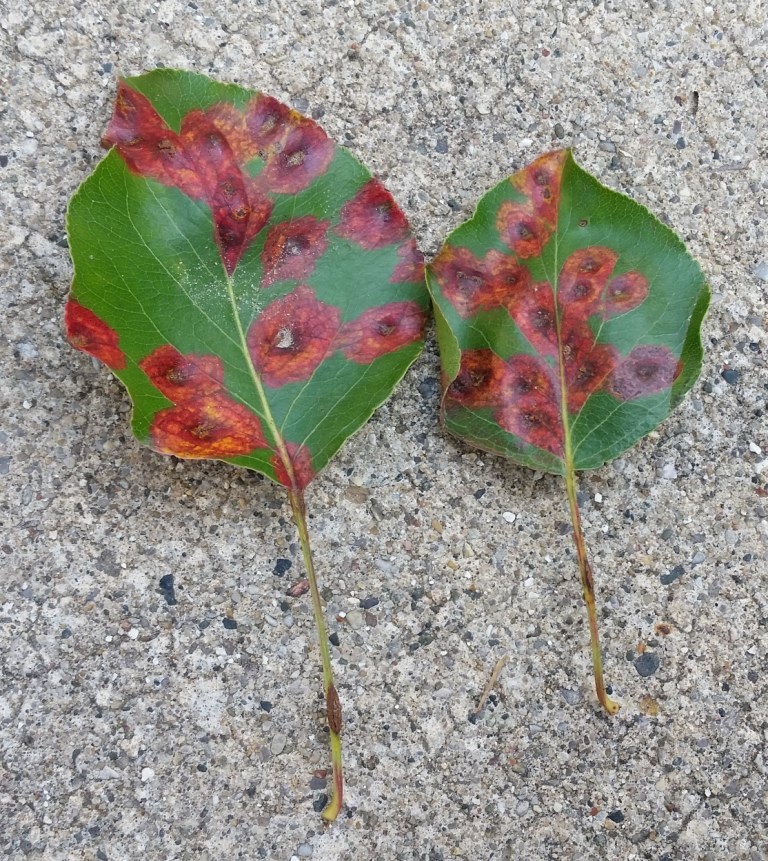
Pear trellis rust on flowering pear leaves. | Tom Morgan, Owen Tree Service
In cities across the United States, trees face constant threats from diseases that can weaken, disfigure, or even kill them. From towering oaks in neighborhood parks to shade-giving maples along busy streets, urban trees endure stresses that their forest counterparts rarely experience - compacted soil, air pollution, physical damage, and limited root space. These pressures make urban and suburban landscape trees especially vulnerable to serious infections.
The good news? Professional arborists have advanced tools, treatments, and strategies to diagnose, manage, and often prevent the most dangerous tree diseases.
Understanding the two major categories—vascular and foliar diseases—can help property owners act quickly and protect their valuable trees.
Vascular Diseases: The Silent Killers
Among the most lethal threats to trees are vascular diseases, which attack the critical “circulatory system” that moves water and nutrients throughout the tree. These diseases are caused by fungi, bacteria, or even microscopic nematodes that invade the xylem and phloem tissues.
Interestingly, the pathogen itself rarely delivers the fatal blow. Instead, when a tree detects the invasion, it responds by sealing off infected vessels with gums, gels, and tyloses - an emergency defense that unfortunately blocks the movement of water within the tree. Over time, this self-inflicted restriction can starve branches or the entire tree, leading to wilting, dieback, and eventual death.
America’s urban landscapes have suffered devastating losses from introduced (exotic) vascular diseases for over a century. The American chestnut, once a dominant Eastern forest species and common city street tree, was virtually wiped out by chestnut blight in the early 1900s. Dutch elm disease decimated millions of graceful American elms that lined streets from coast to coast starting in the 1930s. Sudden oak death is wreaking havoc on western oak trees and thousand cankers disease is threatening black walnut trees.
Even native pathogens can become far more aggressive when trees are stressed by urban conditions. Oak wilt, caused by a fungus native to parts of the U.S., spreads rapidly through root grafts between nearby oaks and via sap-feeding beetles. Drought, construction damage, or poor pruning practices can turn a manageable pathogen into a tree-killing epidemic.
Because vascular diseases move quickly and have no reliable cure once symptoms appear above ground, prevention and early intervention are essential. ISA Certified Arborists can perform root-collar excavations, apply protective fungicidal injections, sever root grafts by trenching, and recommend proper pruning timing to avoid insect vectors. Regular monitoring by a trained professional arborist is often the best defense against losing a mature tree to these aggressive diseases.
Foliar Diseases: More Than Just an Eyesore
While rarely fatal on their own, foliar (leaf and needle) diseases can seriously compromise a tree’s health and dramatically reduce its beauty - an important consideration for urban trees that provide aesthetic value, shade, and property appeal.
Foliar pathogens - typically fungi such as anthracnose, powdery mildew, needlecasts, apple scab and leaf spots - attack leaves and needles, interfering with photosynthesis. When a tree loses its ability to produce energy efficiently season after season, it becomes weaker, grows less, and struggles to defend itself against harmful insects, root diseases, and environmental stress. Repeated defoliation can lead to branch dieback and, over years, significant decline.
In conifers like pines, spruces, and firs, needle diseases are especially problematic because lost needles are not replaced quickly - if at all. A tree that should be lush and green can end up thin, brown, and sparse, lowering curb appeal and property values. Deciduous trees suffer too: early leaf drop, spotting, or scorching creates an unhealthy, neglected appearance that no homeowner wants.
Urban conditions often exacerbate foliar diseases. Poor air circulation in tightly spaced landscape trees, overhead power lines that require severe pruning, and reflected heat from buildings or hardscaping all create perfect environments for fungal growth. Spring and early summer wetness further encourages outbreaks of anthracnose and other common leaf diseases.
Thankfully, foliar diseases are usually much more manageable than vascular ones. Professional arborists can apply targeted fungicide treatments timed to the tree’s growth cycle, improve cultural conditions through proper mulching, fertilizing and watering, and recommend resistant cultivars when planting new trees. Regular inspections catch problems early, often allowing two or three well-timed sprays to restore full, healthy canopies.
Partner with an ISA Certified Arborist
Whether your trees are showing sudden wilting, discolored leaves, thinning crowns, or unsightly needle loss, early diagnosis is critical. Many symptoms of serious disease mimic drought stress or insect damage, so self-diagnosis is risky. An ISA Certified Arborist has the training and tools - soil testing, resistance drilling, laboratory analysis, and years of local experience - to accurately identify the problem and recommend the most effective, environmentally responsible solution.
Investing in professional tree care isn’t just about treating disease - it’s about preserving the enormous benefits urban trees provide: cooler summers, higher property values, cleaner air, wildlife habitat, and simple beauty in our daily lives.
Don’t wait until your tree is beyond saving. Contact Owen Tree and Lawn Care today at 800-724-6680 for a thorough evaluation and customized plant health care plan. Your trees - and your neighborhood - will thank you.