
Lawn Care
Spring Lawn Mower Maintenance
| Mar 14, 2025
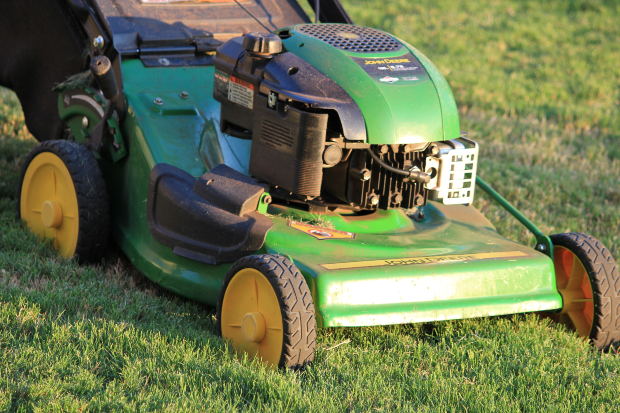
Lawn Mower
For some of us, fall can be a busy time and the last thing on our minds is the maintenance on our lawn mowers. So, many of us must do this maintenance in the spring before the mowing season.
Here we will walk you through some steps that will get your mower or trimmer ready for the coming season.
Step 1: Drain the left-over fuel from the tank
Have you ever started your mower in the spring and spent several minutes pulling the starter cord and priming the motor? Unused gas left in the tank and fuel lines can go bad. Untreated gas can “gum up” the tank and lines. “Gumming up” is when the fuel becomes thick making it hard for your mowers carburetor or injectors to spray into the cylinder, you can avoid this by adding a good fuel stabilizer to the tank in the fall. Leave the tank empty
Step 2: Disconnect, remove, and inspect the spark plug
We recommend this for two main reasons. One is that some of the coming steps require some work around the mowers deck which can be dangerous if the motor were to be accidently started or turned over. Without the spark plug the motor cannot start. Second inspecting the spark plug for “fouling” will prevent hard starts over the coming season. “Fouling” is when carbon deposits build up on the tip of the spark plug making it take more energy to create the spark. If the tip of the spark plug is black it needs to be replaced. You can take it to your nearest parts supplier to get a replacement. If it does not need replacement, reinsert the sparkplug but do not connect the sparkplug wire to it.
Step 3: Remove, sharpen, or replace the blade
To make it safer to change the oil and clean the deck of the mower detach the mower blade or blades by removing the bolts that hold them in place. Wear thick leather or cut proof gloves when removing and handling the blade. With the blade removed, take this chance to sharpen and balance it. You can do this by taking the blade to your local dealer or by buying a blade sharpening kit at your local hardware.