
Plant Health Care
The Environmental Impact of Cytospora Canker in Marysville
| Apr 06, 2025

Cytospora canker blue spruce
The spread of Cytospora canker among Marysville’s Blue Spruces isn’t just an aesthetic concern - it has significant environmental implications for our community.
Blue Spruces play a vital role in our local ecosystem. They provide habitat for various birds and small mammals, offer shade that helps cool our urban areas, and contribute to air purification.
As these trees succumb to Cytospora canker, we risk losing these important ecological services. The loss of mature trees can lead to increased stormwater runoff and soil erosion. The extensive root systems of healthy Blue Spruces help stabilize soil and absorb excess water. Without them, Marysville could face increased flooding risks during heavy rains.
Moreover, the widespread death of Blue Spruces could contribute to the urban heat island effect. These evergreens provide year-round shade and cooling through transpiration. Their loss could lead to higher local temperatures, especially during our hot summers.
There’s also the carbon impact to consider. Healthy trees act as carbon sinks, absorbing CO2 from the atmosphere. As infected trees die and decompose, they release this stored carbon back into the atmosphere.
So, what can be done to help a Blue Spruce infected with Cytospora canker? Unfortunately, no fungicides are labelled for control of this disease. This means we must support these trees through proper cultural practices.
The most important first step is to make sure the trees are not suffering from drought stress. Overhead watering will only aid in spreading Cytospora canker. The best way to water your spruce trees is with a soaker hose coiled under and around the canopy of the tree. Supplemental watering during the hottest / driest part of the summer (mid-June to early September) will minimize the potential for drought stress.
Secondly, dead and infected branches should be pruned from the tree. A key step when pruning Blue Spruce trees is to sterilize your pruning tool between each pruning cut. Not doing this means you could spread the disease throughout the tree or to other Blue Spruce trees that are not yet infected.
Lastly, make sure there are adequate nutrients in the soil for the tree to access. This is accomplished via deep-root fertilization. An annual deep-root fertilization will make sure nutrients are available for the tree to absorb when it needs them.
For Marysville residents, understanding these environmental impacts underscores the importance of managing Cytospora canker. By protecting our Blue Spruces, we’re not just preserving beautiful trees – we’re safeguarding important environmental services that benefit our entire community. If you need one of our ISA Certified Arborists to inspect your Blue Spruce trees for the presence of Cytospora canker call Owen Tree & Lawn Care today.
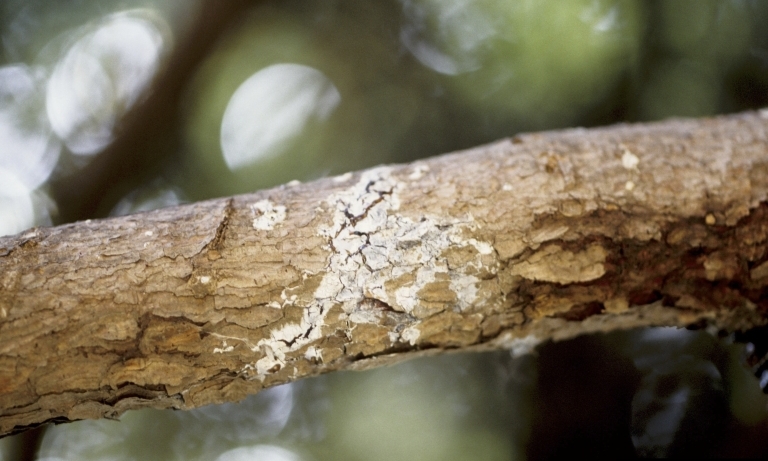
Cytospora canker on spruce. Photo: Joseph OBrien, USDA Forest Service, Bugwood.org