
Plant Health Care
Understanding Squirrel Damage to Tree Bark
| Dec 11, 2025
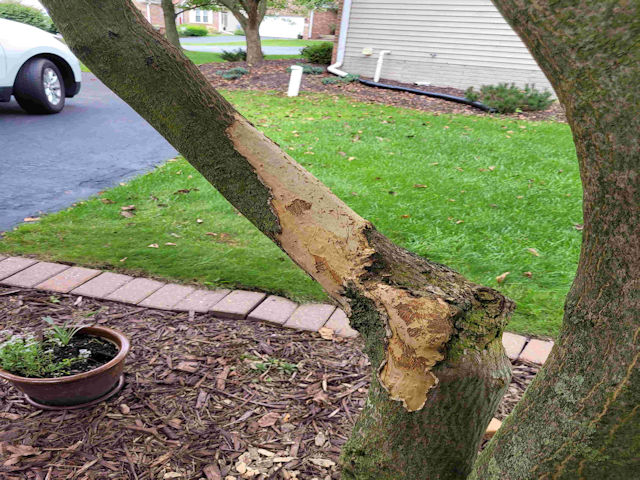
Squirrel damage on a Japanese maple. | David Evans, Owen Tree Service
Squirrels, while often adorable and fun to watch, can sometimes cause significant damage to trees through bark gnawing. This behavior is common in both tree squirrels and ground squirrels, who tend to chew on the bark for several reasons, from searching for food to sharpening their teeth. However, the damage they cause can leave trees vulnerable to disease, insect pests, and even structural failure.
Squirrels typically damage the bark during colder months, as they look for a way to access the cambium layer beneath the bark. This layer contains carbohydrates and water, and by chewing it, squirrels can disrupt the tree’s ability to transport water and nutrients. In severe cases, this can lead to girdling, where a complete ring of bark is removed, effectively starving the tree above the damaged area. This may result in branch dieback or the eventual death of the tree.
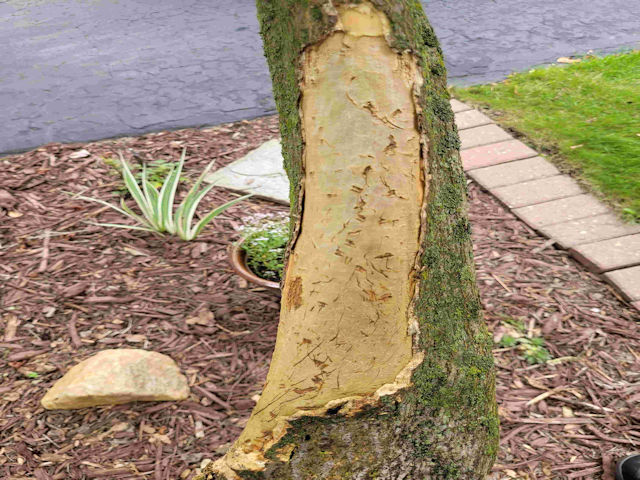 Bark of Japanese maple chewed by a squirrel. | David Evans, Owen Tree Service
Another risk of squirrel damage is the introduction of pathogens. Open wounds caused by chewing are perfect entry points for fungi, bacteria, and insects, which can further weaken the tree. In some cases, squirrels may also damage young trees, inhibiting their growth or causing long-term health problems.
The chewed bark is easier to see on smaller trees, as squirrel damage typically occurs on the top of a branch. On mature trees this damage is not easily seen from the ground. Tree care workers can easily see squirrel damage when climbing a tree or pruning from a bucket truck or backyard lift.
To prevent squirrel damage, consider installing tree protectors like plastic wraps or metal collars around the trunks of vulnerable trees. Some homeowners in Grand Blanc have also chosen to provide a different food source for the squirrels. Keeping your trees healthy through regular fertilization and monitoring will help them withstand the occasional squirrel nibble.
Pictures in this blog are of a mature Japanese Maple injured by bark gnawing in the fall drought of 2024. Tree wound protection was added to this tree followed by deep root fertilization with nutrients, soil stimulants, and root stimulants.