
Plant Health Care
What Are The Best Evergreen Choices For Grand Blanc, Michigan Landscapes?
| Jun 08, 2025

Arborvitate plants in a nursery. | Anthony LeBude, NC State University, Bugwood.org
Green Giant Arborvitae, Concolor Fir, Norway Spruce, and Black Hills Spruce
When designing a landscape in Grand Blanc, Michigan, incorporating evergreen trees can be an excellent way to add year-round beauty, privacy, and shelter to your property. The harsh Michigan winters, with their heavy snowfalls and frigid temperatures, require resilient tree species that can thrive in these conditions. Four evergreen trees that are particularly well-suited for landscapes in Grand Blanc are the Green Giant Arborvitae, Concolor Fir, Norway Spruce, and Black Hills Spruce. Each of these species has unique attributes that make them valuable additions to any landscape.
Green Giant Arborvitae
The Green Giant Arborvitae (Thuja standishii x plicata) is a fast-growing and versatile evergreen that thrives in Grand Blanc's climate. Known for its tall, narrow shape and dense, dark green foliage, the Green Giant Arborvitae is an ideal choice for privacy screens or windbreaks. Growing up to 3 feet per year, it can quickly provide a natural barrier that shields your property from the elements and provides year-round beauty. Its thick foliage also offers excellent protection against harsh winds, making it a strong choice for areas that experience frequent winter storms. The Green Giant is also resistant to pests, diseases and deer feeding, which is an added bonus for homeowners looking for a low-maintenance tree.
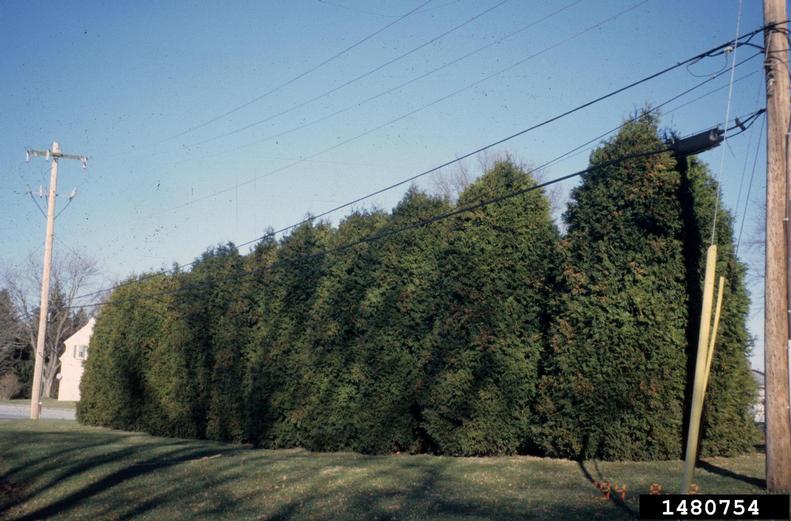
Green giant arborvitae used as a screening hedge. | Richard Webb, Bugwood.org
Concolor Fir
The Concolor Fir (Abies concolor) is another fantastic evergreen for the Grand Blanc area. Its soft, blue-green needles create a striking contrast against other trees, while its symmetrical, pyramidal shape makes it an attractive focal point in landscapes. Concolor Fir trees can grow to impressive heights of 30 to 50 feet, making them perfect for creating a statement in large yards or as part of a mixed-tree woodland garden. Known for their tolerance to both cold and drought, Concolor Firs can withstand Michigan’s diverse weather conditions. The tree’s ability to thrive in partial shade adds to its flexibility, as it can be used in a variety of landscape designs, from wooded areas to more open gardens.

Concolor fir tree. | John Ruter, University of Georgia, Bugwood.org
Norway Spruce
The Norway Spruce (Picea abies) is one of the most popular evergreen trees in Michigan due to its fast growth and adaptability to different soil types. This large tree can grow over 60 feet tall and boasts a wide, pyramidal shape with drooping branches. Its dark green needles and long cones add visual interest to any landscape. The Norway Spruce is particularly well-suited for larger properties or as a backdrop for smaller plantings, as its size and density provide great coverage. It is also a great option for homeowners looking for a tree that offers significant wildlife habitat, as its dense branches are ideal for nesting birds and other wildlife. Furthermore, Norway Spruces are hardy to the cold temperatures in Grand Blanc and have a strong resistance to pests.
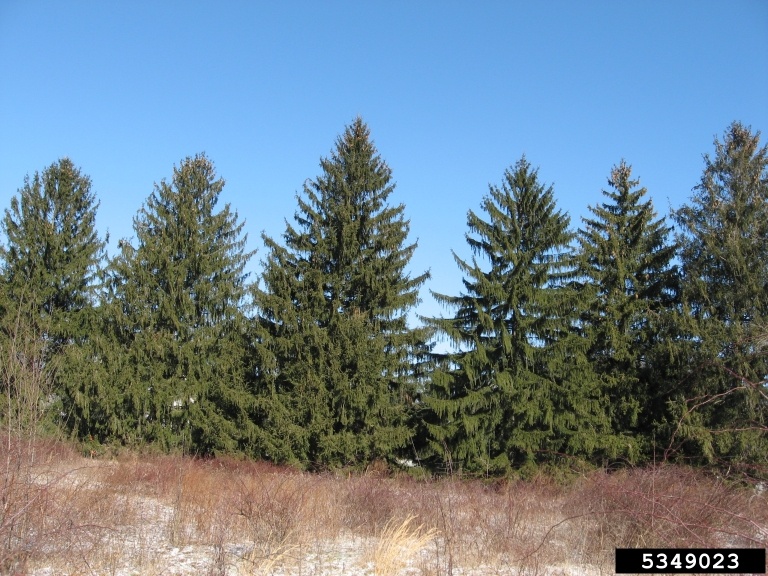
Norway spruce trees used as a screen. | Richard Webb, Bugwood.org
Black Hills Spruce
The Black Hills Spruce (Picea glauca var. densata) is a more compact variety of spruce that is perfect for smaller yards or for adding variety to larger landscapes. Native to the Black Hills region of South Dakota, this tree is a hardy, cold-tolerant evergreen with a pleasing pyramid shape and a dense canopy of blue-green needles. Reaching heights of 30 to 50 feet, the Black Hills Spruce is a great option for creating privacy or adding structure to your landscape without overwhelming smaller spaces. Its compact size also makes it a fantastic choice for urban environments, where space may be limited. The Black Hills Spruce is also resistant to diseases and pests, ensuring that it remains a healthy and low-maintenance choice for homeowners.

Black hills spruce, which is a variety of white spruce, has a pyramidal growth habit. | Brett Marshall, Sault College, Bugwood.org
Conclusion
In Grand Blanc, Michigan, where winters can be harsh and unpredictable, selecting the right evergreens for your landscape is key to creating a resilient, beautiful, and functional outdoor space. The Green Giant Arborvitae, Concolor Fir, Norway Spruce, and Black Hills Spruce each offer unique benefits, from fast growth and privacy protection to aesthetic beauty and wildlife habitat. By choosing these hardy evergreens, you can enjoy a landscape that remains lush and vibrant year-round, adding to the beauty and value of your property in all seasons.