
Invasive Plants
What Are The Most Common Invasive Plant Species In Michigan?
| Apr 03, 2025

Herbicide Spraying Autumn Olive
Invasive plants are an ongoing concern in many areas in Michigan. These plants negatively alter the environment by crowding out native plant species, altering soil conditions and damaging native wildlife habitat. Based on the most recent data available, the most common invasive plant species in Michigan are:
• Phragmites: With 66,793 reported occurrences, this invasive reed is the most prevalent invasive plant species in Michigan.
• Garlic mustard: Reported 20,395 times, this invasive herb is widespread across the state.
• Autumn olive: With 17,436 reports, this shrub is a common invasive plant species in Michigan's landscapes.
• Spotted knapweed: Reported 16,324 times, this invasive plant is frequently found in Michigan.
Phragmites
Phragmites australis, commonly known as common reed, is a perennial wetland grass that has become a significant invasive species in Michigan. This plant can grow up to 15 feet tall and forms dense stands in wetlands, coastal areas, and other water-rich environments.
Characteristics and Identification
• Height: 6-15 feet tall
• Stems: Light, hollow, often dull yellow in color
• Leaves: 10-20 inches long, bluish-green or silver-green, alternating pattern on stem
• Seed head: Large, purple in spring, fluffy when mature
Environmental Impact
Invasive phragmites poses several threats to Michigan's ecosystems:
• Outcompetes native plants, creating monocultures
• Reduces habitat and food resources for wildlife
• Blocks shoreline views and impedes access for recreation
• Poses fire hazards due to dry plant material
• Can clog wetlands and fill in small waterways
Control Methods for Phragmites
Management of phragmites typically involves an integrated approach:
• Herbicide treatment (most effective for large areas)
• Mechanical removal (cutting, mowing)
• Prescribed burning (after herbicide treatment)
• Flooding (where possible)
Early detection and treatment of small populations yield the best results. It's important to note that there is a native subspecies of phragmites in Michigan, which is smaller and less invasive than its non-native counterpart.
Garlic Mustard
Garlic mustard (Alliaria petiolata) is an invasive species that has become a significant concern in Michigan's ecosystems. This biennial herbaceous plant, native to Europe and parts of western Asia, was likely introduced to North America for medicinal and herbal uses, as well as erosion control.
Characteristics and Identification
• Biennial plant with a two-year life cycle
• First-year plants form heart-shaped basal rosettes at ground level
• Second-year plants grow 1-4 feet tall with triangular, toothed leaves
• Produces clusters of small, white, four-petaled flowers in early spring
• Emits a garlic-like odor when leaves are crushed
Environmental Impact
Garlic mustard poses several threats to Michigan's ecosystems:
• Outcompetes native understory plants, including tree seedlings
• Releases allelopathic compounds that inhibit seed germination of other species
• Alters mycorrhizal communities critical for many native plants
• Thrives in wooded areas and can tolerate deep shade
Control Methods for Garlic Mustard
Management of garlic mustard typically involves an integrated approach:
• Hand-pulling: Effective for small infestations; ensuring removal of the entire root system is paramount to success
• Herbicide treatment: Glyphosate-based herbicides are effective for larger infestations; applied in early spring
• Cutting or mowing: Less suitable as it may spread seeds and harm native species
• Prescribed burning: Can be effective in fire-adapted communities to deter garlic mustard invasion
Prevention and Management Strategy
Our approach to managing garlic mustard includes:
• Excluding it from non-infested areas
• Eradicating localized populations where it's not widely established
• Managing existing infestations to reduce impact and limit spread
Early detection and prompt treatment of small populations yield the best results in controlling garlic mustard infestations in Michigan.
Autumn Olive
Autumn olive (Elaeagnus umbellata) is an invasive shrub that has become a significant concern in Michigan's ecosystems. Originally introduced to the United States from Asia in 1830, it was widely planted between the 1940s and 1970s for various purposes such as wildlife cover, windbreaks, and soil stabilization.
Characteristics
• Grows up to 20 feet tall
• Leaves are bright green on top with distinct silver undersides
• Produces fragrant white to pale yellow flowers in May or early June
• Bears bright red berries with silvery scales in fall
• Young branches are speckled with brown spots, turning gray as they mature
Environmental Impact
Autumn olive poses several threats to Michigan's ecosystems:
• Outcompetes native plants, reducing biodiversity
• Alters soil chemistry through nitrogen fixation
• Degrades high-quality habitats, making them vulnerable to other invasive species
• Can increase nitrate levels in water when growing densely along rivers or streams
• Leafs out early and retains leaves late, shading out native species
Control Methods for Autumn Olive
Management of autumn olive typically involves an integrated approach:
• Hand-pulling: Effective for seedlings and small plants; ensure complete root removal for optimum success
• Cutting/mowing: Limits spread but requires follow-up treatments due to resprouting
• Girdling: Can be effective for large trees but may require follow-up treatments
Options for herbicide applications:
• Foliar sprays for smaller shrubs
• Cut-stump method for larger shrubs
• Basal bark application for trees less than 6 inches in diameter
Early detection and prompt treatment of small populations yield the best results in controlling autumn olive infestations in Michigan. It's important to note that autumn olive is classified as a restricted species in Michigan, making it illegal to buy or sell.
Spotted Knapweed
Spotted knapweed (Centaurea stoebe) is an invasive plant species that has become a significant concern in Michigan's ecosystems. This short-lived herbaceous biennial or perennial plant can grow up to 1.2 meters (4 feet) tall and is known for its ability to rapidly spread and dominate various habitats.
Characteristics
• Pale or grayish-green leaves with rough fine hairs
• 1 - 7 upright rough stems that branch towards the upper half of the plant
• Pink-purple flowers bloom from July through September
• Dark-tipped phyllaries with fringed margins
• Small brown wind-dispersed seeds that remain viable for up to nine years
Environmental Impact
Spotted knapweed poses several threats to Michigan's ecosystems:
• Outcompetes native plants, reducing biodiversity
• Releases allelopathic compounds that inhibit growth of neighboring species
• Increases surface runoff and soil erosion
• Reduces forage for livestock and wildlife
• Degrades native plant habitats
Control Methods for Spotted Knapweed
Management of spotted knapweed typically involves an integrated approach:
• Hand-pulling: Effective for small infestations; may be difficult to ensure removal of the entire root system
• Herbicide treatment: A good option for small or large infestations
• Mowing: Can be used in combination with other methods, but effects may be short-lived
• Biological control: Two species of weevils (Cyphocleonus achates and Larinus minutus) have been released in some areas of Michigan to control spotted knapweed
Early detection and prompt treatment of small populations yield the best results in controlling spotted knapweed infestations in Michigan. The Michigan Department of Agriculture has listed spotted knapweed as a prohibited noxious weed.
Other notable invasive species frequently reported in Michigan include Japanese knotweed (13,245 reports), purple loosestrife (11,459 reports), Japanese barberry (9,260 reports), common buckthorn (8,961 reports), and bush honeysuckle (7,710 reports).
It's important to note that Michigan is also monitoring several other invasive species, including aquatic plants, insects, and fish. For example, the hemlock wooly adelgid, an insect native to Asia, is a concern for eastern hemlock trees in the state. Additionally, Michigan has a watch list of potentially threatening invasive species, such as the spotted lanternfly and water chestnut, which have not yet established widespread populations in the state but are being closely monitored.
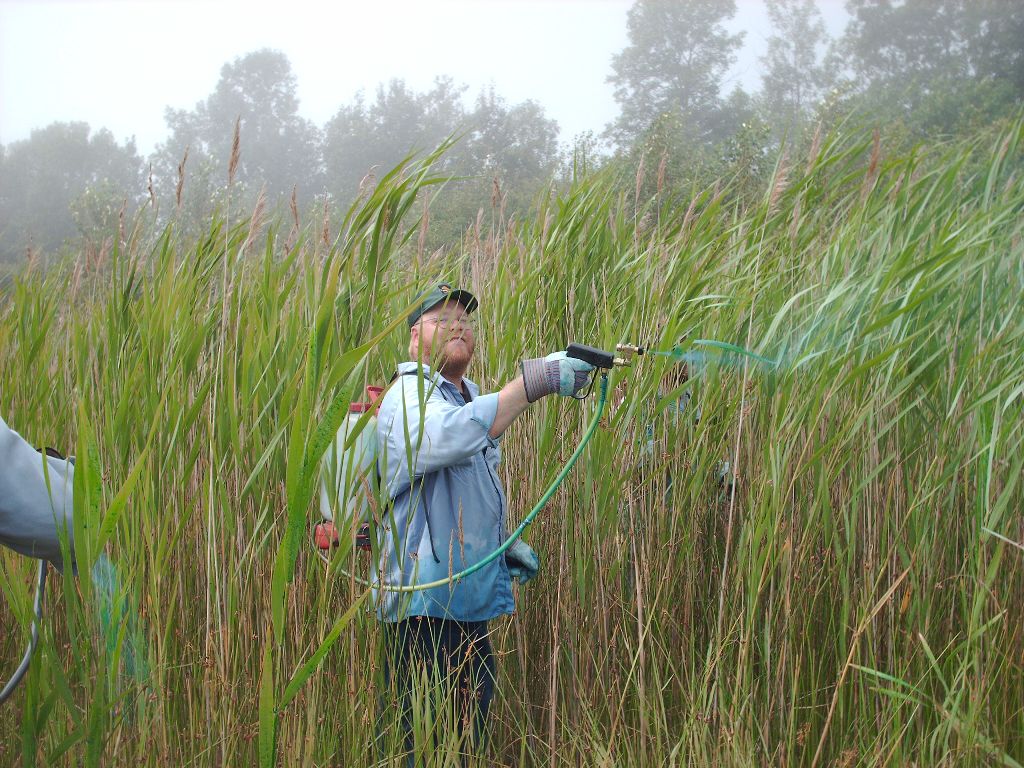
Herbicide spraying Phragmites