
Plant Health Care
White Pine Tree Diseases and Insects in Fenton, Michigan: What You Need to Know
| Apr 28, 2025

White Pine Weevil damage
White pine trees (Pinus strobus) are a staple in the landscapes of Michigan, including Fenton. These trees, with their tall trunks and soft, bluish-green needles, are known for their majestic presence and are often used in landscape plantings. However, just like any other tree, white pines are vulnerable to a variety of diseases and insect infestations that can damage their health. If you're a homeowner or arborist in Fenton, it's essential to understand the common threats to white pines in the area so that you can take steps to protect them. Let’s explore the most common diseases and insect pests that affect white pines in Fenton, offering advice on how to identify and manage them.
Common White Pine Diseases in Fenton
White pines in Michigan are prone to several diseases that can cause serious harm if left unchecked. Recognizing the symptoms early and taking preventative measures is crucial for maintaining the overall health of these trees.
1. White Pine Blister Rust
White pine blister rust (Cronartium ribicola) is a destructive disease that affects white pines across Michigan, including Fenton. This fungal infection compromises the tree's ability to transport water and nutrients, leading to substantial damage. The disease begins with yellow-orange pustules on the needles and can result in branch dieback, stunted growth, and in severe cases, the death of the tree.
Symptoms:
• Yellow-orange lesions or pustules on the needles.
• Blister-like swellings on the tree’s stems, typically near branches.
• Premature needle drop and thinning canopy.
Management:
• Prune and destroy infected branches: Early detection allows for the removal of infected parts to prevent the disease from spreading.
• Avoid planting near alternate hosts: Plants such as currants and gooseberries act as hosts for white pine blister rust, so it's important to keep white pines away from them.
• Fungicide applications: Fungicides may be applied, but they should be used under the guidance of a certified arborist for optimum effectiveness.

White pine blister rust. Photo: Joseph OBrien, USDA Forest Service, Bugwood.org
2. Dothistroma Needle Blight
Dothistroma needle blight (Dothistroma septosporum) is another fungal disease that commonly affects white pines in Fenton. The fungus thrives in the humid climate of Michigan, particularly during the wetter seasons. It weakens the tree by disrupting photosynthesis, leading to a decline in tree health.
Symptoms:
• Yellow to reddish-brown bands on the needle tips, spreading downward.
• Premature needle drop.
• Reduced tree growth or stunted development.
Management:
• Prune affected branches: Remove any diseased branches, if possible, to stop the spread of the fungus.
• Fungicide treatments: Apply fungicides during the growing season to protect new growth from infection.
• Improve air circulation: Proper spacing between trees helps reduce humidity, promoting quicker drying of needles and minimizing fungal infection.
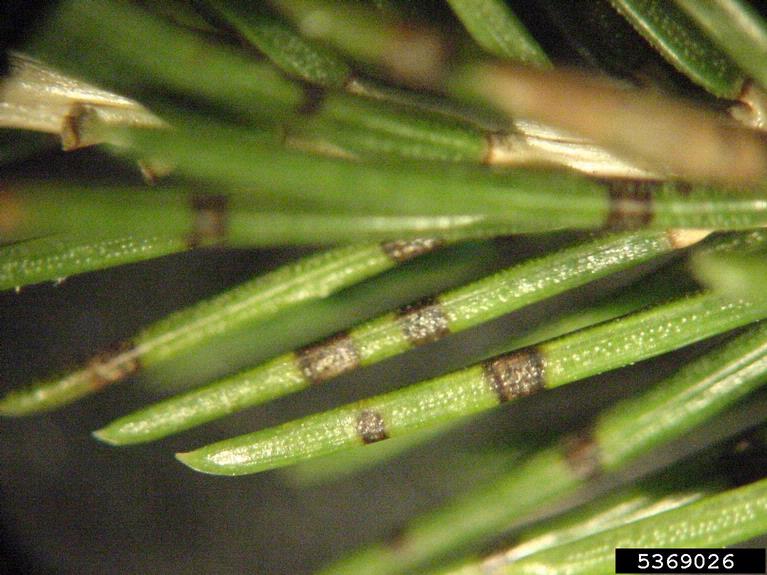
Banding on pine needles from Dothistroma Needle Blight. Photo: Paul Bachi, Univ. of Kentucky, Bugwood.org
3. Armillaria Root Rot
Armillaria root rot (Armillaria spp.) is a fungal disease that affects the roots of white pines, causing gradual tree decline. This disease is particularly problematic in areas with heavy, poorly-drained soils, which promotes fungal activity. Once established, the fungus damages the tree’s roots, making it more susceptible to other stresses and diseases.
Symptoms:
• Yellowing or browning needles.
• Dieback starting from the lower canopy, progressing upward.
• Black, stringy fungal mats found at the base or around the roots.
Management:
• Avoid overwatering: Ensure that the soil around the tree drains well and doesn’t stay overly saturated.
• Remove infected trees: If the infection is severe, removing the infected tree can prevent the spread of the fungus.
• Soil treatments: Fungicide applications to the soil can help control the fungus, although this should be done carefully and under expert supervision.
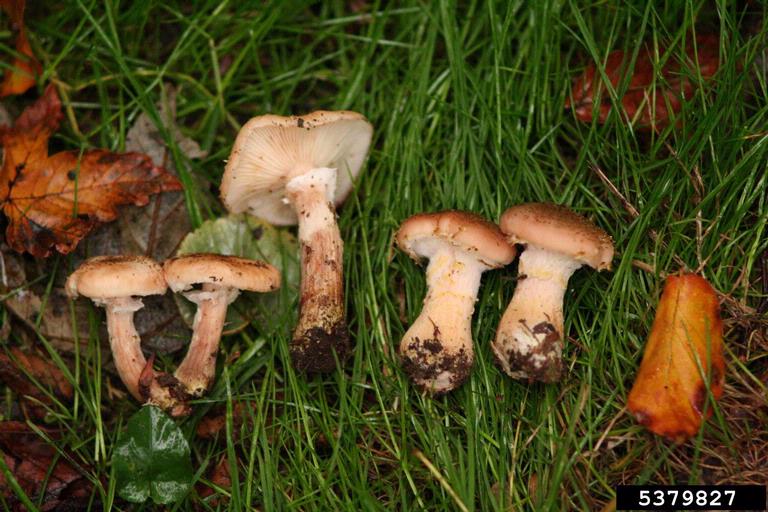
Armillaria root rot mushrooms. Photos: Andrej Kunca, National Forest Centre - Slovakia, Bugwood.org
Common White Pine Insects in Fenton
In addition to diseases, white pines in Fenton face threats from various insect pests. These insects cause damage in different ways, from boring into the bark to sucking sap from the needles. Recognizing the signs of insect infestations and taking action early can prevent serious damage.
1. White Pine Weevil
The white pine weevil (Pissodes strobi) is a notorious pest of young white pines. In most cases, the adult weevil damages the tree by feeding on the central leader of the tree. This causes stunted growth, deformation, and sometimes the death of the central stem. The larvae bore into the tree’s stem, disrupting nutrient flow and weakening the tree.
Symptoms:
• Wilting or dieback of the central leader, leading to multiple leaders growing in its place.
• Resin-soaked areas near the base of the tree.
• Holes in the bark from where the larvae feed.
Management:
• Prune affected leaders: Cut back damaged central leaders as soon as wilting is noticed to remove weevils that are still feeding inside the central leader.
• Insecticide applications: Use insecticides to protect young trees from weevils. A single treatment is applied in the early spring when adults are active and laying eggs.
• Fertilization: Maintaining tree health through proper fertilization strengthens trees and makes them less susceptible to weevil infestations.

White pine weevil exit holes on white pine. Photo: Steven Katovich, Bugwood.org
2. Pine Bark Adelgid
The pine bark adelgid (Pineus strobi) is an insect that feeds on the bark of white pines by sucking out the sap. Large infestations can weaken the tree, causing yellowing of the needles and reducing the tree’s ability to withstand other stresses.
Symptoms:
• Yellowing of the needles, branch dieback.
• Presence of sticky honeydew on branches, ground, and surrounding areas.
• Clusters of white adelgids on the undersides of branches or on the trunk of the tree.
Management:
• Natural predators: Encourage the presence of natural aphid predators such as ladybugs, which can help control adelgid populations.
• Insecticide applications: Insecticidal treatments may be effective during early stages of the infestation.
• Pruning: If needed, prune off heavily infested branches to reduce the number of adelgids on the tree.

Pine bark adelgids on white pine tree trunk. Photo: Gyorgy Csoka, Hungary Forest Research Institute, Bugwood.org
3. Eastern Pine Bark Beetle
The eastern pine bark beetle (Ips pini) targets stressed white pines, especially those affected by drought. The larvae tunnel beneath the bark, disrupting the tree’s vascular system and causing dieback. This beetle is particularly damaging to trees under environmental stress.
Symptoms:
• Yellowing or browning of the needles.
• Small holes in the bark, often surrounded by sawdust-like frass.
• Resin oozing from the bark as the tree tries to seal the damage.
Management:
• Preventive treatments: Apply insecticides during drought or stress periods to protect trees.
• Remove affected trees: If a tree is heavily infested, removal may be necessary to prevent the spread of the beetles to nearby trees.

Pine bark beetles under the bark of a pine tree. Photo: William M. Ciesla, Forest Health Management International, Bugwood.org
Conclusion
White pines in Fenton are exposed to various diseases and insects that can significantly harm their health and appearance. Regularly monitoring your trees for signs of disease or pest infestation is crucial for early intervention. If you suspect your tree is affected, contacting a certified arborist can help in identifying the problem and determining the best corrective action to take. By taking preventive steps and maintaining the overall health of your white pines, you can ensure that these magnificent trees continue to enhance your landscape for many years to come.