
Plant Health Care
White Pine Tree Diseases and Insects in Grand Blanc, Michigan: What You Need to Know
| Mar 31, 2025

White pine weevil damage on white pine. Photo: Steven Katovich, Bugwood.org
White pine trees (Pinus strobus) are a beloved sight in Michigan’s landscapes, including Grand Blanc. Known for their towering stature and soft, bluish-green needles, these majestic trees provide essential wildlife habitats, valuable timber, and beautiful scenery.
However, just like all trees, white pines are susceptible to various diseases and insects that can harm their health. If you’re a homeowner in Grand Blanc, understanding the common threats to white pines is crucial for their preservation. In this blog, we’ll dive into the most prevalent diseases and insect infestations that can impact white pine trees in the area, offering tips on prevention and management.
Common White Pine Diseases in Grand Blanc
White pines in Michigan are vulnerable to a few key diseases that can cause significant damage if not addressed properly. Understanding the symptoms and prevention strategies for these diseases is vital for maintaining tree health.
1. White Pine Blister Rust
White pine blister rust (Cronartium ribicola) is one of the most damaging diseases to white pines in Michigan. This fungal infection affects the tree's ability to transport water and nutrients, causing significant harm. The disease starts with yellow-orange pustules on the needles and can lead to branch dieback, reduced growth, and even tree death if left untreated.
Symptoms:
• Yellow-orange lesions on the needles or branches.
• Blisters or swellings on stems, especially near the branches.
• Premature needle drop.
Management:
• Remove and destroy infected branches: If you notice symptoms early, prune and destroy infected branches to reduce the spread.
• Avoid planting white pines near currants and gooseberries: These plants act as alternate hosts for the rust fungus. By keeping white pines away from them, you can reduce the risk of infection.
• Fungicide treatments: Infected trees can sometimes be treated with fungicides, but this should be done under the guidance of an arborist to be effective.

White pine blister rust on tree trunk. Photo: Steven Katovich, Bugwood.org
2. Dothistroma Needle Blight
Dothistroma needle blight (Dothistroma septosporum) is a fungal disease that targets the needles of white pines. It thrives in humid conditions, which are common in Michigan's climate, especially in the spring and early summer. The fungus weakens the tree, reducing its ability to photosynthesize, which in turn affects its overall health.
Symptoms:
• Yellow to reddish-brown bands on the needles, starting from the tips.
• Premature needle drop.
• Reduced growth or stunted tree development.
Management:
• Pruning: Remove affected branches to prevent the disease from spreading.
• Fungicides: Apply fungicides during the growing season to protect new growth.
• Improve air circulation: Space trees properly to allow air to flow through the canopy, reducing humidity and promoting faster drying of foliage.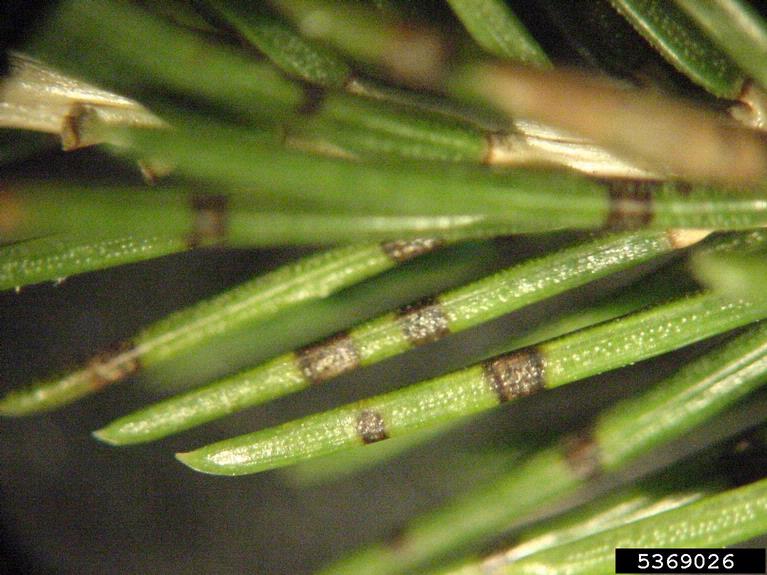
Banding on pine needles from Dothistroma Needle Blight. Photo: Paul Bachi, Univ. of Kentucky, Bugwood.org
3. Armillaria Root Rot
Armillaria root rot (Armillaria spp.) is a soil-borne fungal disease that affects the roots of white pine trees, leading to a slow decline in health. It’s a serious disease in Michigan, particularly in areas with heavy, poorly-drained soils, which can promote fungal growth.
Symptoms:
• Yellowing or browning of needles.
• Dieback of branches, starting from the lower canopy.
• Black, stringy fungal mats found at the base of the tree or around roots.
Management:
• Proper watering: Avoid overwatering and ensure proper drainage around the tree’s roots.
• Remove infected trees: In severe cases, infected trees may need to be removed to prevent the fungus from spreading to other nearby pines.
• Soil treatments: Fungicide treatments can help manage the fungus in the soil, though they must be applied carefully.
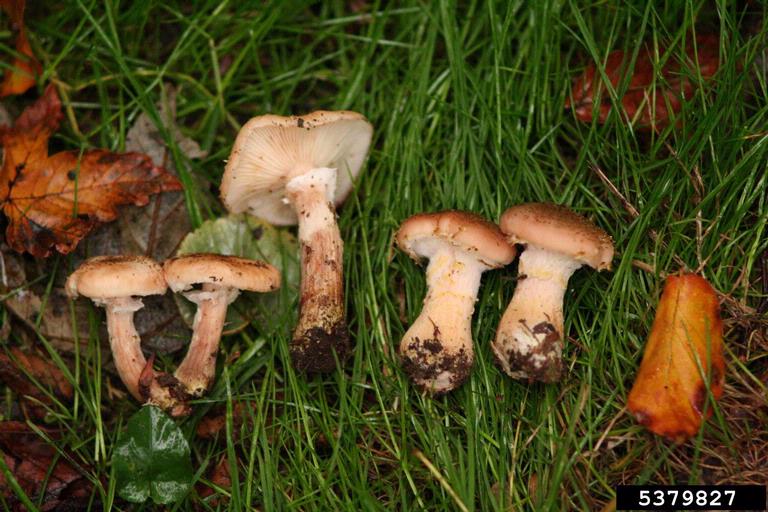
Armillaria root rot mushrooms. Photos: Andrej Kunca, National Forest Centre - Slovakia, Bugwood.org
Common White Pine Insects in Grand Blanc
Insects are another significant threat to white pines in Grand Blanc, Michigan. Several insect pests target these trees, from wood-boring beetles to sap-sucking aphids, each causing different types of damage. Early detection and treatment are key to controlling white pine insects.
1. White Pine Weevil
The white pine weevil (Pissodes strobi) is one of the most damaging insects to white pine trees. The adult weevil feeds on the leader (top growth) of young white pines, causing stunted growth and deformities. The larvae tunnel into the stem, disrupting the tree’s nutrient flow and weakening the tree.
Symptoms:
• Wilting or dying of the central leader, leading to multiple leader growth - which is not ideal.
• Resin-soaked areas near the base of the tree.
• Visible holes in the bark from where the larvae are feeding.
Management:
• Prune affected leaders: Early pruning of damaged leaders can help prevent further spread on young trees.
• Insecticide application: Insecticides can be applied to protect against white pine weevils.
• Fertilization: A healthy tree is the best natural defense against weevils.

White pine blister rust on tree trunk. Photo: Steven Katovich, Bugwood.org
2. Pine Bark Adelgid
The pine bark adelgid (Pineus strobi) is an insect that feeds on the bark of white pines, sucking out sap and causing stress to the tree. Large infestations can cause yellowing of the needles and weaken the tree, making it more susceptible to disease.
Symptoms:
• Yellowing of needles, branch dieback.
• Sticky residue (honeydew) on the branches, ground, and surrounding areas.
• Presence of masses of white adelgids on the trunk or underside of branches.
Management:
• Natural predators: Encourage the presence of natural aphid predators, such as ladybugs and lacewings, which can help reduce aphid populations.
• Insecticides: Insecticides can help manage adelgid populations, especially during the early stages of an infestation.
• Pruning: In severe cases, pruning affected branches can help reduce the number of adelgids on the tree.

Pine bark adelgids on white pine tree trunk. Photo: Gyorgy Csoka, Hungary Forest Research Institute, Bugwood.org
3. Eastern Pine Bark Beetle
The eastern pine bark beetle (Ips pini) is a bark-boring insect that attacks white pines, particularly during periods of drought or other stress. The larvae tunnel under the bark, disrupting the tree’s vascular system and leading to branch dieback or the death of the tree.
Symptoms:
• Yellowing or browning of needles.
• Small holes in the bark, often surrounded by sawdust-like frass.
• Resin oozing from the bark.
Management:
• Preventive treatments: Apply insecticides to protect the tree, especially during periods of drought or when trees are under stress.
• Remove affected trees: In cases of severe infestation, removing and destroying infested trees can help prevent the beetles from spreading.

Pine bark beetles under the bark of a pine tree. Photo: William M. Ciesla, Forest Health Mgt Intl., Bugwood.org
Conclusion
White pines in Grand Blanc, Michigan, face various threats from both diseases and insects. Regular monitoring and early intervention can help protect these valuable landscape trees. If you notice any signs of disease or insect infestation, consult an ISA Certified Arborist who can help identify the issue and recommend the appropriate treatments. With the right care, you can ensure that your white pines continue to thrive for years to come.