
Tree Spraying
Why It’s Important to Fertilize Trees Using ANSI A300 Standards
| Feb 11, 2026
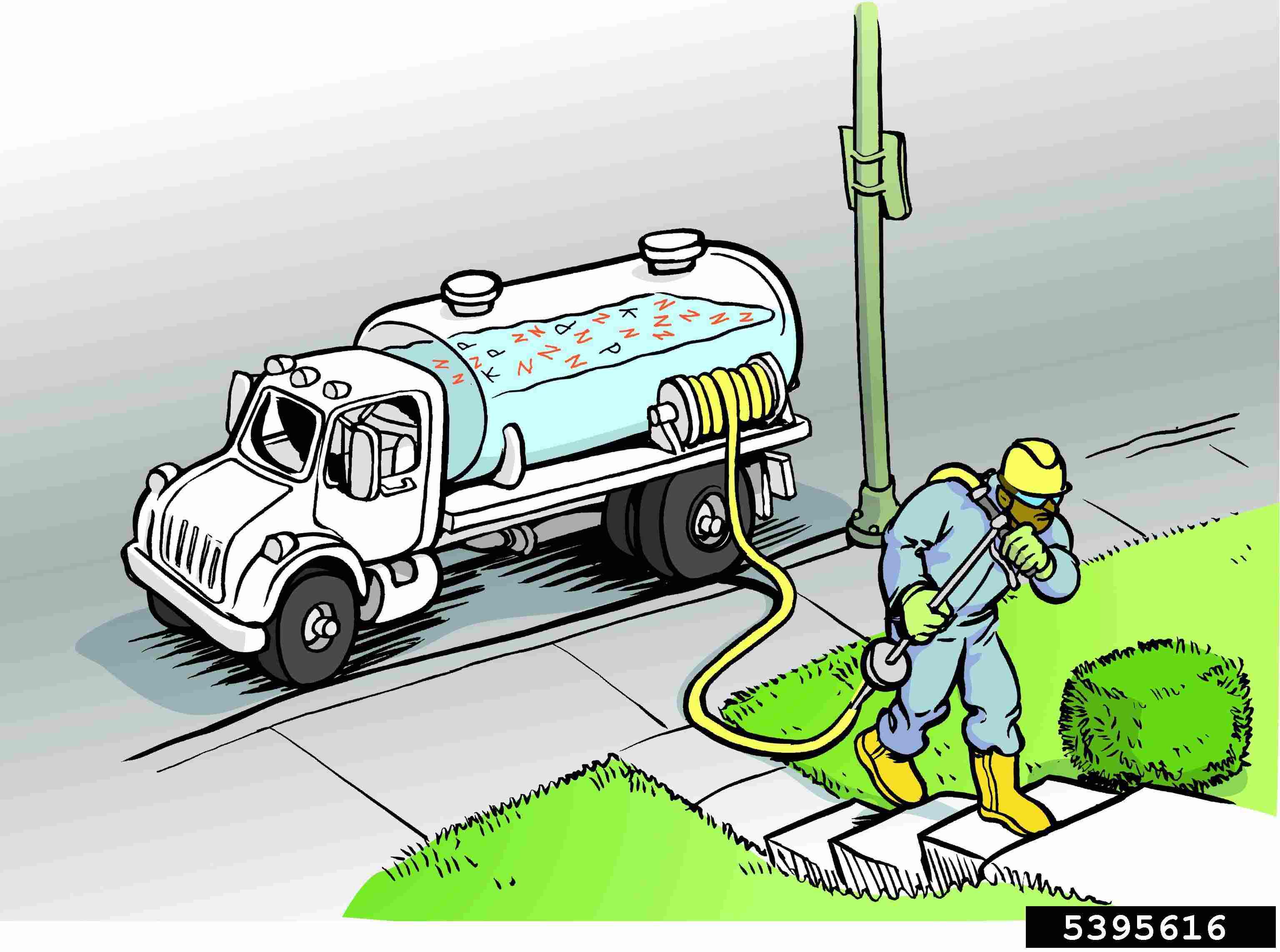
Tree deep-root fertililzation truck. Photo: International Society of Arboriculture, Bugwood.org
Tree fertilization is often misunderstood. Some Fenton, MI homeowners see fertilizer as a quick fix for stressed trees, while others avoid it entirely out of concern that it may cause harm. The reality is that fertilization can be extremely beneficial when it is done correctly. This is why the American National Standards Institute (ANSI) A300 Tree Care Standards exist. These nationally recognized standards provide clear guidance on when and how tree fertilization should be performed to support long-term tree health rather than short-term appearance.
One of the key principles of ANSI A300 is that fertilization is about soil health, not simply feeding the tree. Trees depend on healthy soil systems to function properly. Soil structure, oxygen availability, microbial activity, and nutrient balance all play a role in how well a tree can absorb the nutrients it needs. Fertilization under ANSI A300 is intended to correct deficiencies and improve soil conditions, not override natural biological processes.
Improper fertilization can create more problems than it solves. Applying excessive nitrogen or fertilizing at the wrong time of year can lead to rapid, weak growth that is more susceptible to insects and disease. It can also reduce root development, create nutrient imbalances, and increase drought stress. Commonly used big box store fertilizer tree spikes can be more harmful to the tree in the long run. ANSI A300 standards exist to prevent these outcomes by requiring fertilization decisions to be based on actual need.
Under ANSI A300, fertilization is recommended only when a tree is experiencing a documented limitation. These limitations may include nutrient-deficient soils, compacted root zones, restricted rooting areas, construction damage, or environmental stress. Fertilization is not intended to force growth or make a healthy tree grow faster. Instead, it is meant to restore balance and support normal physiological function.
Soil testing plays a critical role in ANSI A300 fertilization practices. Rather than guessing which nutrients may be lacking, soil analysis provides accurate information about nutrient levels, soil pH, and organic matter. This allows arborists to apply the right nutrients at the right rates while avoiding unnecessary applications that could harm the tree or surrounding environment.
ANSI A300 also emphasizes that fertilization should focus on the root zone. Trees absorb water and nutrients primarily through fine feeder roots located in the upper soil profile and often beyond the drip line. Professional fertilization methods distribute nutrients evenly throughout the root zone, improving uptake and reducing surface runoff.
Another important benefit of fertilization performed to ANSI A300 standards is improved stress tolerance. Trees in urban and suburban environments, like Fenton, are exposed to soil compaction, limited rooting space, heat, drought, deicing salts, and mechanical damage. Proper fertilization supports root function, energy storage, and overall vigor, helping trees better withstand these stresses.
Timing is another key factor addressed by ANSI A300. Fertilization is most effective when roots are actively growing and able to absorb nutrients efficiently. Poorly timed applications can result in wasted fertilizer or excessive shoot growth at inappropriate times. Slow-release formulations are often preferred because they provide a steady nutrient supply without forcing growth.
ANSI A300 makes it clear that fertilization should never be a stand-alone treatment. It works best as part of a comprehensive tree care plan that includes proper mulching, correct pruning, adequate watering, soil decompaction when needed, and protection of the root zone. Fertilizer cannot compensate for poor planting depth, chronic overwatering, or severe soil compaction.
When tree fertilization follows ANSI A300 standards, the long-term benefits are significant. Trees often show improved root development, more balanced growth, increased resistance to pests and disease, and reduced need for corrective pruning. This standards-based approach prioritizes tree longevity and structural stability.
For Fenton homeowners, ANSI A300 provides confidence that tree fertilization decisions are based on science rather than guesswork. Trees are a major investment in property value, energy savings, and landscape quality. Managing them according to professional standards helps protect that investment.
The bottom line is that tree fertilization can be a valuable tool when it is applied correctly. ANSI A300 standards ensure tree fertilization is justified, targeted, and beneficial. By focusing on soil health, root function, timing, and actual need, fertilization performed under ANSI A300 supports healthy, strong trees over the long term.
We offer different types of tree fertilization, depending on the needs of your trees and shrubs. To find out if your landscape plants would benefit from fertilization contact Owen Tree and Lawn Care at 800-724-6680.