
Lawn Care
Why Skunks Dig in Michigan Yards — It’s All About the Food
| Nov 07, 2025
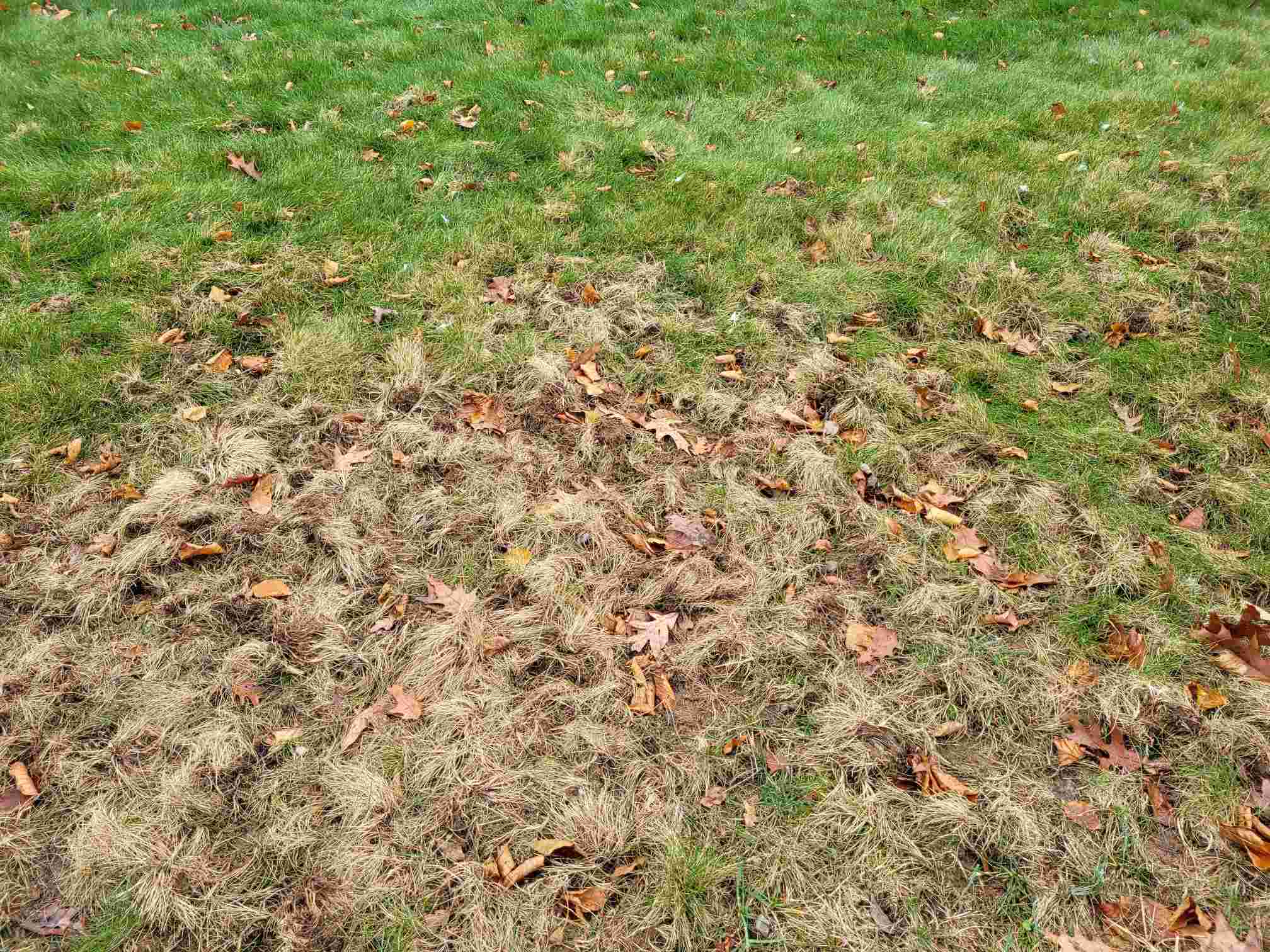
Lawn damage due to skunk digging. | Tom Morgan, Owen Tree & Lawn Care
You wake up one crisp Michigan morning, step outside, and there it is: your lawn looks like someone took a tiny ice-cream scoop to it. Small cone-shaped holes, little piles of dirt, patches of turf have been dug up overnight.
If this scene looks familiar, you’ve probably got a skunk visiting after dark.
Before you panic, take a deep breath (preferably upwind). Skunks aren’t destroying your yard out of spite, they’re simply searching for food; and if your lawn offers a midnight meal, they’ll happily dig in.
Let’s look at why skunks love Michigan lawns, what those holes really mean, and what you can do to keep your turf healthy and hole-free.
What Skunk Holes Look Like
To confirm whether skunks are behind the damage, check for these clues:
• Small, cone-shaped holes, two to four inches wide
• Loose soil or grass flipped up around the edges
• Evenly spaced holes across soft areas of turf
• Damage that appears overnight
According to Michigan State University Extension, skunks leave “shallow holes surrounded by loose soil” while digging for grubs and insects. Unlike raccoons, which tear up entire patches of sod, skunks make smaller, more precise holes, think of them as little insect probes.
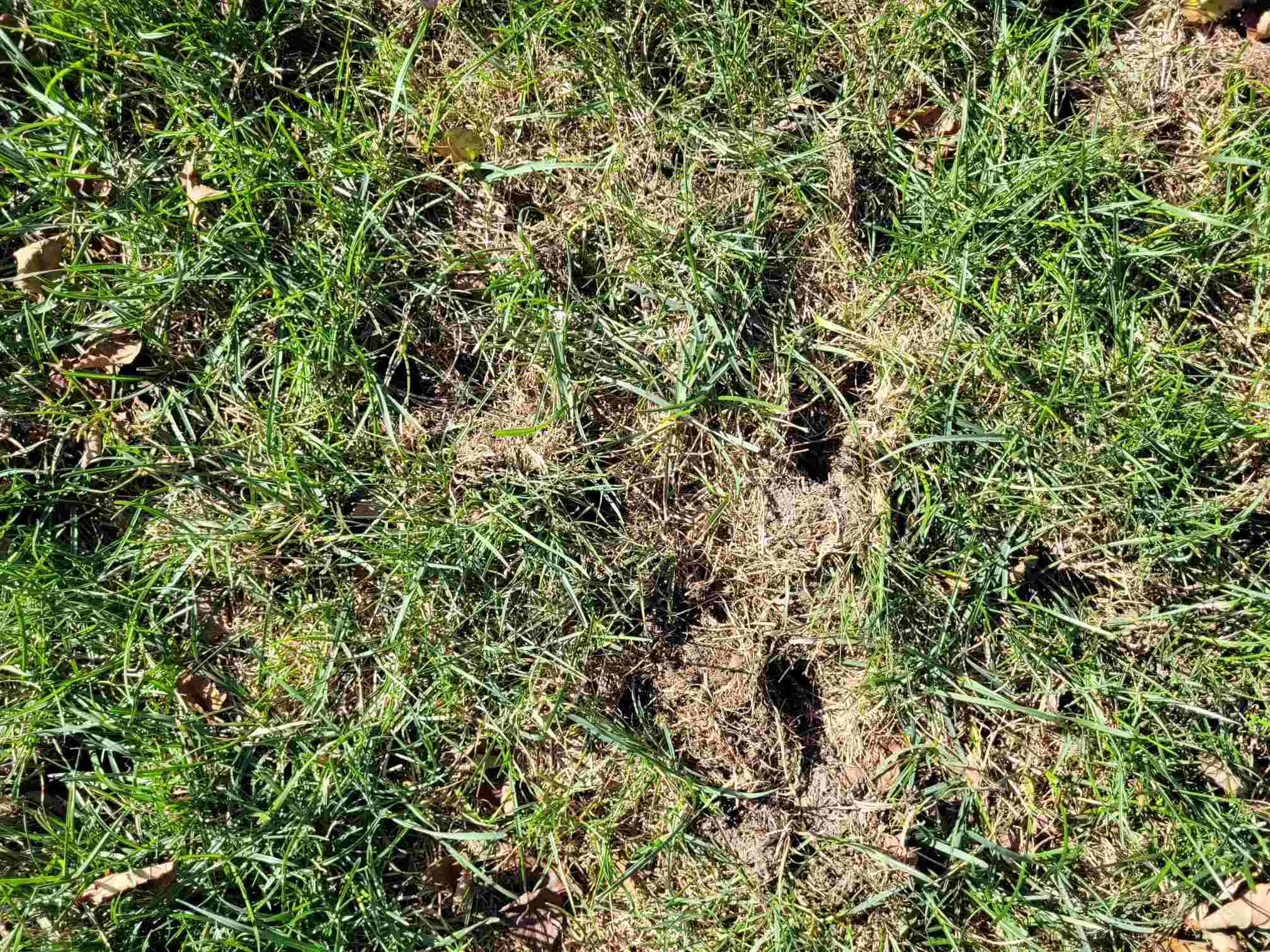
Pock marks in lawn caused by skunk digging. | Tom Morgan, Owen Tree & Lawn Care
Why Skunks Are Digging in Michigan Yards
1. It’s All About the Bugs
Skunks are nature’s pest control crew. Their diets change through the seasons, but insects are always a favorite. In Michigan lawns, that means grubs, beetle larvae, worms, and other soil-dwelling critters.
They can smell insects underground and will dig small, shallow holes to reach them. If your grass hides a healthy grub population, as some Michigan lawns do, skunks will come running (or waddling) to the buffet.
But here’s the catch; even if you don’t have grubs, skunks may still dig for other insects. Worms, ants, earwigs, and even surface beetles are all on the menu. They’re not picky, if it moves or wriggles, it’s food.
So, whether you’ve got a hidden grub issue or just a bug-friendly yard, skunks are happy to explore your lawn for a late-night feast.
2. Fall Is Peak Digging Season
In Michigan, skunks are most active in the fall, when they’re fattening up for winter hibernation. As temperatures drop and nights grow longer, they increase their feeding to build fat reserves.
Cool, damp autumn soil also makes digging easier, and grubs are abundant near the surface at that time of year.
You may also see fresh holes in spring, right after the thaw, when worms and beetle larvae reappear near the surface. You will also see them during summer where irrigation or rainfall can bring insects higher up in the soil; yet another easy snack for a hungry skunk.
Basically, whenever your yard is soft and bug-active, skunks will take notice.
3. Soft, Moist Lawns Attract Skunks
Michigan lawns tend to hold moisture, especially after snowmelt or fall rains. That soft ground not only draws insects and worms upward, but also makes digging a breeze.
New sod, recently seeded areas, and overwatered lawns are especially vulnerable. Their loose topsoil and shallow roots make perfect hunting grounds for skunks.
If you’ve just laid new sod and wake up to find little holes, it’s not your landscaper’s fault, chances are it’s a local skunk taking advantage of your easy-dig buffet.
4. They’ll Hunt Even Without Grubs
One of the biggest myths is that skunks only dig when grubs are present. In reality, skunks are opportunistic feeders.
If there aren’t grubs, they’ll simply switch gears to eating worms, beetles, crickets, spiders, ants, fallen fruit, or even birdseed scattered on the ground. Some will even paw through mulch or compost piles looking for insects.
So even a “grub-free” lawn can attract them if it offers moisture, organic matter, or easy insect hunting.
5. They Work the Night Shift
Skunks do all their digging after dark, when it’s quiet and safe. You’ll rarely see them in action, but the evidence is unmistakable come morning.
They often return for several nights in a row, focusing on areas where food is most plentiful. Once they’ve cleaned out the insects from one spot, they’ll move to another; sometimes the neighbor’s yard is the next restaurant on their list.
The Bright Side: Skunks Help With Pest Control
Here’s something most homeowners don’t realize; skunks are actually doing some good.
Those grubs they’re after, they’re the same pests that destroy Michigan lawns by eating grass roots from below. By eating grubs, skunks can help reduce the long-term damage grubs cause.
So, while the holes are unsightly, they often indicate a lawn that already had a pest problem. In that sense, the skunk is more symptom than cause, so they are sometimes a furry, four-legged pest inspector.
How to Stop Skunks From Digging in Your Lawn
If you’d prefer to keep your yard skunk-free (and hole-free), the solution starts with removing their motivation to dig.
1. Treat for Grubs
Since skunks are digging for food, eliminating their main food source is the most effective strategy. While most insects, and certainly earthworms, are not harmful to lawns, grubs are a different story. Grubs can cause serious damage to lawns.
Apply a grub treatment to target grub larvae when they are small and close to the surface. Depending on the product used, the timing to apply a grub treatment can range from late spring to mid-September.
Even if you don’t have visible grub damage, a preventative treatment once a year can keep skunks from getting interested in your lawn in the first place.
2. Manage Lawn Moisture
Too much watering keeps soil soft and insects near the surface, this is a double invitation for skunks.
Water deeply but infrequently, allowing your lawn to dry slightly between sessions; a firmer lawn surface makes digging harder and less appealing. This also promotes deeper root growth and healthier turf overall, which helps resist insect infestations.
3. Eliminate Other Food Sources
Skunks will happily eat whatever they find on your property, not just bugs. Keep these tips in mind to keep skunks out of your yard:
• Bring in pet food at night.
• Rake up fallen fruit under trees.
• Sweep away spilled birdseed.
• Use tight-fitting lids on trash cans.
A clean, tidy yard leaves them with nothing to scavenge and no reason to stick around.
4. Use Gentle Deterrents
If skunks keep visiting while you’re treating your lawn, consider adding some mild deterrents.
Motion-activated sprinklers, solar lights, or noise devices can startle them away safely. Some homeowners also use citrus peels or ammonia-soaked rags around high-activity areas to create unpleasant smells.
These won’t solve the food issue on their own, but they can help discourage repeat visits while you deal with the grubs. Dealing with the insect issue is the main priority as often times, the skunks ignore and become desensitized to the lights and noise deterrents after a period of time.
5. Repair and Strengthen Your Lawn
Once digging stops, fill the holes with soil, reseed, and focus on long-term lawn health.
A thick, dense lawn naturally resists grub infestations and recovers quickly from wildlife damage. Aerate annually, fertilize in the fall, and mow at the proper height to build strong roots.
Healthy grass plants equals fewer nuisance bugs and fewer skunks.
6. Hire an Animal Control Company
There are several animal control companies that will set traps for skunks. Once they catch a skunk in the trap they will relocate it to a different area. Prices vary, but there will probably be a fee even if they do not catch a skunk.
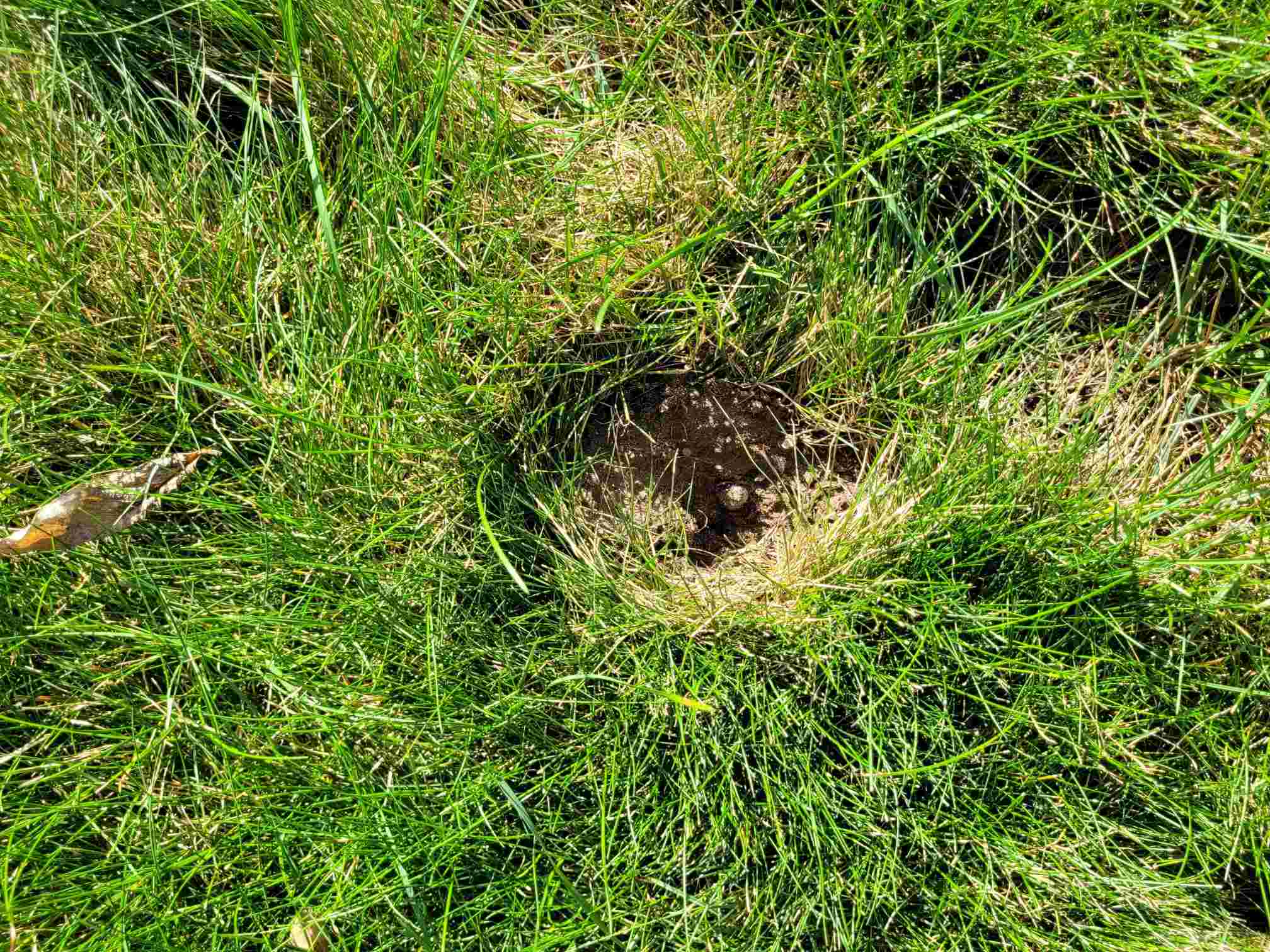
Hole in lawn from skunk digging. | Tom Morgan, Owen Tree & Lawn Care
Michigan-Specific Tips
• Watch the fall: Skunks are busiest in September to November before hibernation.
• Spring activity: Expect light digging again when the ground thaws.
• New sod: Protect it with light deterrents or temporary mesh covers until it establishes roots.
• Stay calm: Skunks rarely spray unless cornered, they’re gentle insect hunters, not aggressors.
How Owen Tree & Lawn Care Can Help With Skunks
Grubs are a favorite food source for skunks. A preventative grub control treatment, usually applied in early summer, will control grubs when they are small and less likely to attract skunks.
If skunks are digging in your yard and finding mature grubs, then we can apply a curative grub control treatment. However, this is not likely to be an immediate cure to your skunk problem. Even if the curative grub control eliminates 100% of the grubs, a skunk is likely to return to your lawn for a while. It knows it found food there once, so it may return to see if it can find more to eat.
Call Owen Tree & Lawn Care at 800-724-6680 today to get immediate pricing on a grub control application for your yard.
Final Thoughts
If you’re seeing small holes across your Michigan lawn, chances are skunks are simply searching for grubs, earthworms, or insects beneath the surface.
They dig mostly in fall when preparing for winter but will forage any time conditions are right. Even without grubs, they’ll hunt for worms, beetles, and other soil life that healthy lawns naturally attract.
By treating for grubs, managing soil moisture, and removing easy food sources, you can protect your turf without harming these helpful (if slightly smelly) visitors.