
Winter Tree Care
Will Your Trees Weather the Winter?
| Feb 25, 2026
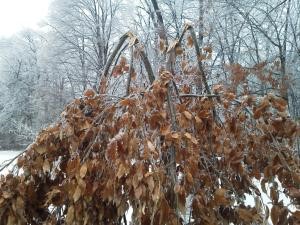
Broken branches from ice storm. | Tom Morgan, Owen Tree Service
Winter in Commerce Township offers picturesque landscapes, but the heavy snowfalls and ice storms characteristic of Michigan winters can pose a serious threat to your landscape's trees and shrubs. The accumulated weight can lead to significant structural damage, from broken limbs to split trunks, creating safety hazards and potential entry points for pests and diseases. Understanding how to prevent and manage this damage is crucial for preserving your landscape's beauty and ensuring plant health.
The Mechanics of Winter Damage
Snow and ice inflict damage primarily through immense weight and temperature fluctuations. Wet, heavy snow or a coating of ice can add hundreds of pounds of weight to branches, often exceeding their natural flexibility and breaking point. This is particularly common in:
• Coniferous evergreens, which have needles that efficiently trap snow, leading to heavy loads on horizontal branches.
• Weak-wooded deciduous trees, like silver maples and birches, whose branch structure makes them prone to splitting under an ice load.
• Arborvitaes and junipers, which often experience splaying or bending of limbs away from the center of the plant.
Frost Cracking and Root Damage
Rapid temperature swings, typical in Michigan, can cause a tree's outer bark to expand and contract faster than the inner wood, leading to vertical cracks (frost cracks). These cracks can be an entry point for disease and wood decay fungi.
Additionally, repeated freezing and thawing of the soil can cause soil heaving, a process that damages root systems, especially in recently planted trees and shrubs.
Other Winter Threats
• Desiccation/Winter Burn: Drying winter winds can draw moisture from evergreen needles faster than frozen roots can replenish it, resulting in brown, dead foliage. This damage is often not evident until May or June.
• Salt Damage: Runoff from salted roads and sidewalks can harm root systems and evergreen foliage can be impacted from salt spray near roads.
• Wildlife Damage: With natural food sources buried under snow, rodents and deer may resort to chewing on the bark of young trees and shrubs, potentially "girdling" them and causing death.
Prevention Strategies for Commerce Homeowners
Proactive measures in the fall and early winter are your best defense against damage.
• Proper Pruning: Prune trees strategically in late fall or winter to remove weak, dead, or crossing branches and establish a strong central leader. This structural pruning reduces the surface area where snow and ice can accumulate. For guidance, consult an ISA Certified Arborist for a professional assessment.
• Species Selection: When planting, choose species adapted to Michigan's climate and known for storm resistance, such as white fir, locust or red maples. Avoid brittle species like white pine, birch or ornamental flowering pears.
Protecting Plants from Winter Weather
• Wrap the trunks of young or thin-barked trees in late fall with commercial tree guards or burlap to prevent sunscald and rodent damage. Remove the wraps in late March or early April.
• For vulnerable evergreens, tie branches gently together with soft rope or twine to keep them upright, or create burlap screens as a windbreak. Remove in April after the threat of winter weather has passed.
• Apply a 2-4 inch layer of organic mulch around the root zone to insulate the soil and regulate soil temperature, preventing frost heaving.
Managing Snow and Ice: Do's and Don'ts
When a winter storm hits, your reaction is critical.
• DO gently remove fresh, heavy snow from tree branches and evergreens using a broom or a rake, starting from the lower limbs and working upward. This helps prevent the weight from building up.
• DO NOT attempt to shake or hit ice-laden branches. Frozen branches are extremely brittle and are far more likely to snap under manual force than if left alone.
• DO NOT spray plants with water to melt the ice, as this will only add another layer of ice if the temperature drops again.
• DO NOT walk under heavily ice-covered trees due to the danger of falling limbs or ice chunks.
In cases of significant damage, especially near power lines or structures, the best course of action is to contact a professional tree care service in Commerce Township. They have the experience and equipment to safely manage hazards and perform proper pruning cuts to ensure the tree's long-term health.
By understanding the risks of winter weather and taking preventative action, you can help your landscape plants weather the winter and return to their full splendor when spring arrives.