
Plant Health Care
Controlling Box Tree Moth on Genesee County Boxwood Shrubs
| Feb 18, 2026
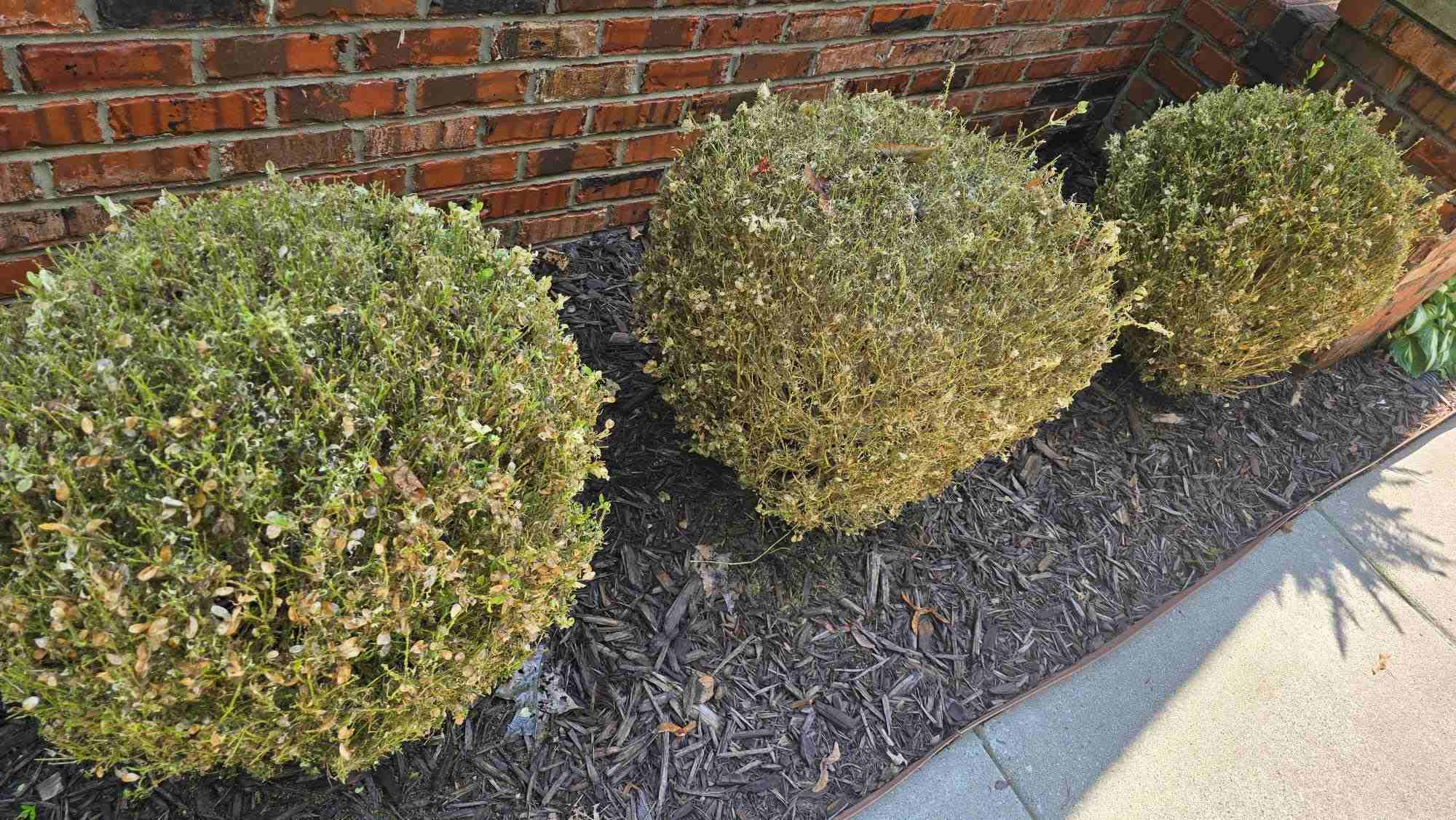
Boxwood shrub damage from box tree moth. | Tim Lindley, Owen Tree Service
Boxwoods have long been a staple shrub in Genesee County, Michigan landscapes, valued for their clean look, year-round greenery, and ability to frame homes and walkways. In communities like Grand Blanc, boxwoods are often a major investment in both time and money. Unfortunately, a relatively new invasive insect - the box tree moth - has changed the outlook for boxwood shrubs across Southeast Michigan. Without proper, season-long protection, box tree moth caterpillars can severely damage or even kill boxwoods in a matter of days or weeks.
Box tree moth (Cydalima perspectalis) is an invasive caterpillar that feeds exclusively on boxwoods. Native to Asia, it was first detected in Michigan in recent years and has spread quickly across multiple counties, including Genesee County. Once established, populations can build rapidly, leading to total defoliation of boxwoods.
Landscapes in Genesee County, including many in Grand Blanc, are home to mature boxwood shrubs planted close together to form hedges. This creates ideal conditions for box tree moths to spread from plant to plant and property to property. Boxwoods already stressed by drought, winter injury, or poor drainage are especially vulnerable, and untreated shrubs are at a heightened risk.
Early detection is critical. Damage often begins inside the canopy of the shrub and can be easy to miss. Common signs of box tree moth damage include chewed or missing leaves, thinning foliage, webbing inside the plant, green caterpillars with black stripes, droppings inside the shrub, and bare stems after heavy feeding.
To effectively control box tree moth, understanding its life cycle is essential. This insect pest produces multiple generations each season. Adult moths lay eggs on boxwood leaves, which hatch into caterpillars that feed aggressively. After feeding, caterpillars pupate within a webbing chamber and then emerge as moths to repeat the cycle. Because generations overlap, boxwoods can face continuous pressure from spring through fall.
A common misconception is that one shrub spraying will solve the problem. Due to repeated egg hatch and ongoing feeding cycles, single treatments provide only short-term relief. Season-long protection sprays are necessary to maintain control and prevent repeated defoliation.
Effective box tree moth management includes regular monitoring, preventive treatments, targeted shrub spraying applications when caterpillars are active, and multiple applications throughout the growing season. When done properly, these strategies protect foliage and help boxwoods maintain healthy growth.
Untreated boxwood shrubs often experience repeated defoliation, leading to permanent thinning, branch dieback, increased winter injury, and eventual plant death. Once severe damage occurs, shrub replacement is often the only option.
Box tree moth damage is sometimes confused with winter burn, drought stress, or boxwood blight disease. However, the presence of chewed leaves, webbing, and caterpillars typically confirms box tree moth activity. Accurate identification is critical for effective management.
Because box tree moth populations are still expanding in Genesee County, early action is especially important. Landscapes that begin protection programs early in the season have much better outcomes than those that wait until damage is visible.
For homeowners in Grand Blanc and throughout Genesee County, box tree moth is now an ongoing threat. Season-long protection sprays, applied with proper timing, are essential to prevent severe damage and total loss of your boxwood shrubs. Proactive management with shrub spraying is the most reliable way to protect boxwoods and preserve the appearance and value of your landscape.
If you need your boxwood shrubs checked for box tree moth, or need to set up a box tree moth control program, contact Owen Tree and Lawn Care today at 800-724-6680.