
Plant Health Care
Dead Branches In My Oak Tree
| Mar 05, 2025
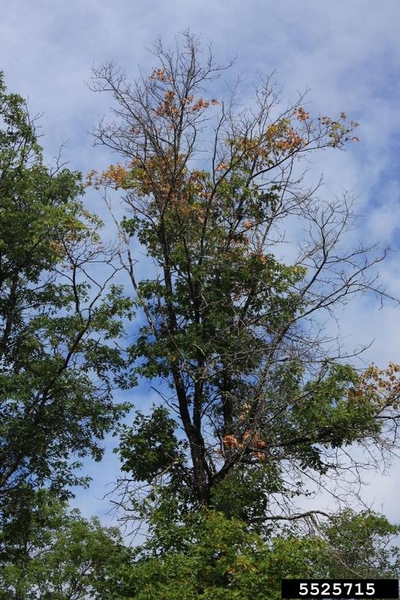
Two-lined chestnut borer damage on oak trees. Photo: Steven Katovich, Bugwood.org
I have several dead branches in my Oak Tree in Goodrich, Michigan. Could it be suffering from Oak Wilt Disease?
While Oak Wilt is a concern in this area, it is much more rare than an insect called the two-lined chestnut borer (Agrilus bilineatus). The two-lined chestnut borer is more commonly found throughout Genesee County.
The Threat of the Two-Lined Chestnut Borer to Oak Trees in Goodrich, Michigan
In Goodrich, oak trees are facing a growing threat from the two-lined chestnut borer, a beetle responsible for extensive damage to local oak populations. This destructive pest, which negatively affects hardwood forests, has become an increasing concern in the region.
The two-lined chestnut borer larvae burrow beneath the bark of oak trees, feeding in the cambium layer where they disrupt the flow of water and nutrients. This disturbance causes the tree to weaken, stress, and eventually die. Though the pest often targets already stressed trees, the rising frequency of droughts and other environmental pressures are making oak trees in Goodrich more susceptible.
Although two-lined chestnut borer outbreaks have been reported across Michigan, their impact in Goodrich is particularly troubling. Oak trees, which are essential to the area’s ecosystem, are suffering severe damage, threatening biodiversity and wildlife habitats. In addition to their ecological value, oak trees provide shade, enhance air quality, and contribute to the visual appeal of the area.
To address this problem, experts suggest timely action, including insecticide treatments, enhancing tree health, and removing deadwood. Tree owners should closely monitor their oak trees for signs of damage, such as thinning canopies, dead upper branches, fallen limbs, and discoloration of the bark.