
Plant Health Care
Mountain-ash Sawfly Control In Birmingham Landscapes
| Mar 26, 2025
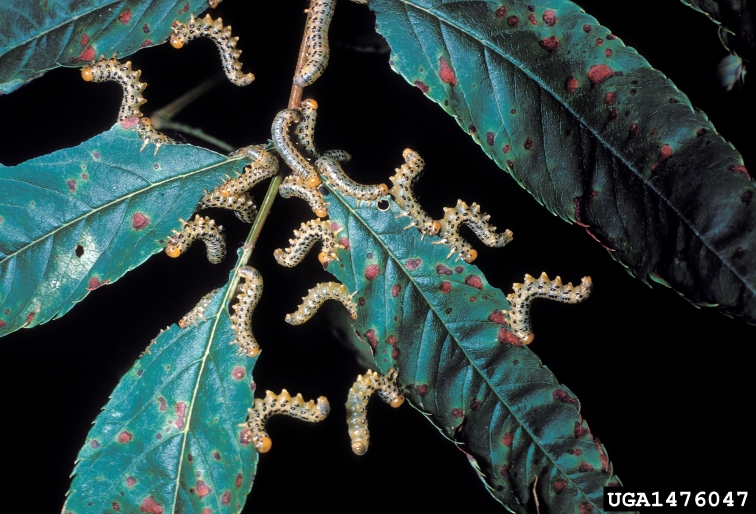
Mountain-ash Sawfly larva feeding
The mountain-ash sawfly (Pristiphora geniculata) is an invasive pest originating from Europe, now found in northeastern North America, including Birmingham, Michigan. This sawfly primarily targets American mountain-ash (Sorbus americana) and European mountain-ash (Sorbus aucuparia), causing significant defoliation that impacts the aesthetic value of these ornamental trees but rarely threatens their survival.
The lifecycle of the mountain-ash sawfly involves overwintering as larvae in cocoons beneath the soil. Adults emerge in late spring, laying eggs along the edges of host tree leaves. The larvae, initially pale yellow and later yellow with black spots, feed voraciously on foliage, leaving only the midribs of leaves intact. Young larvae feed in groups but disperse as they grow, causing severe defoliation that begins at the tree crown and progresses downward.
In Birmingham, homeowners may notice defoliation from June to mid-July, with a potential second generation appearing in late summer. While natural predators and parasitoids like Olesicampe geniculatae help control populations, manual removal of the insects from infested leaves or branches is effective for small trees. Chemical controls, by spraying the tree with an insecticide, can be applied when larvae are first observed but should be done by a professional applicator.
Although damage from the mountain-ash sawfly is typically cosmetic, monitoring and early intervention can help maintain the health and appearance of these valued ornamental trees in Birmingham’s landscapes.
If mountain-ash sawfly feeding has caused significant damage to your tree you may want to consider a deep-root fertilization to help the tree recover. The fertilization will make sure there are adequate nutrients in the soil for the tree to draw upon as it recovers.
If you see insect damage on your mountain-ash tree call Owen Tree Service to schedule an inspection and to find out the best option for helping your tree recover.