
Plant Health Care
Scale Insects on Dryden Magnolia Trees
| Nov 24, 2025
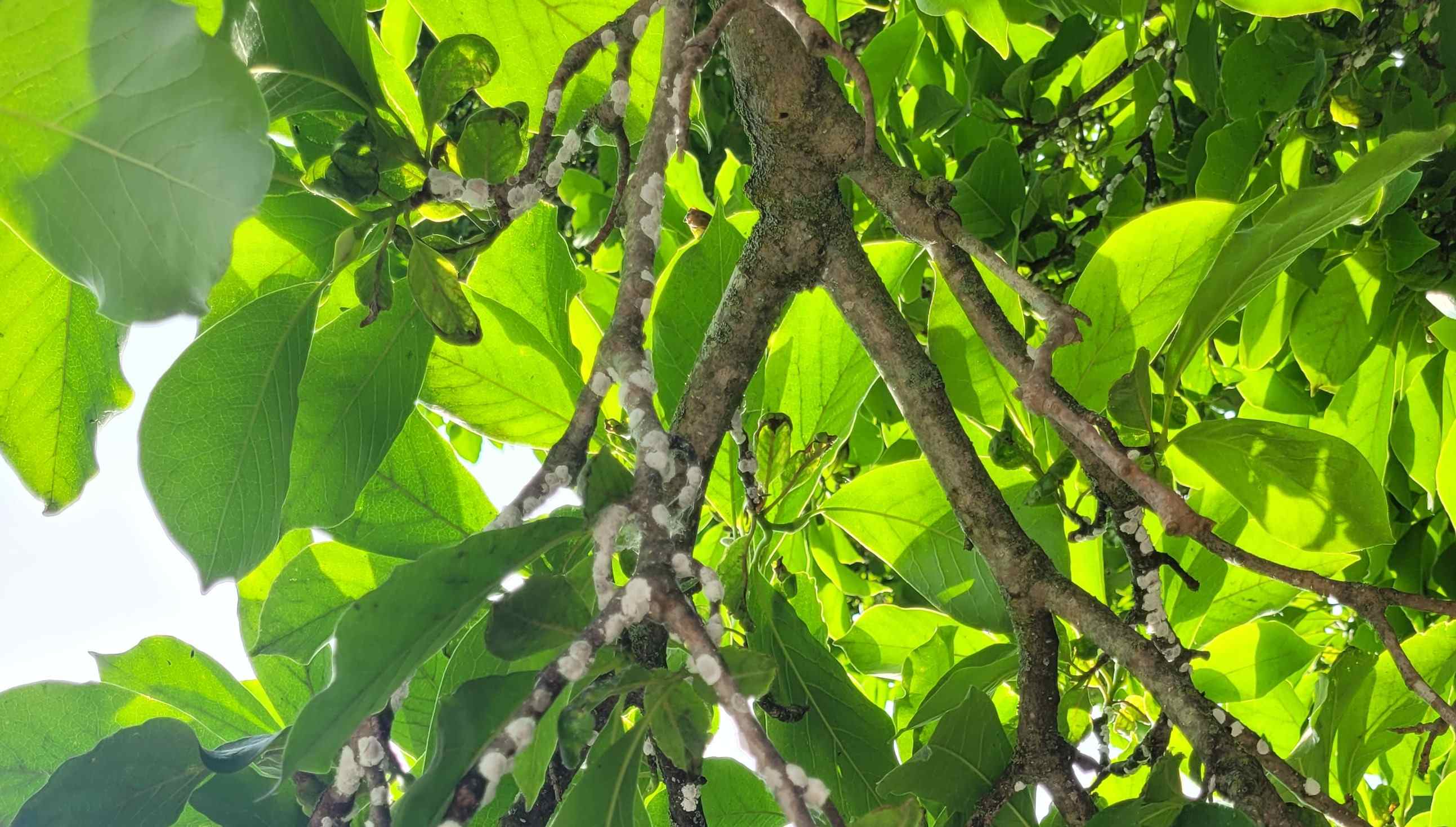
Magnolia scale on bottom of magnolia branches. Photo: David Evans, ISA Board Certified Master Arborist, Owen Tree Service
Magnolia scale, a significant pest for magnolia trees, has become increasingly common in Dryden, Michigan. This insect, scientifically known as Neolecanium cornuparvum, is one of the largest scale insects in the U.S., with females reaching up to half an inch in size. They primarily infest star magnolia and saucer magnolia species. There was a large outbreak of these insects this year. If you have a Magnolia tree in Lapeer County, there’s a real good chance you have the insect also.
Identifying Magnolia Scale
Magnolia scale appears as large, grayish-white bumps on the branches of magnolia trees. These insects feed on the sap, excreting a sticky substance called honeydew, which can lead to sooty mold growth on leaves and any nearby surfaces. This not only affects the tree's health but also attracts other pests like wasps and ants.
Managing Magnolia Scale
Effective management of magnolia scale involves both cultural and chemical strategies, through a Plant Health Care. Plant Health Care is an Integrated Pest Management approach, designed by your arborist, that determines which seasonal insects and diseases your landscape is prone to, and he/she sets up an appropriate spray program.
Cultural Control: Regular inspection of your trees for signs of scale is the first step in proper management. Often populations can grow to damaging levels without being noticed. Therefore, pruning out heavily infested branches, where practical, can help reduce the population. Ensuring proper tree health through adequate watering and fertilization can also make trees less susceptible to severe infestations.
Chemical Control: Systemic insecticides are effective when applied as a soil drench in early spring through mid-summer. This allows the insecticide to be absorbed by the roots and distributed throughout the tree.
In the late summer as the new generation of scale insects hatch and enter the “crawler stage” a contact insecticide can be applied to the leaves and twigs. This contact insecticide should be applied a couple times throughout the fall to ensure adequate coverage of the susceptible scale insects.
If you have magnolia scale, or need a magnolia tree inspected for scale insects, call Owen Tree & Lawn Care today at 800-724-6680.