
Plant Health Care
Should I treat the trees or remove the trees at a commercial property I manage?
| Feb 02, 2026

Spruce disease complex thinning the lower branches of a blue spruce tree. | Tom Morgan, Owen Tree & Lawn Care
Managing trees on commercial properties goes beyond simply planting them and maintaining them. Trees contribute to the aesthetic appeal of a property, provide shade, enhance property values, and improve the overall environment. However, like any living organism, trees are vulnerable to diseases, insect pests, and environmental stressors that can significantly impact their health. When a tree becomes infected with a disease, property managers often face a critical decision: should they treat the tree for the disease or remove it altogether?
This article will explore the costs and benefits of treating trees for diseases versus removing them after they are diagnosed with a disease on commercial properties. The decision to treat or remove a tree can depend on several factors, including the type of disease, the cost of treatment, the tree's value to the property, and the long-term benefits of tree retention. We’ll also examine various management strategies and how to make informed decisions to optimize costs, safety, and the long-term value of trees.
Understanding Tree Diseases and Their Impact on Commercial Properties
Before diving into the cost-benefit analysis of treating versus removing diseased trees, it's important to understand the potential diseases and their effects on trees, especially in urban environments like commercial properties.
Common Tree Diseases on Commercial Properties
1. Dutch Elm Disease (DED): A fungal infection transmitted by beetles that affects elm trees, causing rapid wilt, dieback and death.
2. Oak Wilt: Caused by a fungus, oak wilt impacts oak trees, leading to leaf wilting, branch dieback, and eventual tree death.
3. Anthracnose: A fungal disease that affects a wide variety of trees, causing leaf spots, dieback, and tree stress.
4. Apple Scab: A fungal disease that affects crabapple trees, causing leaf drop to begin as early as July.
5. Spruce Disease Complex / Rhizosphaera Needlecast: Multiple fungal pathogens that work in concert to cause the early loss of interior needles of spruce trees.
6. Diplodia Tip Blight: A fungus that kills the new growth, causing the tips of branches to turn brown. Can eventually progress to total branch dieback.
7. Leaf Chlorosis: Leaf yellowing and branch dieback caused by a soil pH level that locks up certain micronutrients necessary for proper tree functions.
8. Root Rot: Often caused by soil-borne fungi, these various diseases weaken the tree roots, leading to potential structural instability and death.
On commercial properties, these diseases may affect the tree's structural integrity, aesthetic value, or overall health. Diseased trees might also become safety hazards, especially if they are close to structures, walkways, or high-traffic areas.

Austrian pine branch before and after treatments were started. | Owen Tree Service
The Case for Treatment: Benefits of Preserving Diseased Trees
Treating a diseased tree on a commercial property can have long-term advantages, especially if the tree is valuable or integral to the property’s landscape. Here are some of the primary benefits of treating diseased trees instead of removing them.
1. Cost-Effectiveness of Treatment
The immediate cost of treating a diseased tree can be significantly lower than the costs associated with tree removal and replanting. Treatment methods may include:
• Fungicides: For fungal diseases like oak wilt or Dutch elm disease, systemic fungicides are the best option to protect the tree from further infection. For other diseases foliar tree spraying at specific intervals, depending on the pathogen, is adequate. Regular treatments can prevent, or at least minimize, the degree of infection, potentially saving the tree.
• Growth Regulators: These products have been shown to help leaves resist disease infection and improve tree root development.
• Root Treatments: For root rot, certain soil treatments may help the tree recover or prevent further damage.
Depending on the product, and the disease being controlled, these treatments may need to be done annually, every other year, or every three years. While there may be initial costs involved, this investment is often less than the costs of tree removal, stump grinding, and replanting new trees, particularly when the tree at risk is well-established.
2. Preservation of Property Value and Aesthetics
Well-maintained trees enhance the overall appearance of a property and contribute to its market value. Commercial properties often rely on landscaping and green spaces to attract residents, tenants, or buyers. A mature, healthy tree can add curb appeal and be an important feature of the property's aesthetic design.
Removing a tree can create an undesirable gap in the landscaping that leaves the property looking barren. In contrast, treating a tree for disease helps maintain the beauty of the landscape, which is important for keeping up the property’s visual appeal.
3. Environmental Benefits of Retaining Trees
Trees provide several environmental benefits that are particularly valuable in urban settings, including:
• Shade: Trees can lower temperatures by providing shade, reducing the heat island effect in cities. This can lead to lower energy costs for cooling, improving the sustainability of the property.
• Air Quality: Trees help filter the air by absorbing pollutants and releasing oxygen. This can improve the quality of life for residents and tenants on the property.
• Stormwater Management: Trees absorb rainwater, reducing runoff and mitigating flood risks. This is particularly important in areas prone to heavy rainfall.
By preserving a diseased tree through treatment, commercial property owners can continue to benefit from these environmental advantages.
4. Long-Term Cost Savings
Although the upfront costs of tree treatment might seem significant, in the long run, treating a tree can be more cost-effective than removal and replanting. See example property below. A mature tree that has already established its roots, canopy, and overall structure can be worth far more in terms of property value and ecological benefits than a newly planted tree.
Furthermore, tree treatments are typically ongoing, meaning the investment is spread out over time, whereas removal requires an immediate lump sum payment. The financial impact of having to remove a tree and then wait for a replacement to grow is considerable. With proper treatment, the life of the tree may be extended, providing continued value without the need for a full replanting cycle.
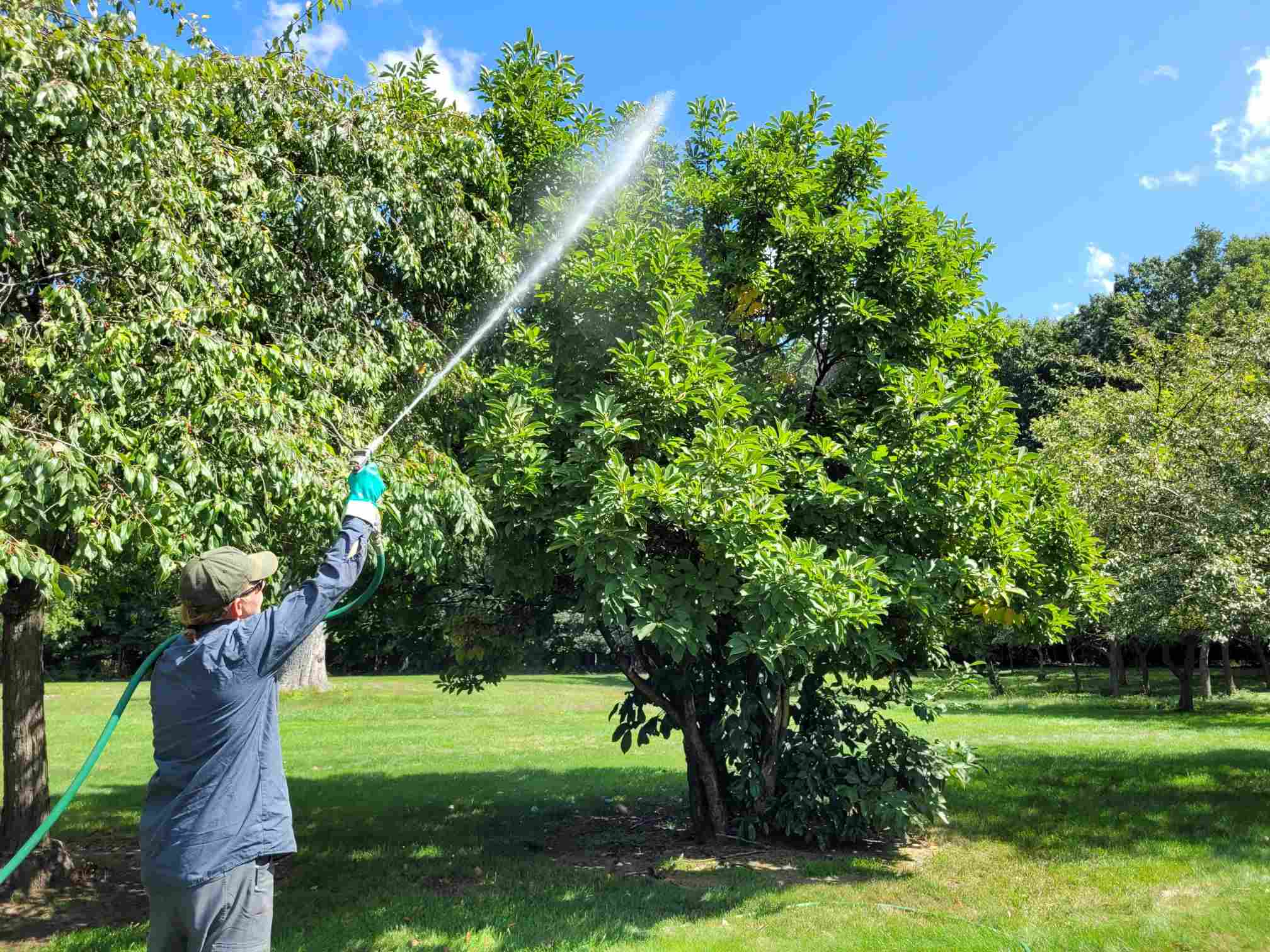
Spraying magnolia tree for magnolia scale. | Tom Morgan, Owen Tree & Lawn Care
The Case for Removal: Reasons to Choose Removal Over Treatment
While treating a diseased tree has its benefits, there are situations where removal may be the more prudent decision. Below are the main reasons why commercial property owners might opt for tree removal over disease treatment.
1. Severe Disease or Irreparable Damage
Not all tree diseases can be successfully treated, especially when the infection is too severe. For instance, if a tree is infected with Dutch Elm Disease or Oak Wilt and has reached the point of no return, treatment is probably not going to be effective. In these cases, the tree is likely to continue declining, and attempting to save it could be a waste of financial resources.
Trees that have suffered significant structural damage (such as large branch dieback or root decay) may not recover, even with pruning or treatment. A weakened tree can pose a risk to the safety of residents and visitors to the property. In such cases, removal might be necessary to avoid accidents.
2. Safety Concerns
Diseased trees are more prone to being structurally unstable, with weakened branches or compromised root systems. This can lead to a higher risk of falling limbs, broken branches, or even the collapse of the entire tree. If the tree is located near buildings, walkways, or parking areas, it may pose a significant safety hazard.
Removing the tree may be the safer option if the tree is in a high-traffic area of a commercial property. The risk of injury or damage to the property may outweigh the potential benefits of treating the tree.
3. Aesthetic and Long-Term Planning Considerations
While mature trees provide numerous benefits, there are situations in which replacing a diseased tree with a new one might be more beneficial in the long run. Over time, a new tree can grow to provide the same or greater value than an old, diseased tree. Commercial properties often have landscaping plans that include a variety of tree species with a focus on diversity and sustainability. If the diseased tree is out of place within the property’s broader landscape design, removal and replacement might align better with the property’s long-term aesthetic goals.
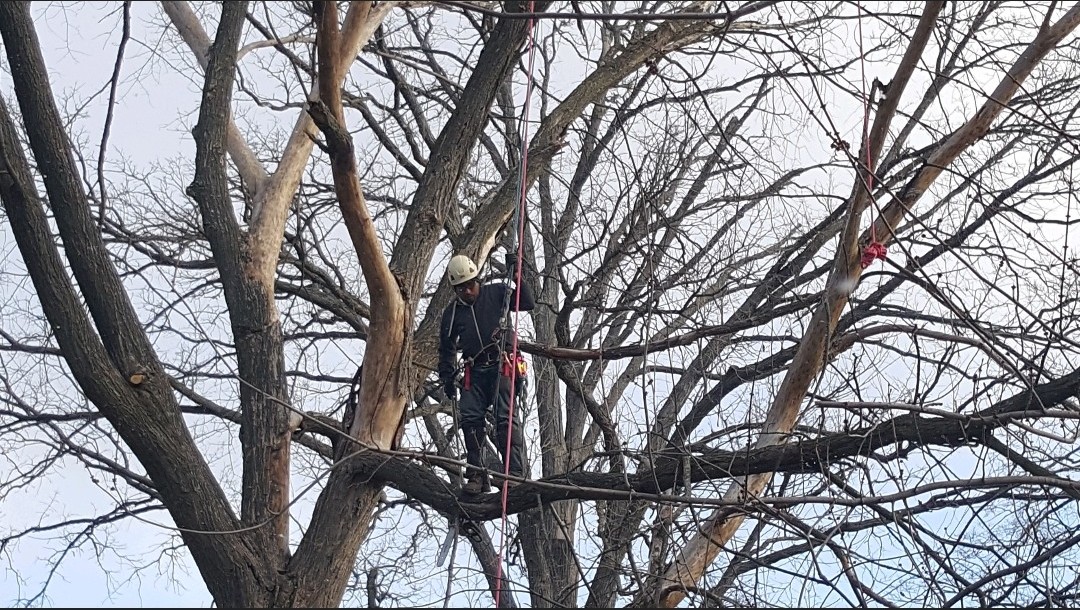
Removal of elm tree killed by Dutch elm disease. | Owen Tree Service
Cost-Benefit Analysis Example: Treatment vs. Removal
When deciding whether to treat or remove a tree on a commercial property, a cost-benefit analysis should consider the following key factors:
1. Initial Costs: Treatment typically involves lower upfront costs compared to removal, stump grinding, replanting, and potential damage/repair to lawns from the work. Treatment costs can range from $15 to $75 per tree per year, depending on the type of disease, the number of trees, and the size of the tree(s). As the number of trees being treated increases the cost per tree typically decreases. In contrast, tree removal, stump grinding, removal of stump chips, and replacement of a 60 ft spruce tree can average $2,500 to $3,500 or more per tree, depending on the size and type of replacement tree.
2. Long-Term Costs: Treatments are ongoing and must be done periodically, requiring regular monitoring and intervention. Conversely, tree removal leads to the expense of planting and nurturing a new tree. New trees will need several years, maybe decades, to mature and provide similar benefits to the old tree and may require more care and maintenance compared to established trees.
3. Ecological and Aesthetic Value: If the tree contributes significantly to the property’s aesthetics or provides environmental benefits, it may be worth the investment to preserve it through treatment. Conversely, if the tree is of little value to the property's overall design or is nearing the end of its natural life cycle, removal might make more sense.
4. Safety Risks: Diseased trees that pose safety risks should be removed regardless of cost considerations. Ensuring the safety of residents, visitors, and property structures is paramount.
Example property: A condo complex with 62 spruce trees that we currently treat for needlecast disease, with great success, has a yearly treatment cost of $1215.00. The yearly cost per tree is $19.59.
If the removal option was chosen, then removal, stump grinding and replacement per tree would be about $2650.00 per tree.
The $2650 removal/replacement cost divided by the annual maintenance cost of $19.59 equals 135 years’ worth of budget money that can be applied to treatments. The option of treating the trees for the disease is clearly more cost effective, plus you have the benefit of retaining the mature, established tree.
The Bottom Line
Ultimately, the decision to treat or remove diseased trees on commercial properties requires a careful assessment of costs, benefits, and risks. While treating trees for disease can be an effective strategy for preserving property value and maintaining environmental benefits, there are cases where removal is the safer, more cost-effective option.
By working with an ISA Certified Arborist, property managers can make informed decisions that strike the right balance between tree preservation and property safety. Regardless of the choice, managing tree health proactively and responsibly is essential to ensuring that trees continue to enhance your commercial property for years to come.
To set up an on-site consultation with one of our ISA Certified Arborists to evaluate your trees drop us a message or call Owen Tree and Lawn Care today at 800-724-6680.